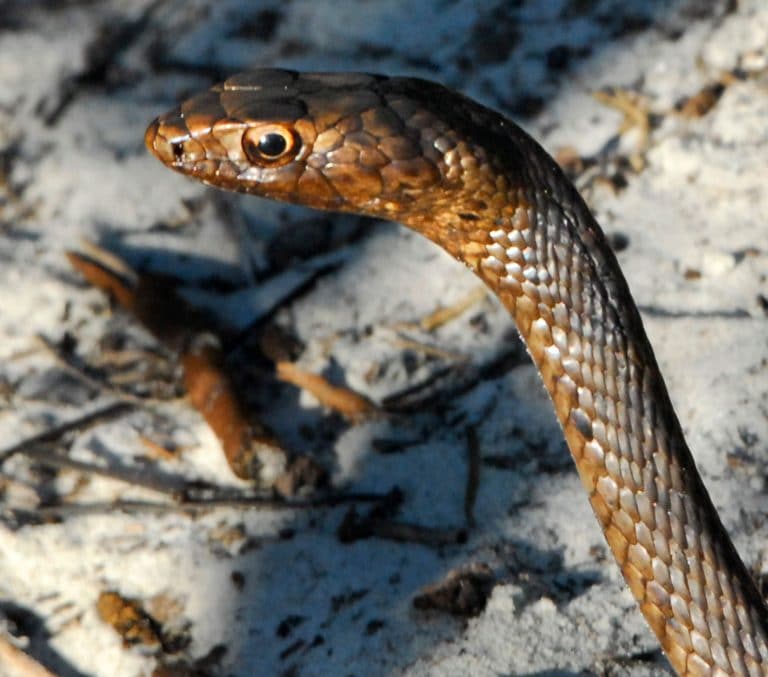
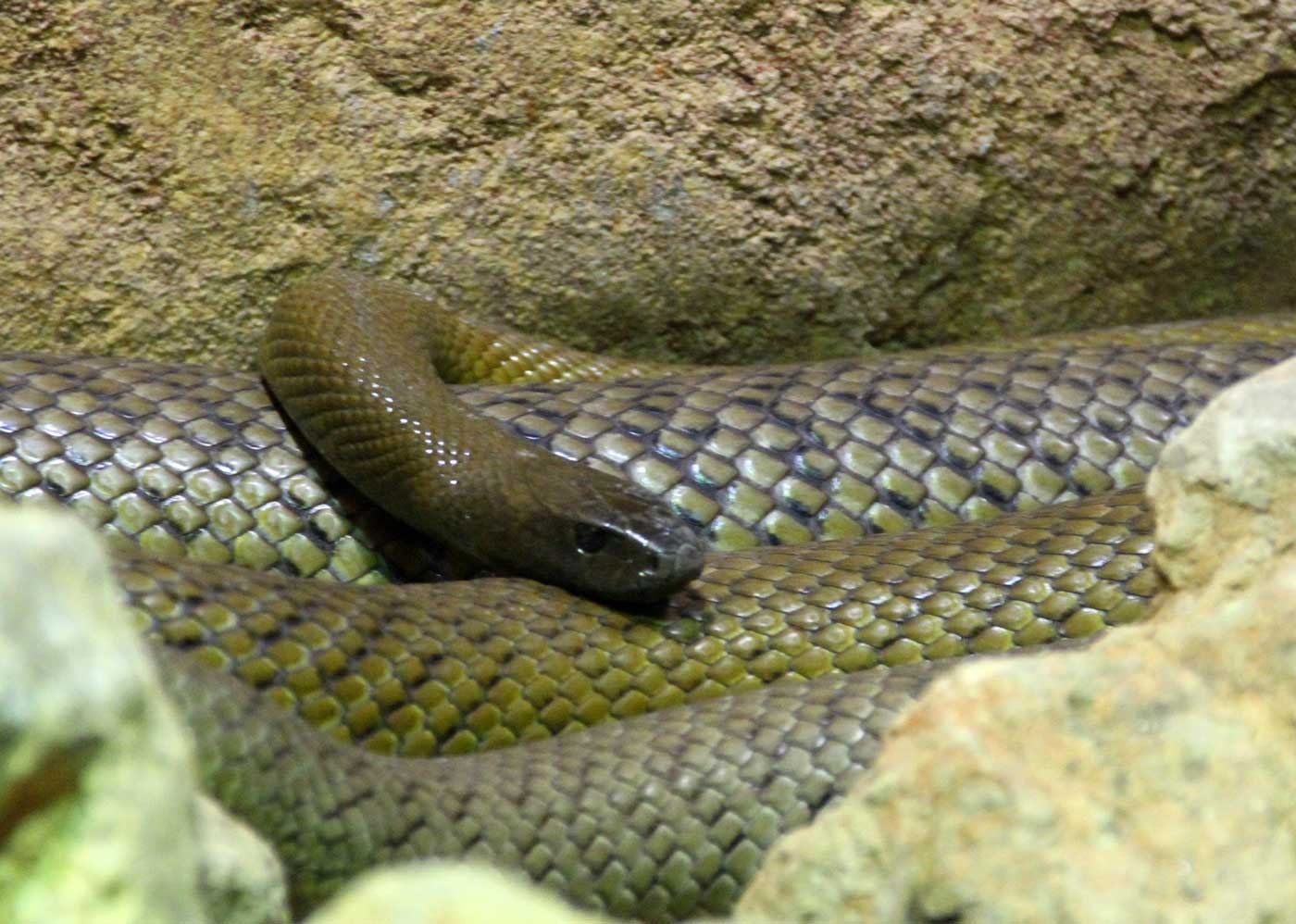
Taipan Snake
Scientific Classification
| Kingdom: | Animalia |
| Phylum: | Chordata |
| Subphylum: | Vertebrata |
| Class: | Reptilia |
| Order: | Squamata |
| Suborder: | Serpentes |
| Family: | Elapidae |
| Genus: | Oxyuranus |
Taipan snakes belong to the genera Oxyuranus, This snake moves very fast. It is big and very poisonous and belongs to the Elapid family from Australia. At present, there are 3 varieties that are identified, among these. One is the coastal Taipan, which is further divided into two types. The Taipan snake is known as the deadliest land snake of all.
The 3 identified varieties are the Inland Taipan Oxyuranus Microlepidotus, the coastal Taipan biologically called Oxyuranus Scutellatus, and the third one which is lately identified, is the Central Range Taipan, biologically called Oxyuranus Temporalis.
All the varieties included in this genus have a strong venom, highly toxic to nervous tissues, combined with other toxic ingredients which affect victims in different ways. This venom numbs the person’s nervous system, and leads to blood clotting, which further blocks the blood vessels and continues with a host of problems to do with clotting.
Anatomy
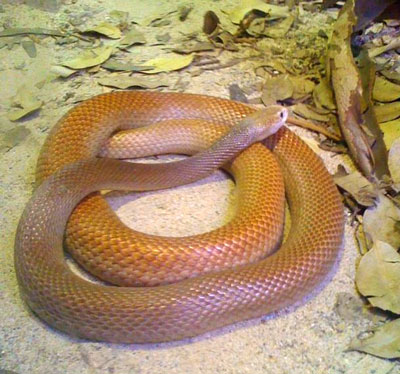
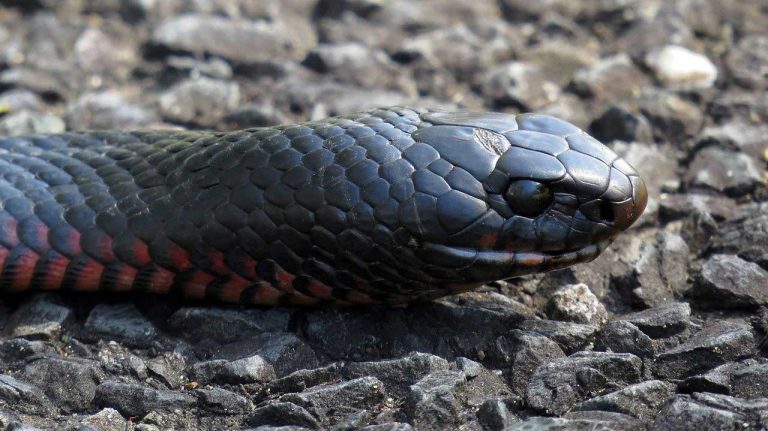
The Taipan snakes are capable of growing up to 3 m long. It is the longest venomous snake in Australia. It is generally known by the name Coastal Taipan. This Taipan snake has no markings and is colored pale olive to deep russet brown. Few of the exceptional ones, hailing from the Tully regions of the Northeast Queensland are colored black.
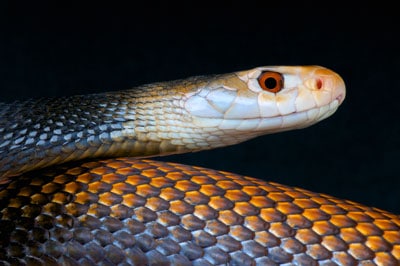
When compared to the other parts of the body, the head is pale in color, the eyes are red and mouth pink in color.
Behavior
In spite of their treacherous status, Taipan snakes are a very isolated type, and there has been no incident of a person getting bitten, except for herpetologists, who handle the snakes.
Habitat
The Taipan snake dwells in the grasslands, dunes of grassy beaches, heaths of the coastal regions and cultivated regions like cane-fields that are in the extreme northern parts of Australia descending to the coastal regions of Queensland, and further you can see them in the Northern provinces of the New South Wales.
As a Pet
Breeding
Most of these snakes depend to a great extent on the most liked prey that is available. The year in which the crop is rich, the population of rats increases, which simultaneously increases the number of these dangerous snakes. In the similar manner, in a year when the crop is poor the rats and snakes die due to shortage of food. The female Taipan snakes lay from 12 – 20 eggs in a clutch, in burrows that are deserted by animals or in deep crevices in the soil.
Housing
You can start raring these Taipan snakes in cages of 400 x 600 x 600 mm with the top open and placing a substrate of newspaper, a water bowl made of ceramic and a trap box. Heat the cage with a 140 watt light bulb provided with a thermostat to cut off at 31°C. A fluorescent tube of 12 connected to a timer enables the snake to get light/darkness for a period of 12 hours. These cages are fine till the snake attains the 1200 mm level; then, is not safe when the snakes repeatedly crawl out to fetch the rats. You can consider keeping the snakes now in similar, but bigger cages of size (800 x 800 x 600 mm).
Food
In the beginning they feed on fuzzy mice. You can feed them every 4 days with a standard quantity of 3 fuzzy mice. Continue this practice for a period of three months by which time they will attain a length of 750 mm. You will never experience snakes consuming so much food and defecate that much quantity, giving you a lot of work. The live mice were killed and eaten. The time between the striking of the mice and its death is only about three seconds! On observing this incident you lead to a novel admiration for the poisonous Taipan snakes; totally remarkable reptiles. When they are about thirteen months old they consume grown-up rats chasing one after the other. It is very fascinating to observe these snakes’ feeding habits. Prior to giving the mice one or two sudden, speedy precision strikes the snakes make a thorough study of their prey and then strike at the point (shoulder or head), and observing it die. Prior to consuming the head of the mouse, they go after the smell of their prey. They normally empty their bowels between two days after a feed, and then they continue chasing their next prey. Some snakes alter their feeding habits as they grow, a factor that is prominent with Coastal Taipan snakes. An adult snake will strike the prey and leave it, whereas, a young one strikes the prey and grips it for a time. This feature may be to safeguard themselves from the sharp teeth of rats, small mammals and mice which they consume in nature.
Handling
Only very experienced snake handlers should attempt to handle this most venomous snake in the world.
Having discovered a fondness for insects while pursuing her degree in Biology, Randi Jones was quite bugged to know that people usually dismissed these little creatures as “creepy-crawlies”.