Red-bellied Black Snake
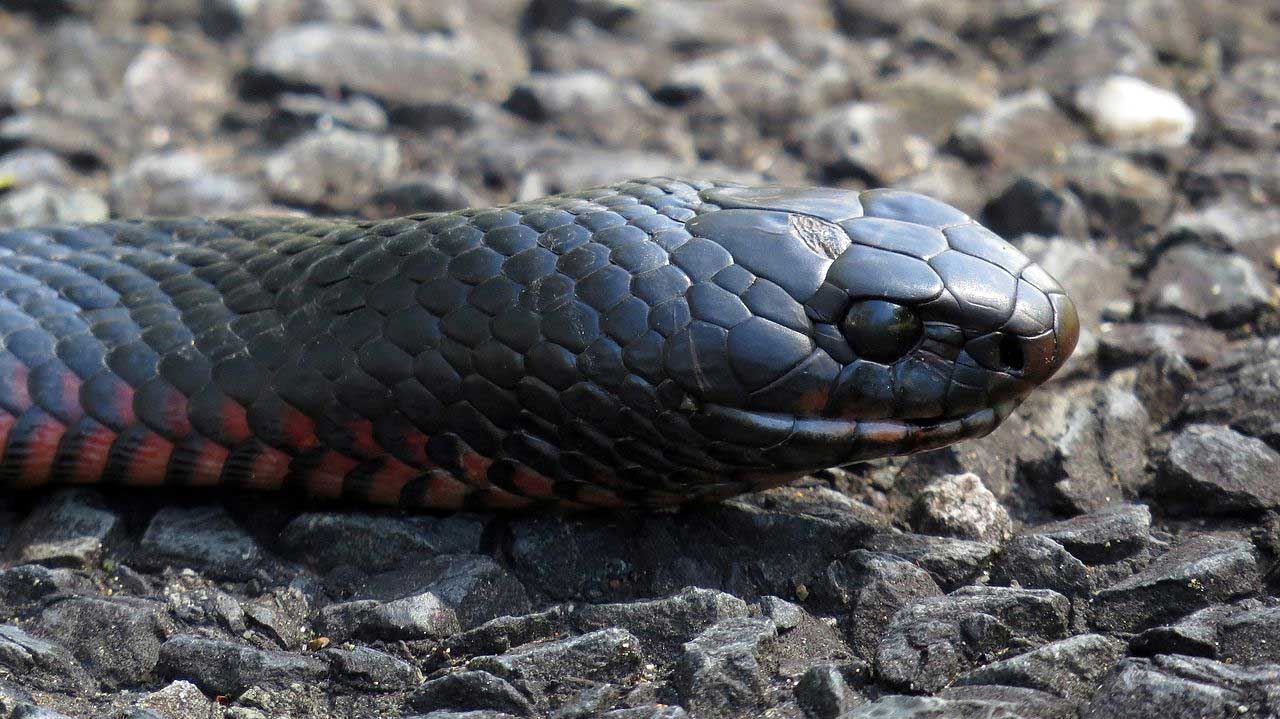
The red-bellied black snake (Pseudechis porphyriacus) is a shiny black snake with a bright red or pink belly that lives in eastern Australia. It is venomous, but it is shy and usually tries to slip away from people rather than bite. Because it often lives near towns and farms, it is one of the best-known snakes in Australia.
Scientific Classification & Quick Facts
| Common name | Red-bellied black snake |
| Scientific name | Pseudechis porphyriacus |
| Kingdom | Animalia |
| Phylum | Chordata |
| Class | Squamata |
| Family | Elapidae |
| Genus | Pseudechis |
| Conservation status | Least Concern |
| Type | Reptile (venomous snake) |
| Diet | Frogs, tadpoles, lizards, fish, other snakes |
| Habitat | Swamps, woodland and gardens near water |
| Native range | Eastern Australia |
| Size | About 1.4 m; up to 2 m |
| Colours | Black with red or pink sides and pale snout |
| Special feature | Gives birth to live young |
What It Looks Like
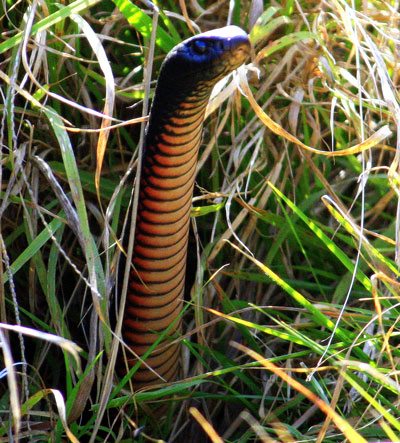
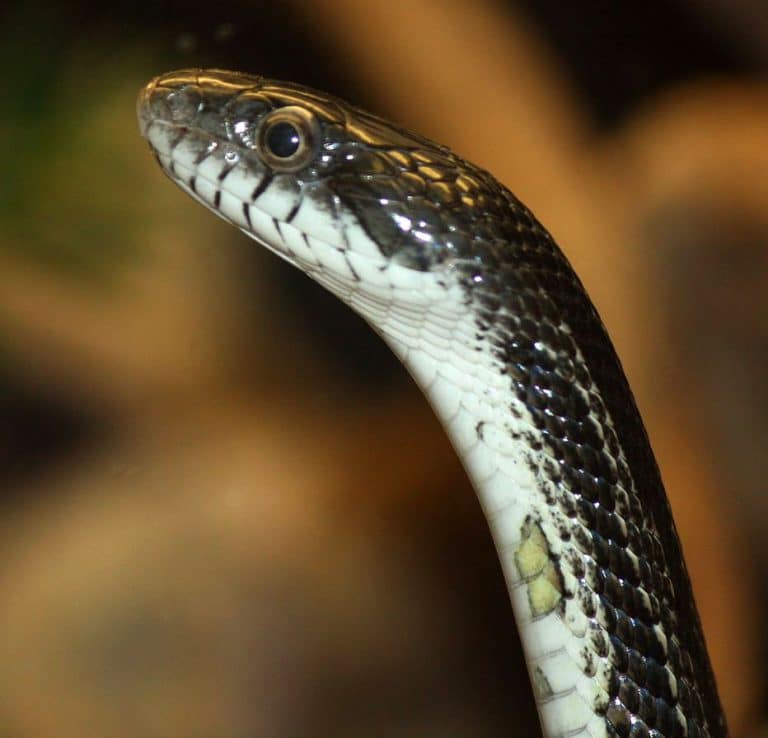
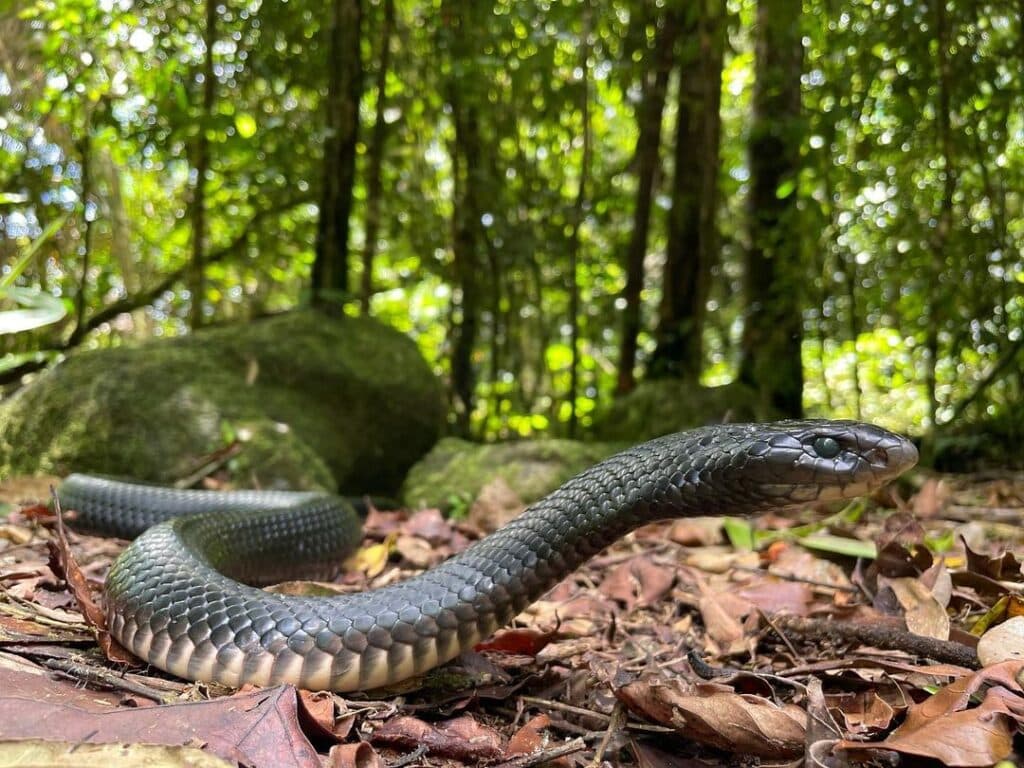
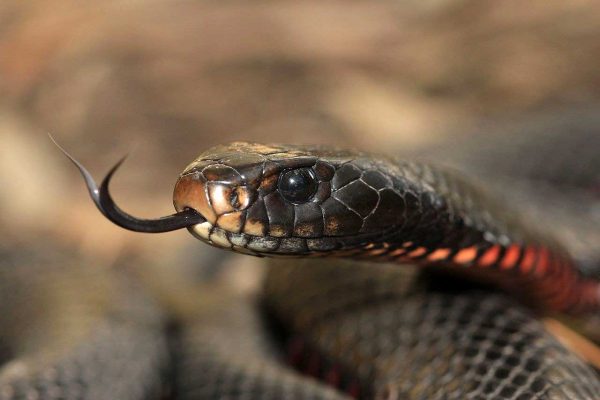
From above, this snake is glossy black from head to tail. Along its lower sides the scales are a vivid crimson or red, fading to pink or orange toward the middle of the belly. The snout is often a paler brown. Under the tail the scales are black.
Most adults are about 1.2 to 1.5 meters (4 to 5 feet) long, and big ones can reach about 2 meters (6.5 feet). The body is fairly sturdy, and the head is only slightly wider than the neck. The scales are smooth and glossy, and the eyes are small with round pupils.
Like other members of the elapid family of snakes (which includes cobras and taipans), it has short, fixed fangs at the front of its mouth. Scientists use scale counts to identify snakes: this species has 17 rows of scales around the middle of its body and about 170 to 215 belly scales.
Young red-bellied black snakes can look a lot like the eastern small-eyed snake, another dark snake with a pinkish belly, so even experts sometimes need a close look to tell them apart.
Venom and Safety
The red-bellied black snake is venomous, and a bite can make a person quite sick. Symptoms can include pain, swelling, vomiting, headache and problems with blood clotting or muscles. Its venom is weaker than that of many other Australian snakes, such as brown snakes and taipans, and deaths are extremely rare. Even so, every snakebite should be treated as an emergency.
If you see one, stay calm, keep your distance and let it move away. Never try to catch or kill a snake. If someone is bitten, call for emergency help, keep the person still and apply a pressure bandage if you have been taught how.
Behavior
This snake is active during the day. It spends a lot of time basking in the sun to warm up, especially in the morning. When it is resting, it hides under logs, rocks, piles of rubbish or in burrows and holes.
It is not aggressive. Its first choice is to escape, often into water. If it is cornered, it may flatten its neck and body, hiss, and make bluffing strikes to scare the threat away. Bites usually happen only when people try to handle or harm the snake.
Where It Lives
Red-bellied black snakes live along the eastern side of Australia, from Queensland through New South Wales and Victoria to south-eastern South Australia. They are found around cities such as Brisbane, Sydney, Canberra and Melbourne, and in places like the Blue Mountains.
They love water. You are most likely to meet one near creeks, rivers, swamps, lagoons, dams and billabongs (small, cut-off ponds). They also live in forests, woodlands and grasslands close to water, and sometimes visit leafy gardens near streams.
What It Eats
In the wild, the red-bellied black snake mostly eats frogs. It also catches fish, tadpoles, lizards, small mammals and other snakes, sometimes even smaller snakes of its own kind. It often hunts in shallow water and can stay underwater for a while.
It usually swallows its prey quickly, sometimes before the venom has had much effect. Captive snakes have occasionally brought up frogs that were still alive, which shows that small prey is often simply swallowed.
Sadly, many of these snakes die after eating poisonous cane toads, which were brought to Australia in 1935. In some areas their numbers dropped when cane toads arrived.
Babies
Unlike most snakes, the red-bellied black snake does not lay eggs. The female gives birth to live young in late summer. Each baby is born inside a thin, clear membrane that it quickly breaks out of. A litter often has around 8 to 20 babies, though larger litters have been recorded. The newborns are only about 12 centimeters (5 inches) long and must look after themselves from the start.
In Captivity
Because it is venomous, this snake is not a pet for families. In Australia, keeping native reptiles needs a government license, and venomous species need special permits and experience. Zoos and licensed keepers house them in large, secure enclosures with hiding places, branches, a water bowl and a warm basking spot at one end and a cooler area at the other, so the snake can control its body temperature.
In captivity, these snakes have big appetites. Keepers usually feed them mice and rats, and sometimes pieces of fish or chicken.
Fun Facts
- Red-bellied black snakes play a useful role by keeping frog and rodent numbers in balance.
- Males sometimes “wrestle” each other in spring, twisting their bodies together to win the chance to mate.
- They are strong swimmers and will often escape danger by diving into water.
Red-bellied black snake FAQs
Are red-bellied black snakes dangerous?
Their venom can make you very sick, but a bite is not usually deadly and the snake is less venomous than many other Australian snakes. They are not aggressive and try to escape first.
What do red-bellied black snakes eat?
They eat frogs and tadpoles, lizards, fish, and even other snakes, including their own kind.
Where do red-bellied black snakes live?
They live along the east coast of Australia, in swamps, forests and bushland, near streams, dams and billabongs. They also appear in gardens in cities such as Sydney and Brisbane.
How big do red-bellied black snakes get?
They are usually around 1.4 metres long, and the biggest reach about 2 metres.
How do you recognise a red-bellied black snake?
It has a shiny black back, a pale brown snout, and bright red, pink or orange along the sides of its belly. That is how it got its name.

Randi Jones is the owner and founder of the Nature Gift Store, an online retailer specializing in nature-themed gifts, educational science projects, live animal nature kits and real butterfly artwork. A biology graduate who fell in love with insects, she founded the company in 2001 to make active learning about nature fun, accessible and engaging for children and adults. Her store offers real butterfly frames, home and garden decor and educational live animal kits, including ant farms, worm farms, tadpoles, ladybugs and hermit crabs, and she runs a bug museum in Washington featuring live animals like Eddie the Iguana alongside other reptiles and insects.