Facts on Tarantula Spiders

Largest Among the Species of Spiders in the World
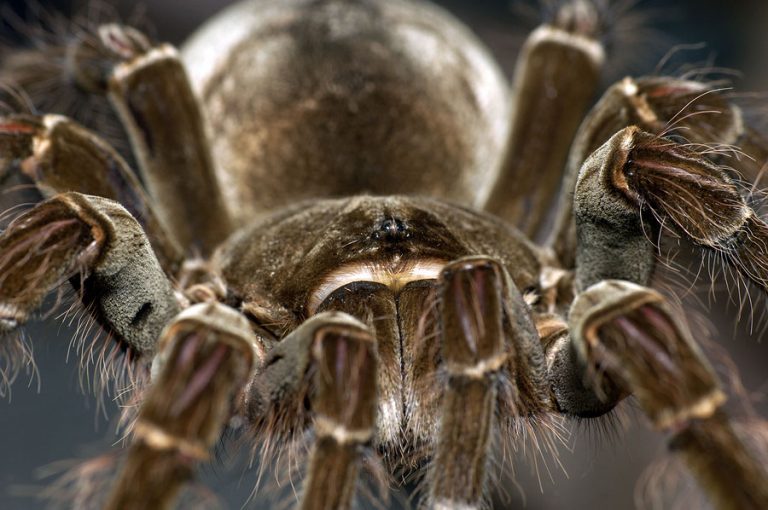
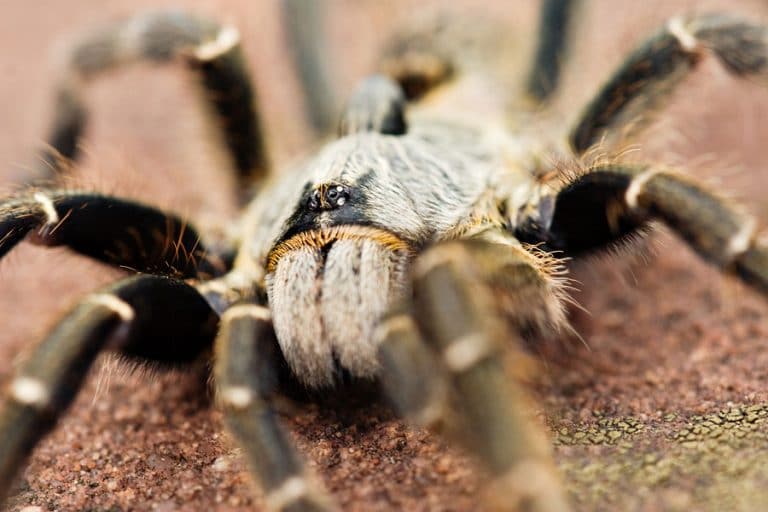
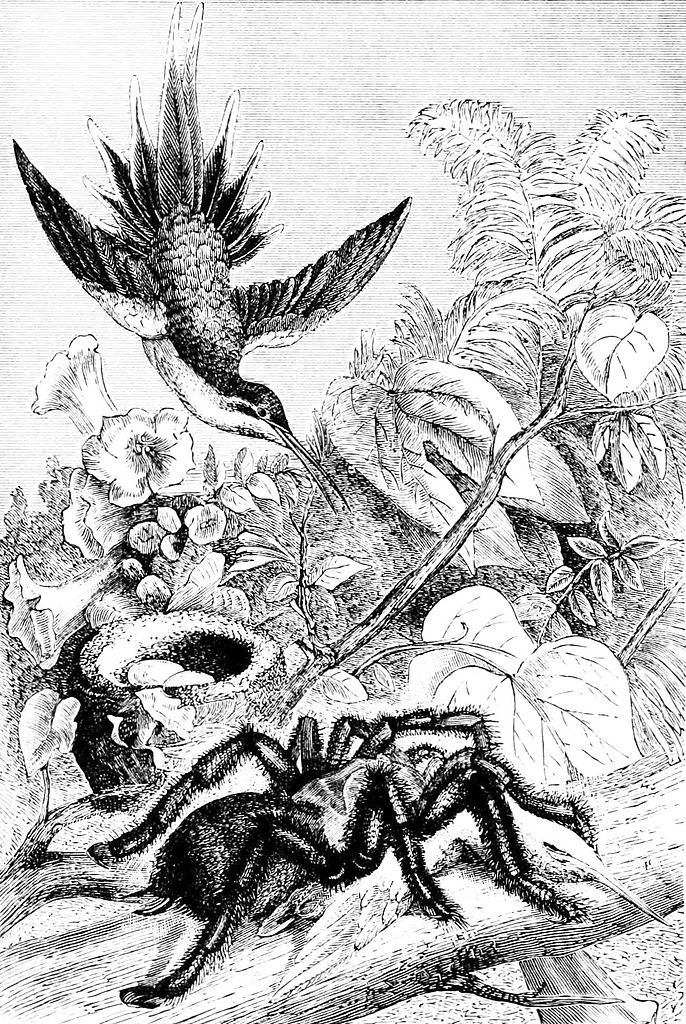
Hairy Mygalomorphs are a group of spiders that also include tarantulas. Scientists think this variety of spiders has been there for millions of years and has not undergone any significant change since. They are the largest among the species of spiders in the world. There are about a thousand types of tarantulas and these are the largest of spiders, with eight legs, two large fangs and generally have hair. You can see them as small as the size of a fingernail or large of the size of a dinner plate.Read on and you will learn a lot more facts about tarantula spiders.
Tarantulas dwell in the jungles and rainforests of Central and South America, Africa and parts of North America. Many of these live in underground hideaway. Using their fangs, they can make their own burrows or may occupy a burrow made by someone else. Though they do not make webs, they use their silk for fabricating doors and soft walls for their hideaway, while the tree living variety uses the same for making their home in the shape of a tunnel on the trees.
The defense mechanism of Tarantulas is fascinating. Their abdomen, covered with hair, has sharp small barbs. On getting endangered, they will use their legs to rub those hairs and attack the predator. Yes, that would be injurious!
Diet

Tarantulas go hunting at night, their diet consists of beetles, insects and grasshoppers. The diet of Goliath bird eating variety consists of bigger victims like bats, frogs, snakes, lizards and even small birds. These are carnivores by nature and habitually eat insects. The interesting part is that, on getting a fat meal, they can survive without food for nearly one month.
Biology
The outer surface of tarantulas is strong, called exoskeleton. Their body consists of two main parts, the abdomen and prosoma or cephalothorax. The two parts connect via a pedicle that is its waist, and is vital for its movements and agility, as it enables the abdomen to move over a large range. Spiders have up to eight eyes, laid in two sets. However, compared to insects, their eyes are poorly developed, though some can see images.
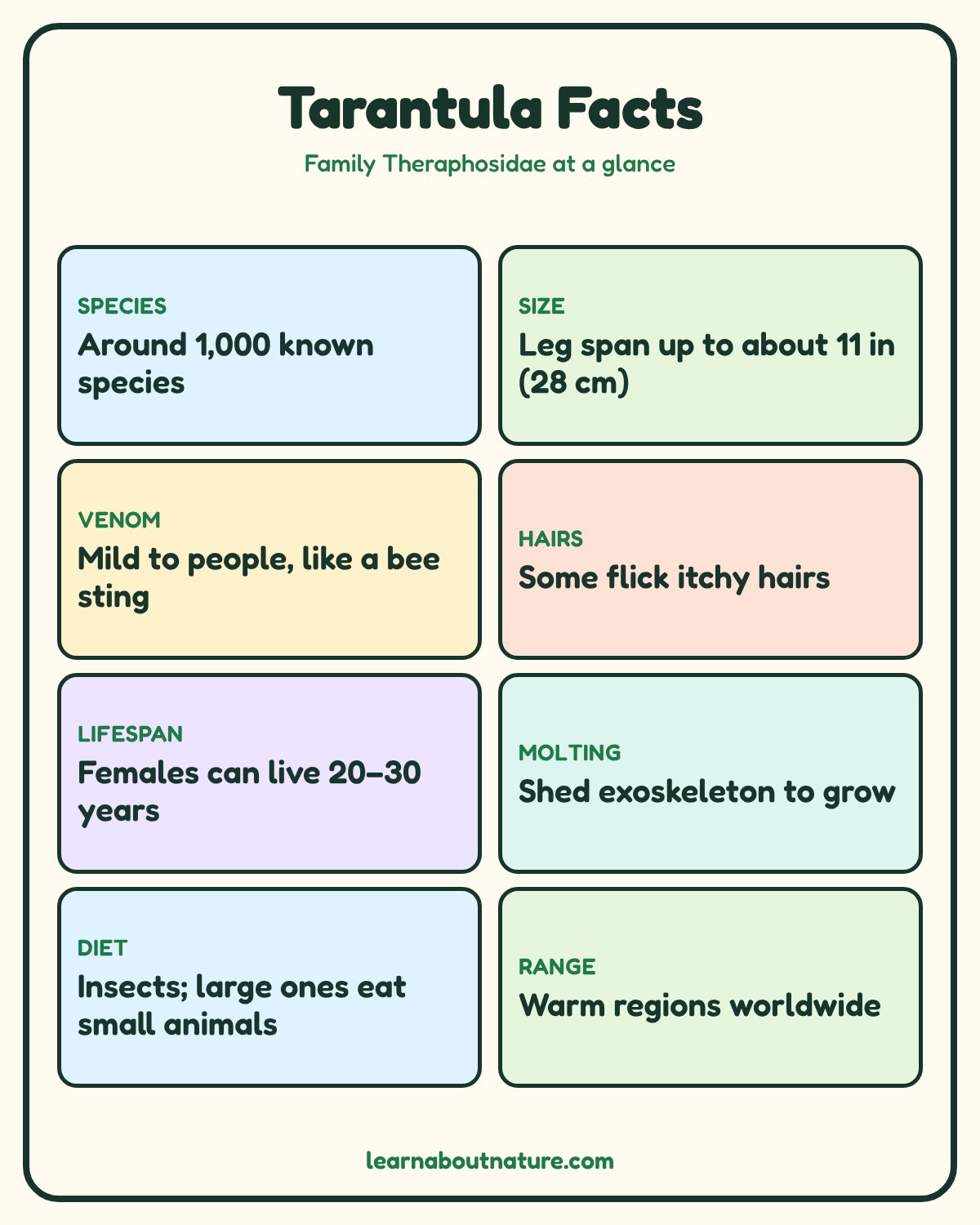
If you read the tarantula spider trivia, you will be surprised to learn that the females store their eggs in a cocoon, and guard them for a period of six to nine weeks, at the end of which, they hatch from 500 to 1000 little tarantulas. The female tarantula, they say, has a life span of over 30 years. They grow up to a length of 4.75 inches or 12 centimeters and their leg span can reach up to about 11 inches or 28 centimeters, and weigh up to 3 ounces or 85 grams.
Who Hunt the Tarantulas

When you read the facts on tarantulas, it is interesting to note that some of the predators that hunt tarantulas are the snakes, skunks, owls, weasels and hawks, the worst one being the spider wasp. The female wasp stings and paralyzes the spider, digs a hole and deposits the spider and an egg (of the spider wasp) into it. Sad to say, the spider can stay buried alive for several days, and when the baby wasp hatches, it will consume the paralyzed spider.
Tarantula Facts FAQs
How big do tarantulas get?
Tarantulas range from small species with leg spans of a few centimetres to giants like the Goliath birdeater of South America, which can have a leg span of nearly 30 centimetres. The Goliath birdeater is considered the largest spider by mass.
Are tarantulas dangerous to humans?
Most tarantula bites are no worse than a bee sting for healthy people, though some Old World species have stronger venom that can cause significant pain. Many New World tarantulas also flick tiny barbed hairs from their abdomen, which can irritate skin and eyes.
What eats tarantulas?
Tarantulas are hunted by birds, lizards, snakes and some mammals, but their best-known enemy is the tarantula hawk wasp. The wasp paralyses a tarantula with its sting and lays an egg on it, and the wasp larva then feeds on the living spider.
How many species of tarantulas are there?
There are more than 1,000 known species of tarantulas in the family Theraphosidae. They live in tropical, subtropical and desert regions of the Americas, Africa, Asia, Australia and southern Europe, with many species still being described.

Randi Jones is the owner and founder of the Nature Gift Store, an online retailer specializing in nature-themed gifts, educational science projects, live animal nature kits and real butterfly artwork. A biology graduate who fell in love with insects, she founded the company in 2001 to make active learning about nature fun, accessible and engaging for children and adults. Her store offers real butterfly frames, home and garden decor and educational live animal kits, including ant farms, worm farms, tadpoles, ladybugs and hermit crabs, and she runs a bug museum in Washington featuring live animals like Eddie the Iguana alongside other reptiles and insects. Randi wrote most of the guides on this site. They first appeared on her long-running nature sites, including Monarch-Butterfly.com, Ladybug-Life-Cycle.com, Frog-Life-Cycle.com, Dragonfly-Site.com and Butterfly Pictures, which have now been brought together here at Learn About Nature.