Cat’s Claw

Scientific Classification & Quick Facts
| Common name | Cat’s claw |
| Scientific name | Uncaria tomentosa |
| Kingdom | Plantae |
| Phylum | Tracheophyta |
| Class | Magnoliopsida |
| Order | Gentianales |
| Family | Rubiaceae |
| Genus | Uncaria |
| Type | Woody climbing vine |
| Habitat | Tropical rainforest |
| Native range | Central and South America, including the Amazon |
| Colours | Yellow or pale orange trumpet flowers |
| Height | Up to 100 ft |
| Special feature | Thorns shaped like cat claws |
Cats claw, scientifically known as Uncaria Tomentosa is a woody vine from the Rubiaceae family. This name is also used for other plants as well. In Peru, it is called Vilcacora and in Spanish, Uña de Gato. You can find this plant in the south and central part of America, growing in the tropical jungles. The plant got its name cats claw due to the shape of its thorns which are like claws. Cats claw is traditionally used in herbal medicine. The other names of this plant are sparrow hawk nail, pot hook, hawks claw, and the like.
History
Uña De Gato is the Spanish name for cats claw. This plant is a vine that clings to other trees and grows up to a 100 feet height. It has very sharp thorns on the body. It is native to the South and the Central American tropical rain forest. The American rain forest is the place where it is commercially produced. Many Brazilian and Peruvian villages live on the income that they earn from the harvest of cats claw.
Anatomy
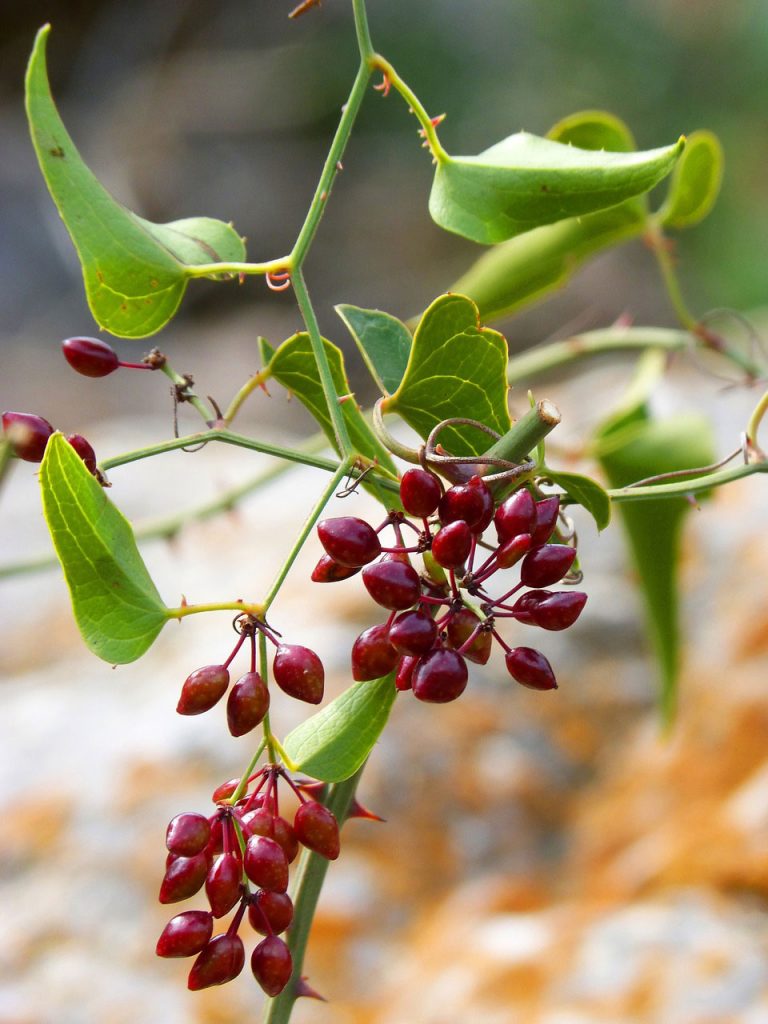
Cats claw is a creeper and it has small, tubular, yellow flowers. You can see the flowers in yellow or pale orange color and they are in hairy form. We can see the flowers on the leaf axis in rounded clusters, and each flower is small and tubular. The fruit of the cats claw looks like a narrow capsule.
Habitat
We can see the cats claw plant in the rainforest of the Amazon. The habitat of the cats claw is restricted to the tropical regions of the Central and South America. We can see the leaves of the plant in an elliptical form. It has a very smooth edge and grows in opposite whorls.
Soil
Cats claw grows in many kinds of soil. A soil with a pH between 6.0 and 8.0 is well suited for it. Soil that is well drained, alkaline and infertile is also suitable for the cats claw to thrive. If the soil is organic, the cats claw will get root rot, as claimed, by the Las Pilitas Nursery..
Planting
If the plant has grown as tall as 50 cm, then it indicates that the plant is ready to be transplanted. Make sure you keep a distance of 6-8 m between each plant. You will need a well trained person nearby while you plant because the cats claw cannot support itself. After a height of 1m they need a support system to grow. You either need to give this plant an external support or you need to plant it at the foot of a tree or fence so that it can grow in their support. During the initial stage of planting, regularly pour enough water or else the plant will die. Make sure you plant it during the rainy season.
Watering
It is not necessary to water the cats claw regularly. Even if you water it once a month, it will be sufficient. Water the plant deeply and in a very slow manner. Apply water up to 10 inches to the young plant so that it will have a good amount of water, whereas the grown up plant is drought tolerant. If the temperature is too hot or if they are growing in the desert areas, a regular supply of water will be good because the sun may cause the leaves to burn.
Temperature
Cats claw is a tropical plant and does not tolerate frost. When the temperature is low, germination progresses very slowly. During cold and dry stress the general distribution is very much limited.
Uses
The wildlife and the bees are attracted by the nectar of the flowers and the birds love their seeds. The plant can be planted in gardens, but not too close to walkways because of their thorns.
Pests
Pests do not affect the cat’s claw much.
Cat’s claw FAQs
Why is it called cat’s claw?
The plant has sharp thorns that are curved like a cat’s claws. The Spanish name is ‘uña de gato’, which means cat’s claw.
Where does cat’s claw grow?
Cat’s claw is a vine native to the tropical rainforests of Central and South America, including the Amazon.
How tall does cat’s claw grow?
It can climb up to about 100 feet tall by clinging to trees. It cannot hold itself up, so it needs a tree or fence for support.
What do cat’s claw flowers look like?
The flowers are yellow to pale orange, hairy, and shaped like trumpets, about 4 to 8 centimetres long. They grow singly or in clusters.
Which animals visit cat’s claw?
Wildlife and bees are attracted by the nectar in the flowers, and birds like the seeds.

Randi Jones is the owner and founder of the Nature Gift Store, an online retailer specializing in nature-themed gifts, educational science projects, live animal nature kits and real butterfly artwork. A biology graduate who fell in love with insects, she founded the company in 2001 to make active learning about nature fun, accessible and engaging for children and adults. Her store offers real butterfly frames, home and garden decor and educational live animal kits, including ant farms, worm farms, tadpoles, ladybugs and hermit crabs, and she runs a bug museum in Washington featuring live animals like Eddie the Iguana alongside other reptiles and insects.