Artichoke
Scientific Classification & Quick Facts
| Common name | Globe artichoke |
| Scientific name | Cynara scolymus |
| Kingdom | Plantae |
| Phylum | Tracheophyta |
| Class | Magnoliopsida |
| Order | Asterales |
| Family | Asteraceae |
| Genus | Cynara |
| Type | Thistle-family perennial grown as a vegetable |
| Native range | Mediterranean region |
| Size | About 4 ft tall and 4–6 ft wide |
| Edible parts | Flower bud (heart) and leaves |
| Special feature | Prickly petals show its thistle family |
The artichoke (Cynara scolymus) is a tall plant in the daisy family, grown for its large flower buds, which people cook and eat. It is closely related to thistles, and if a bud is left on the plant, it opens into a big, spiky purple flower. Artichokes grow best where winters are mild and summers are cool, such as around the Mediterranean and along the coast of California. In hotter places, like parts of Texas, gardeners have to pick suitable varieties and plant at the right time of year.
History
The artichoke is believed to have been developed from the cardoon, a wild thistle-like plant native to the Mediterranean region. Ancient Greeks and Romans ate cardoons and early artichokes, and wild cardoons still grow in parts of North Africa today. Over many centuries, farmers in places like Sicily and Italy improved the plant, turning it into the modern artichoke with its big, tender buds. The English word “artichoke” comes from an Arabic word that passed into Spanish and Italian in the Middle Ages.
Anatomy
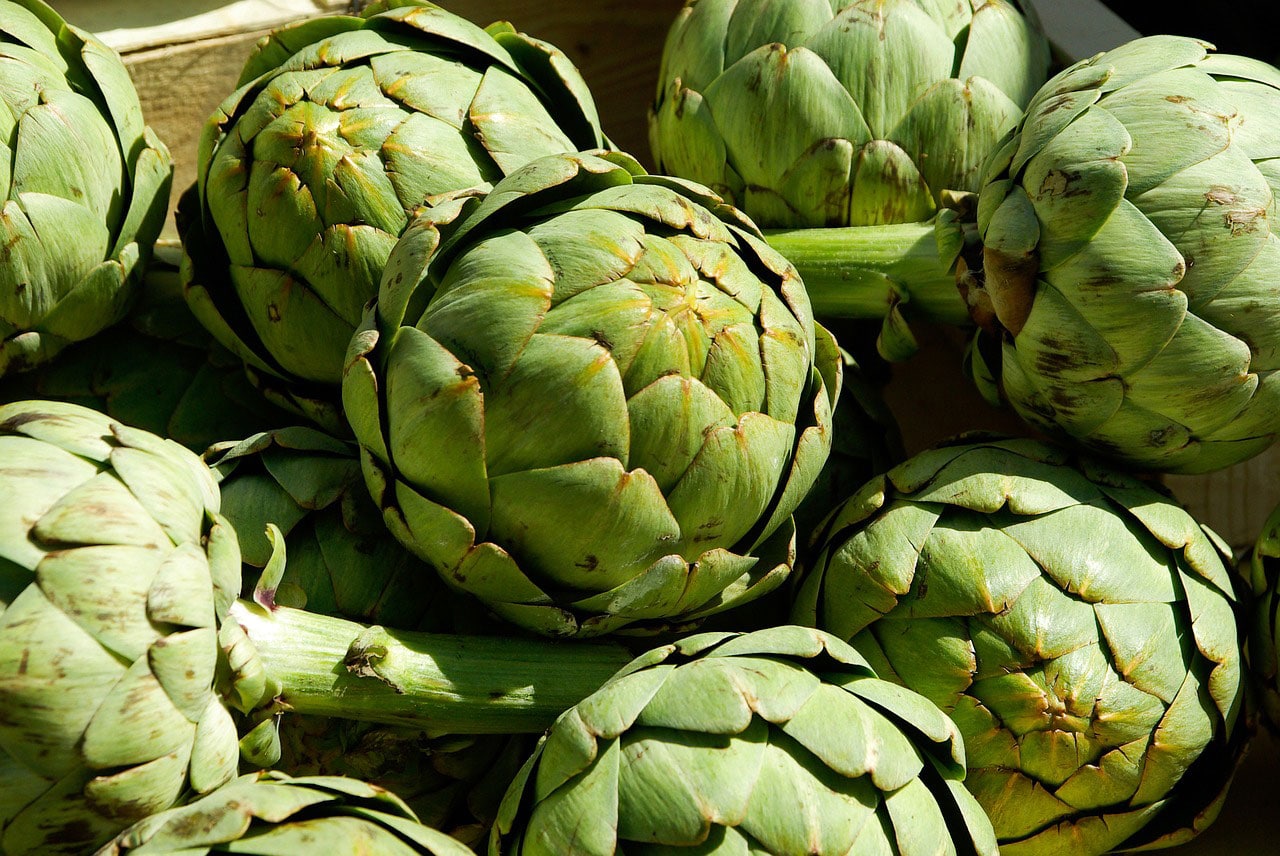
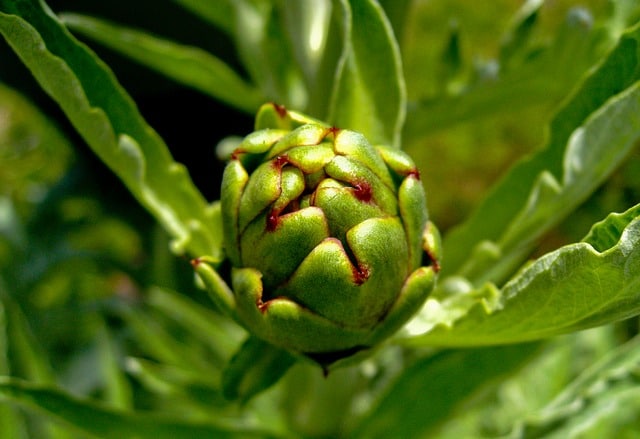
The part of the artichoke that we eat is an unopened flower bud, not a fruit. Artichokes belong to the thistle family, and a fully grown plant can reach about 3 to 5 feet (1 to 1.5 m) tall and spread up to 6 feet (1.8 m) wide, with large, silvery-green leaves. The bud is made of many overlapping scales called bracts, and their fleshy bases are good to eat. Inside the bud is a hairy center called the choke, which sits on top of the tasty “heart.” Many bracts end in small thorns, a reminder of the artichoke’s thistle family roots.
Habitat
The artichoke is native to the Mediterranean region, where it also grows wild. A different plant, the Jerusalem artichoke (a kind of sunflower), grows wild across much of eastern North America, including Illinois, in thickets, roadsides, railroad edges, ditches and waste areas.
Soil
Artichoke can survive in soils that are rich. During the spring season make sure you mix compost to the bed of your artichoke. A granulated mixture of organic fertilizer with a good balance of Phosphorous- nitrogen and potassium can also be mixed in equal proportions.
Planting
Artichokes like mild climates where they grow as perennials. They produce buds during the second growing season. The gardeners have to seed the artichokes when the climate is cooler, and do this annually if they need to get the buds every year
Watering
The water at the root has to be kept evenly moist all throughout the season.
Temperature and Humidity
We have to expose the young plants in the winter to the cooler temperatures. For this, we have to get the artichoke into behaving as if they have already made their first winter. Vernalization (Wiki: the acquisition of a plant’s ability to flower in the spring by exposure to the prolonged cold of winter, or by an artificial equivalent) is the subterfuge. Even before the last frost, start planting the seeds indoors 12 weeks before the normal time. You have to place the seeds in a cold frame for about 6 weeks, even before the last frost, during which time the temperature should be below 50 degrees. This should be for the first 6 weeks. You have to keep on opening the lid of the frame to make the temperature cool. When the dangers of the frost have disappeared, you can plant the seedlings outside. When the climate is warm, plant the divisions or set it as a 6 week old seedling. This can be done during the night time where the temperature stays above 50 constantly.
Uses
Consumption is the basic use of the artichokes. They can be eaten either in the cooked or in raw condition. The globe artichokes are used in many ways. They are used to make tea, to be canned, pickled, for the extraction of metabolites or they can be used for the extraction of liqueur. They are used for the making of alcohol.
Care
When you choose a spot for artichokes, pick one where they can stay for about 5 years, because in mild climates the plants come back year after year. Give them plenty of room, since each plant can grow about 4 feet tall and spread even wider. Artichokes grow best in full sun, though in very hot climates a little afternoon shade can help.
Artichoke Curly Dwarf Virus
Artichoke curly dwarf virus makes artichoke plants grow small, with curled, twisted leaves and fewer, smaller buds. Infected plants cannot be cured, so gardeners remove and destroy them to stop the disease spreading and start again with healthy plants. Artichokes can also get fungus diseases such as powdery mildew, which leaves a white powdery coating on the leaves, and botrytis (gray mold), which likes cool, damp weather. Good air flow and removing sick leaves help keep these diseases away.
Globe artichoke FAQs
What part of an artichoke do we eat?
We eat the flower bud. The meaty heart and the soft base of the petals are the tasty parts, while the fuzzy centre, called the choke, is not eaten.
Is an artichoke a flower or a vegetable?
The artichoke is neither a fruit nor a flower but a bud of the plant, and it belongs to the thistle family. The tiny thorns on its petals show its thistle relatives.
Where do artichokes come from?
Artichokes come from the Mediterranean region, where a wild type called cardoon is native. The ancient Greeks and Romans already ate them.
How big do artichoke plants get?
The plant is about 4 feet tall and up to 4 to 6 feet wide when it is fully grown, so it needs lots of room.
How long does an artichoke plant live?
In mild climates, artichokes grow as perennials. Choose a spot where the plant can stay for about 5 years. It makes buds in its second growing season.

Randi Jones is the owner and founder of the Nature Gift Store, an online retailer specializing in nature-themed gifts, educational science projects, live animal nature kits and real butterfly artwork. A biology graduate who fell in love with insects, she founded the company in 2001 to make active learning about nature fun, accessible and engaging for children and adults. Her store offers real butterfly frames, home and garden decor and educational live animal kits, including ant farms, worm farms, tadpoles, ladybugs and hermit crabs, and she runs a bug museum in Washington featuring live animals like Eddie the Iguana alongside other reptiles and insects.