Arnica Montana
Scientific Classification & Quick Facts
| Common name | Arnica |
| Scientific name | Arnica montana |
| Kingdom | Plantae |
| Phylum | Tracheophyta |
| Class | Magnoliopsida |
| Order | Asterales |
| Family | Asteraceae |
| Genus | Arnica |
| Conservation status | Least Concern |
| Type | Perennial herb in the daisy family |
| Habitat | Mountain meadows, pastures, light forest; poor, acidic soil |
| Native range | Europe: southern Iberia to southern Scandinavia |
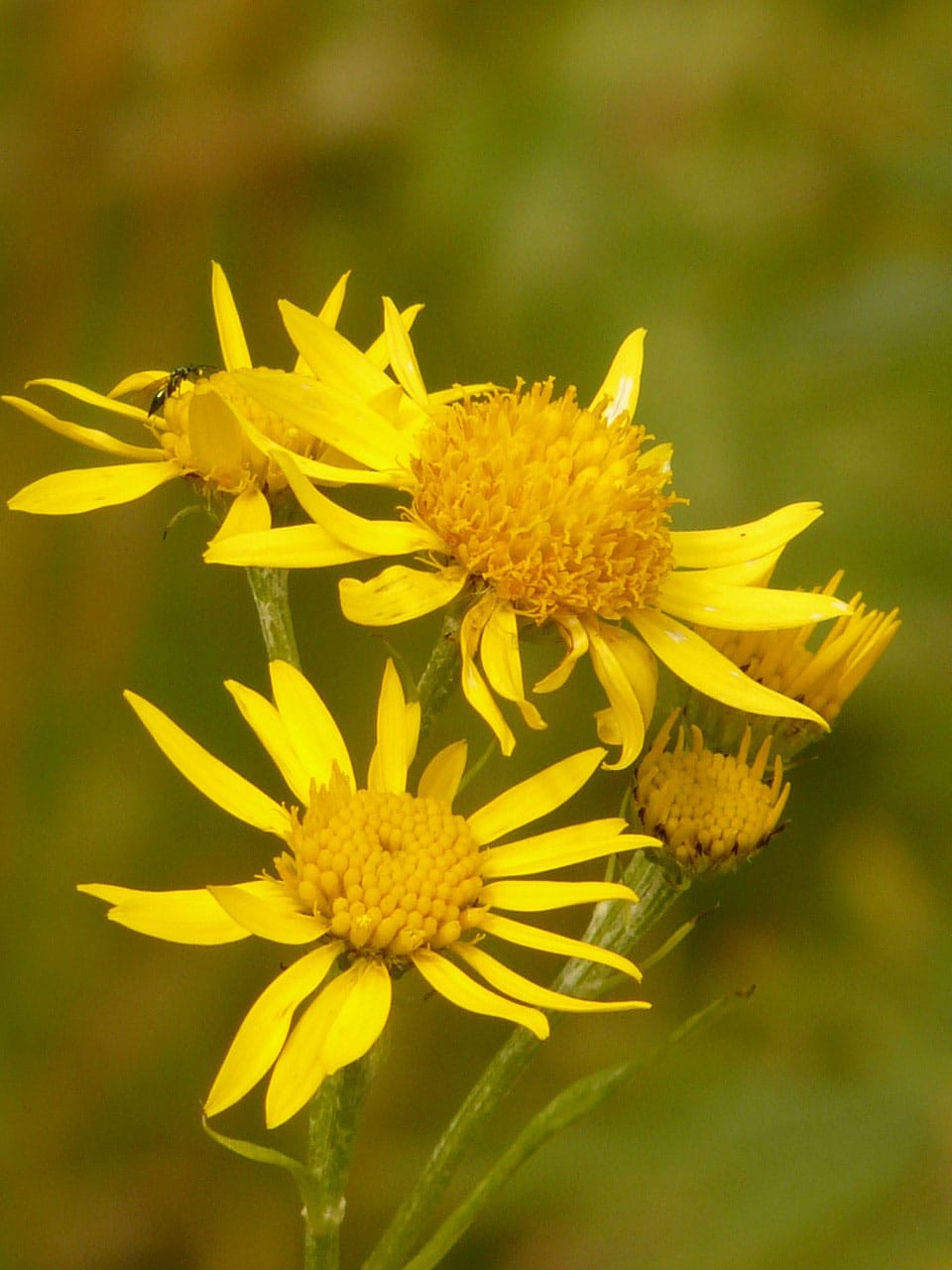
| Colours | Bright yellow flowers, about 5 cm wide |
| Flowering season | July to August |
| Height | 20–60 cm |
| Special feature | Can be poisonous if taken in large amounts |
Arnica Montana belongs to the Arnica genus and the Asteraceae family. It is often mistaken for Leopard’s Bane. It is found in European regions like Scandinavia, the Carpathian mountain region, and Iberia. The other names of this plant are Mountain Arnica, Wolf’s Bane, and Mountain Tobacco. Arnica Montana was used mainly as an herbal medicine in ancient times, especially in countries like Russia, Europe, and North America. Its roots and flowers have traditionally been used in herbal medicine.
History
The history of Arnica goes long back to ancient times. Since16th century, it was used in making traditional medicines in some regions of Russia, Germany and North America. In ancient records, a German writer has attributed Arnica for helping him to recover from a constant high fever. Arnica is also famous in Russia, where it is commonly used for treating external wounds, concussions, sprains and black eye. This herb is believed to have originated from a European flower. Its name is derived from the Latin language. Today Arnica has grown to be one of the most popular Homeopathic medicines throughout the world.
Anatomy
Arnica Montana is a perennial herb that grows about 1 to 2 feet tall. It has bright yellow flowers with a flower head of about 5cm in diameter. They usually appear in July and August. The leaves are mostly found in a basal rosette, and are hairy, toothed and bright green in color. Some leaves can also be found over the stem that is usually opposite, clustered, ciliated and ovate with rounded tips. It has tall stems that grow around 20 to 60 cm high and it supports only one flower head.
Habitat
Arnica is native to Europe that extends from southern Iberia to southern Scandinavia. It can also be seen in some parts of the Carpathians. Usually it grows in siliceous meadows at elevations up to about 2,800 m and less fertile. It is missing in areas like Italian peninsulas, Balkan peninsulas and the British Isles. Arnica can be seen in alpine meadows and pastures. It is also found in light forests. It prefers partial shade but can also thrive in full sun. The Montana subspecies can be widely found in mountainous regions and in poor meadows where the soil is acidic in nature. The Atlantica subspecies also known as Bolós, grows only in the extended areas from the south-west of France to southern Portugal. It is overall very rare and even decreasing in number due to increasing agriculture and human habitat. Apuseni Mountain areas have Arnica Montana habitats which are organic certified
Soil
Arnica Montana can grow on a wide variety of soils. It can tolerate fine, coarse to medium type of soil. It is usually found on sloppy surface land, on medium acidic or alkaline rock, bad landscape on the mountain ranges, which is usually with bedrock on the outer part, on acidic soil that is well drained and on soil with poor nutrients. It grows well in a combination of humus oriented and dry peat, loam and sand. It should have a pH level of 5 to 6 which can be increased. It does not prefer limy soil. It usually prefers fewer nutrients. The commercially available all purpose fertilizer can provide all nutrients to Arnica Montana.
Planting
Arnica is a flowering herbaceous plant that is hardy to all temperate zones. It is best grown at high elevations. Arnica Montana makes sturdy clumps in the native habitat and so it should be planted in a moist and damp soil. There should be a gap of about 2 feet between the plants to provide the required space. The best method to grow the plant is by using the standard flower seed planting method. In this method, the seeds are sown in a spongy soil in pots and kept evenly damp and moist during the period of germination. The germination process takes place in about a couple of weeks. After the germination, the plant can be transplanted.
Watering
Regular watering is required for this plant. In normal climate, pour around 1.5 liters of water every 2 to 3 weeks. In hot and dry climate, the frequency should be increased to 1 to 2 weeks and even more often if it is extremely hot climate. The growing substratum of Arnica Montana should be always kept wet and moist. Care should be taken to prevent over watering and water stagnation.
Temperature and Humidity
Arnica Montana enjoys full to partial sun. Although they tend to bloom in full sun, it can also grow in partial shade as well. It also helps to protect the plant from the elements in the warmer climate. It is less than ideal to grow in coastal areas where there is humidity. If Arnica is grown as a container plant, then it should be placed near a north facing window to get moderate sun exposure
Diseases
Arnica Montana is usually harmed by Crown rot (Cylindrocarpon sp.). The leaves are also harmed by fungi that grow as parasites. The plant should be washed very well before using it.
Uses
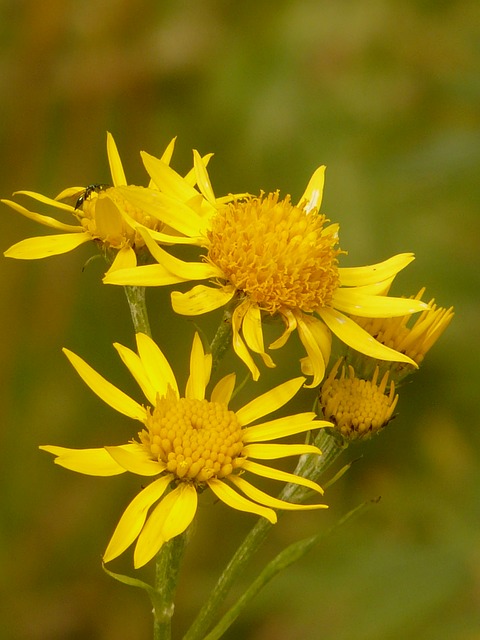
Arnica Montana is mainly grown in herb gardens and is traditionally used in making medicines for treating numerous illnesses. People have traditionally used it on unbroken skin for aches, bruises and sprains. It should not be swallowed, because arnica can be poisonous. It is used in manufacturing oils, perfumes, creams, and tonic. Hair oil made from Arnica is traditionally used for dandruff and other scalp problems. It has traditionally been applied to bruises and swelling. The root consists of Thymol which is used as a preservative and fungicide. It is also used as a home remedy for many small problems and a useful ingredient in homeopathic treatment.
Arnica Overview Information
The flower and root of Arnica possess medicinal value.
Arnica Montana is used since ancient times for treating numerous diseases, but if taken in high quantity can lead to many problems.
Arnica can be poisonous and leads to death if taken in more quantity.
It can also cause irritation in skin, stomach, mouth and throat.
It consists of two chemicals named helenalin and dihyrdohelenalin which are thought to give the plant its medicinal effects
How does it work?
The active ingredients in Arnica Montana are traditionally used for relief of bruises and sore muscles. The proper scientific reason behind the working mechanism of Arnica is still unknown. But it is believed that the chemicals called as dihyrdohelenalin and helenalin provides the medicinal power to the plant..
Some special points about Arnica
GENERIC NAME: Arnica Montana
BRAND NAME: Arnicare, ArnifloraArnica Montana is traditionally used as a homeopathic pain relief ingredient. Its method of treating the illnesses is still unknown. Arnica Montana is traditionally used for bruises and sore muscles.
Arnica FAQs
What does arnica look like?
Arnica montana is a perennial herb with one bright yellow, daisy-like flower head about 5 cm wide on each stem. The stems are 20 to 60 cm tall, and the hairy green leaves form a rosette near the ground.
Where does arnica grow?
Arnica is native to Europe, from southern Iberia to southern Scandinavia, and the Carpathian mountains. It grows in alpine meadows, pastures and light forests, on poor, acidic soil.
When does arnica flower?
Arnica usually flowers in July and August.
Is arnica poisonous?
It can be. The article says arnica can irritate the skin, stomach, mouth and throat, and that taking a lot can be deadly. It should not be eaten, so ask a doctor or pharmacist before using it.
What is arnica used for?
Arnica has been used for hundreds of years in traditional medicine, for things like bruises, sprains and sore muscles. Today it is a popular homeopathic ingredient.

Randi Jones is the owner and founder of the Nature Gift Store, an online retailer specializing in nature-themed gifts, educational science projects, live animal nature kits and real butterfly artwork. A biology graduate who fell in love with insects, she founded the company in 2001 to make active learning about nature fun, accessible and engaging for children and adults. Her store offers real butterfly frames, home and garden decor and educational live animal kits, including ant farms, worm farms, tadpoles, ladybugs and hermit crabs, and she runs a bug museum in Washington featuring live animals like Eddie the Iguana alongside other reptiles and insects.