Cactus Flower

A cactus flower is the bloom of a cactus, a plant that mostly lives in deserts and other dry places. They come in all shapes and sizes; some are round and short and others, tall and thin. Many flowers of this plant are big and beautiful and some bloom at night. These flowers are usually bisexual. The flowers of this plant are large and showy in many species; they can be colored pink, yellow, red, orange and white. Cactus flowers receive little attention. Its flowers have dozens of petals and stamens. Cacti have an inferior ovary which is surrounded by material obtained from the stem. The flowers are pollinated by bats, birds, bees, small doves and moths and also by humming birds. These flowers are delicate and usually bloom in the spring for a short period of time. As it is a flowering plant, every kind of cactus plant is capable of blooming on maturity. Rather than in a group, flowers of the cactus plants occur singly. The flowers are used as a diuretic and in the treatment of Arthritis, Edema and Whooping Cough. It is also used in preventing infection of wounds.
How Do You Get a Cactus to Flower?
To get a cactus to flower, give it bright light, a cool, dry winter rest of about 7 to 13°C (45 to 55°F) with very little water, then resume watering and feed with a low-nitrogen fertiliser in spring. Only mature plants bloom, and many species flower best when slightly pot-bound.
Habitat
Cactus plant is native to South and North America. It can be found in many habitats. It is found in temperate, tropical and subtropical regions, and one species also grows wild in Africa and Sri Lanka. It ranges from deserts to tropical rainforests to high in the Andes Mountains.
Planting
Planting of cactus plant should be done in medium pots, which contain equal part of bird gravel, leaf mold and soil. At the time of transplanting, it requires regular watering. But excess water is not ideal for it. From the month of March to November is when the plant actively blooms. At this time it requires regular watering.
Cactus Flower Care
A cactus flower is a low maintenance plant, but for blooming it requires care. Some cactus plants do not bloom until they are 30 years old because they do not get proper light, fertilizers and water. A flowering cactus plant requires occasional pruning and full sunlight.
Temperature and Humidity
The Flowering cactus plant requires bright and indirect light. Too much light is not ideal for the plant because it fades the bloom. It requires a fairly warm temperature. During the daytime, a temperature of about 70°F (21°C) is ideal for the plant. At night it prefers about 55 to 60°F (13 to 16°C).
Uses
Flowers of cactus plants are very beautiful and they are sometimes used as a gift. It also has anti inflammatory properties. In traditional medicine, these flowers are used as anti diabetic and anti inflammatory agents because; flower extract is known to reduce the chances of diabetes and inflammation in medical conditions. Extract of Methanolic cactus flower reveal an anti “Ulcerogenic” (causing ulcers) and antioxidant properties. An Alcohol extract of the flowers has pain relieving properties. Its antioxidant property makes it beneficial for beauty. Because, these antioxidants protect the skin from damage by free radicals, its extracts also have been recycled as a component in the products of skin care. They are used in maintaining the moisture of the skin. The flowers of the cactus plant are used as natural food colorants. Essential oil is also obtained from the flowers and finds use in making perfumes.
Popular Flowering Cacti
All cacti can flower once mature, but some bloom much more easily and showily than others. These are some of the best for homes and gardens.
| Cactus | Flower colours | When it blooms |
|---|---|---|
| Christmas and Thanksgiving cactus (Schlumbergera) | Pink, red, white, orange, purple | Late autumn to winter |
| Easter cactus | Pink, red, white | Spring |
| Pincushion cactus (Mammillaria) | Rings of small pink, white or red flowers | Spring |
| Rebutia and Sulcorebutia (crown cactus) | Red, orange, yellow, pink | Spring, often on young plants |
| Echinopsis (Easter lily cactus) | White, pink; large trumpets | Summer, often for one day |
| Prickly pear (Opuntia) | Yellow, orange, red | Late spring to summer |
| Orchid cactus (Epiphyllum) | Large red, pink, white, yellow | Spring to summer |
| Queen of the night (Selenicereus) | Huge white, scented | Summer nights only |
| Saguaro | White | Late spring |
Small desert cacti such as Rebutia and Mammillaria can flower when only a few years old, while large columnar cacti such as the saguaro may take decades. Forest cacti like the Christmas cactus need different care from desert cacti, with more water and less direct sun.
When Do Cacti Bloom?
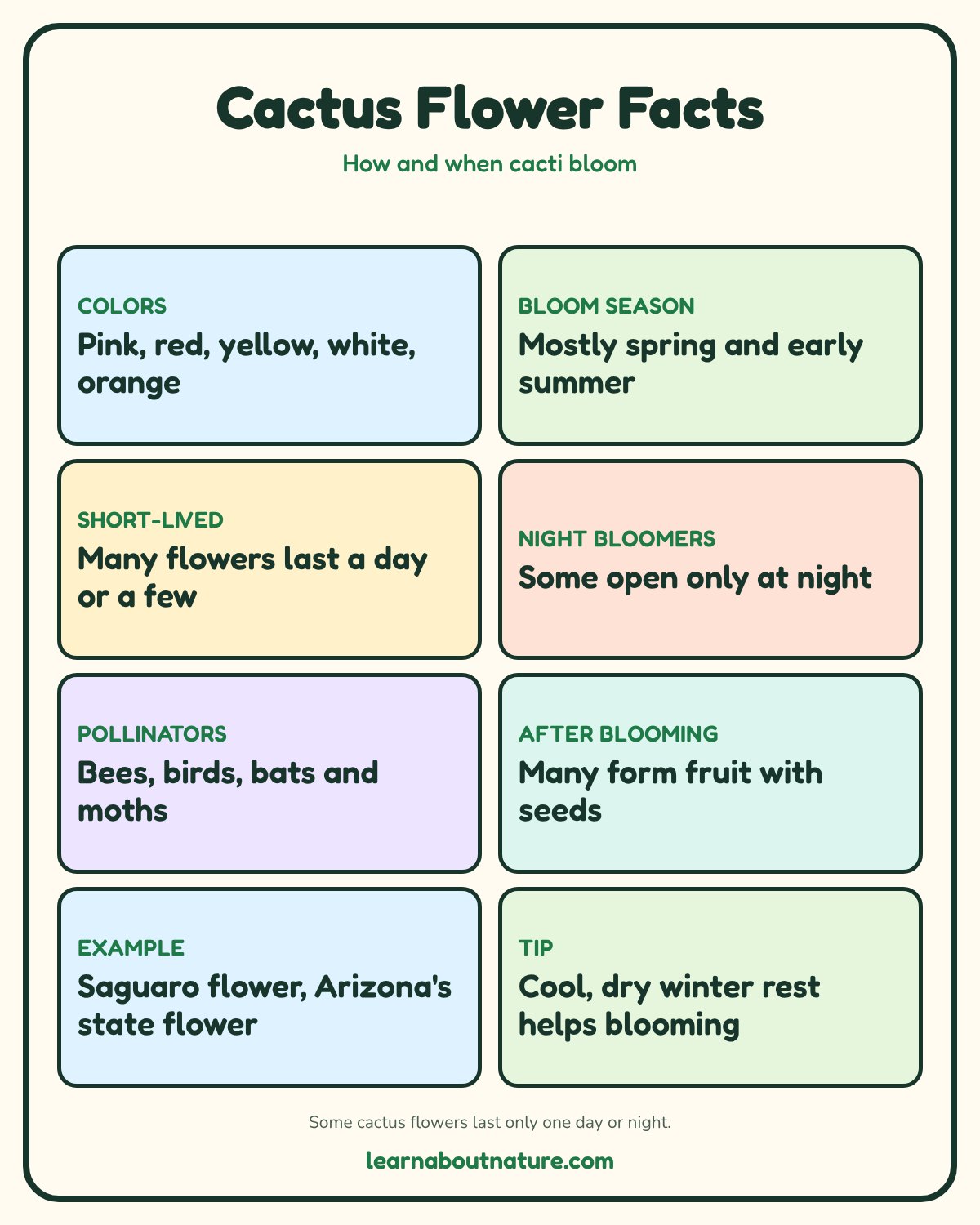
Most desert cacti flower in spring and early summer, after a cool, dry winter rest. In the wild, the arrival of warmer weather and spring rains tells the plant it is time to bloom. Forest cacti such as the Christmas cactus flower in late autumn and winter, triggered by longer nights and cooler temperatures.
Cactus flowers are often short-lived. Many open for just one to three days, and some last only a single night. However, a healthy plant may produce many buds that open one after another, so the flowering season can last several weeks.
Night-blooming cacti, such as queen of the night and many Echinopsis species, open in the evening. Their large white flowers and strong scent attract moths and bats, which are active after dark. Day-flowering cacti tend to have brighter colours that attract bees and hummingbirds.
How old must a cactus be to flower? It depends on the species. Small globe-shaped cacti may flower at two to four years old. Larger species often need ten years or more, and a saguaro usually does not flower until it is several decades old.
Why Won’t My Cactus Flower?
If your cactus is healthy but never blooms, one of these reasons is usually to blame:
- No winter rest. Most desert cacti need a cool, dry period in winter to form buds. A plant kept warm and watered all year often grows but does not flower.
- Not enough light. Desert cacti need several hours of bright light, ideally with some direct sun. A dim room is one of the commonest reasons for no flowers.
- Too young. The plant may simply not be old or big enough yet.
- Too much nitrogen. Rich fertilisers encourage green growth instead of flowers. Use a cactus or tomato-type feed that is higher in potassium.
- Overpotting. Many cacti flower better when their roots are slightly crowded.
- Moving the plant. Christmas cacti in particular may drop their buds if moved or turned once buds have formed.
- Light at night. Christmas cacti need long, dark nights in autumn. Keep them away from lamps in the evening for about six weeks.
Fixing these conditions usually brings flowers within a season or two.
Cactus Flowers and Fruit
After a cactus flower is pollinated, it develops into a fruit containing seeds. Many cactus fruits are colourful and fleshy, which attracts birds and other animals that eat them and spread the seeds in their droppings.
Some cactus fruits are eaten by people:
- Prickly pear fruit (tuna) from Opuntia cacti is sweet and juicy. It is eaten fresh or made into juice, jam and sweets, especially in Mexico and the Mediterranean.
- Dragon fruit (pitaya) is the fruit of climbing cacti in the Selenicereus group, grown in many tropical countries.
- Saguaro fruit has long been harvested by the Tohono O’odham people of Arizona to make syrup and jam.
Prickly pear fruits are covered in tiny hair-like spines called glochids, which easily stick in the skin. They must be removed carefully, usually by an adult wearing gloves, before peeling.
Cactus flowers are also important in nature. In deserts, they provide nectar and pollen for bees, bats, moths, hummingbirds and doves, and the saguaro flower is the state wildflower of Arizona.

Randi Jones is the owner and founder of the Nature Gift Store, an online retailer specializing in nature-themed gifts, educational science projects, live animal nature kits and real butterfly artwork. A biology graduate who fell in love with insects, she founded the company in 2001 to make active learning about nature fun, accessible and engaging for children and adults. Her store offers real butterfly frames, home and garden decor and educational live animal kits, including ant farms, worm farms, tadpoles, ladybugs and hermit crabs, and she runs a bug museum in Washington featuring live animals like Eddie the Iguana alongside other reptiles and insects. Randi wrote most of the guides on this site. They first appeared on her long-running nature sites, including Monarch-Butterfly.com, Ladybug-Life-Cycle.com, Frog-Life-Cycle.com, Dragonfly-Site.com and Butterfly Pictures, which have now been brought together here at Learn About Nature.