5 Most Dangerous Dog Breeds: What You Need to Know for Safety
Archaeological evidence suggests that dogs were the first animals humans domesticated over 30,000 years ago. Over time, dogs have earned the reputation of being men’s best friends. However, this perception can change rapidly when dogs attack humans.
At this point, if you are curious about what criteria are used to classify certain dog breeds as “dangerous dogs“, it won’t surprise you to learn that the most dangerous dog breeds often include fighting and guard dogs. These breeds were intentionally developed with traits like aggression and resilience in mind.
In this guide, we aim not only to provide information about the most dangerous dog breeds in the world but also to help you understand the factors that contribute to a dog breed being considered dangerous and whether it’s safe to own an aggressive dog.
So, let’s proceed and find out more to address all the questions you may have concerning the most dangerous dog breeds in the world!
What Is the Most Dangerous Dog Breed?
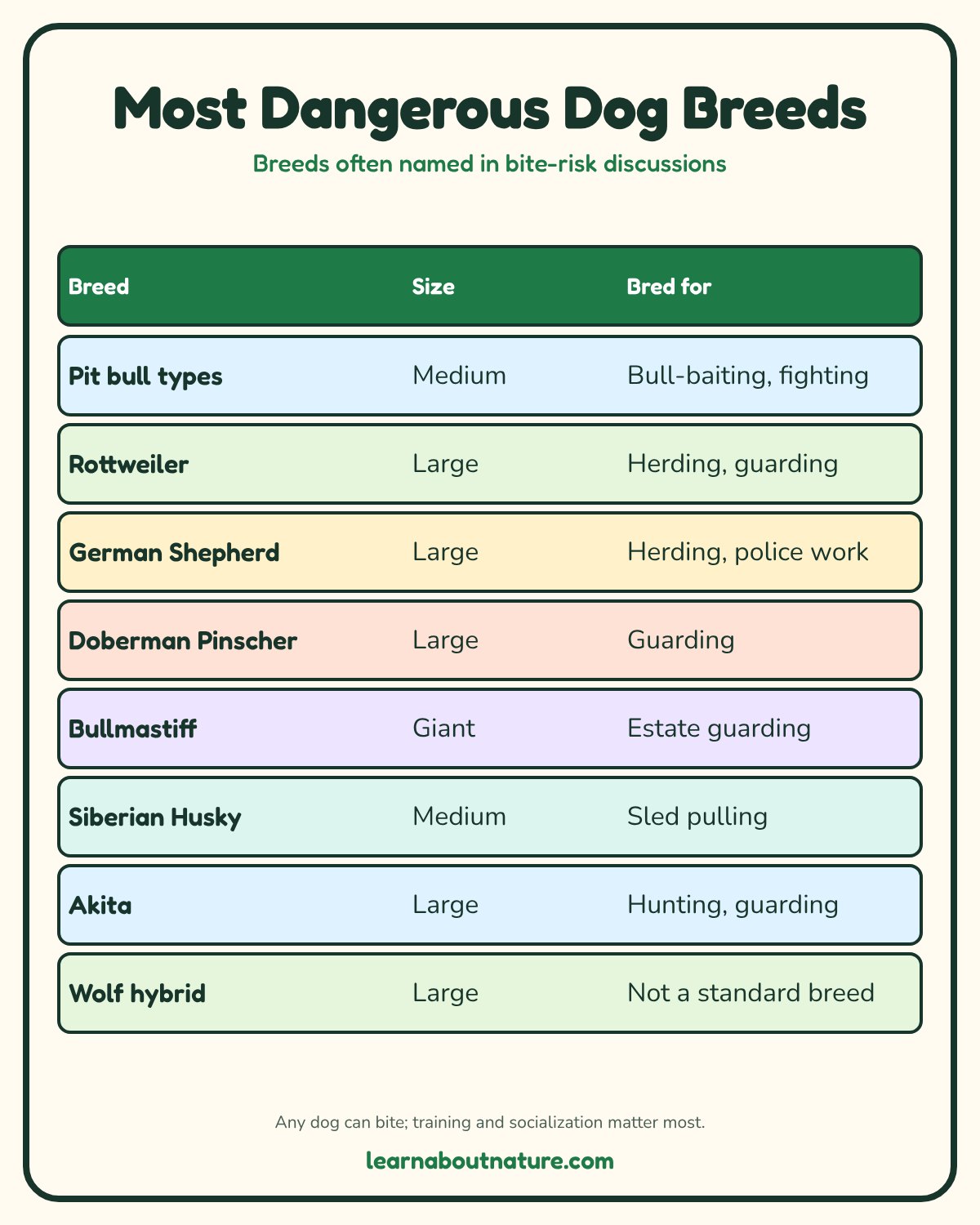
Pit Bull-type dogs are most often named the most dangerous dog breed, because US studies link them to the largest share of fatal and severe attacks, followed by Rottweilers. Experts stress that breed alone does not predict danger: size, poor socialisation, lack of training, chaining and supervision of children all strongly affect bite risk.
5 Most Dangerous Dog Breeds to Watch Out
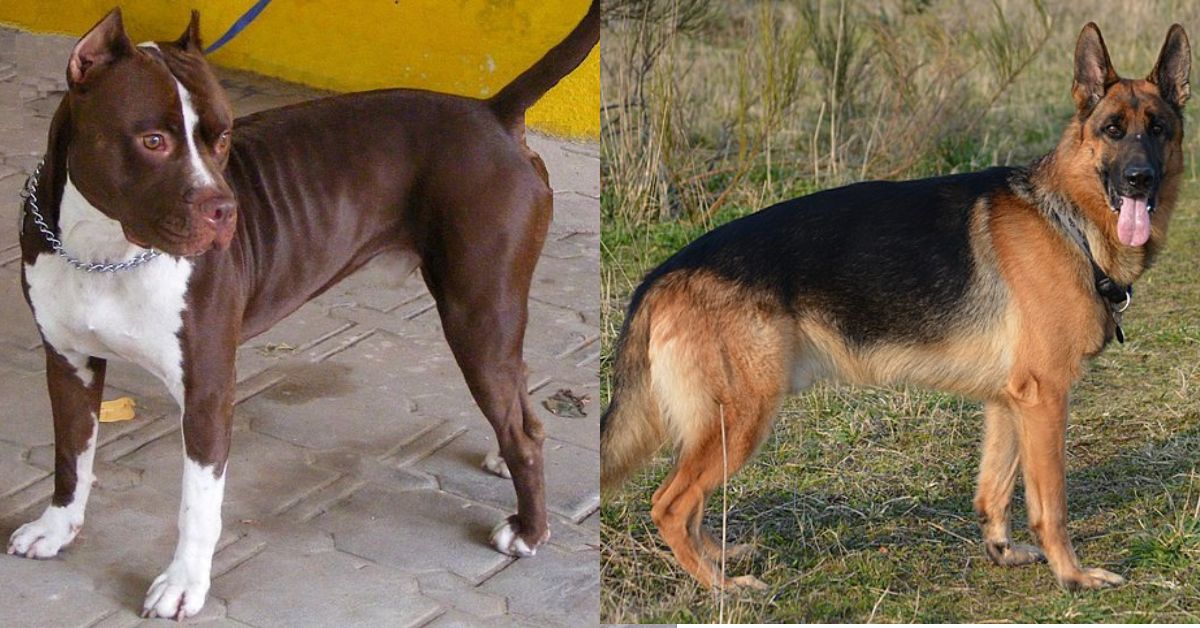
1. Pit Bull

Responsible Pit Bull owners often reject the misconception that their dogs are dangerous, praising them as some of the most affectionate canines. However, Pit Bulls are commonly perceived as the most dangerous dog breeds in the world that were specifically bred for dogfighting and even nowadays emphasize traits like aggression and determination, which are deeply ingrained in their lineage.
Furthermore, Pit Bulls are known for having a particularly formidable bite style, characterized by a strong grip, vigorous shaking, and a reluctance to release their hold. This explains why Pit Bull attacks frequently result in severe injuries or even fatalities.
2. Rottweilers

Before pit bulls gained notoriety as potentially dangerous dogs, Rottweilers were often considered one of the most dangerous dog breeds globally. These dogs can reach heights of up to 27 inches and weigh around 120 pounds. Rottweilers have a reputation for being exceptionally aggressive, and, unfortunately, this reputation is somewhat deserved, as an agitated Rottweiler can be quite intimidating.
However, even considering them as one of the most dangerous dog breeds, it’s important to note that Rottweilers tend to be calm and gentle when they’re with their families. Their more aggressive side typically emerges when they encounter unfamiliar individuals or perceive a threat to their loved ones. This behavior is rooted in their history as guard dogs, and that’s exactly why early socialization is crucial for Rottweilers.
Rottweilers are quick learners and exhibit strong loyalty to their owners. However, due to their size, strength, and the force behind their bites, they can be potentially hazardous if not trained properly. To prevent behavioral problems or aggressive tendencies, it’s essential to maintain firm control over a Rottweiler.
3. Dogo Argentino

The Dogo Argentino, also known as the Argentinian Mastiff, is a dog breed often compared to Pit Bulls and therefore considered one of the most dangerous dog breeds. At this point, you might not be surprised to learn that Dogo Argentinos are physically powerful and possess a formidable bite. Due to its potentially dangerous nature, the Dogo Argentino is one of the prohibited dog breeds in several countries, including Australia, Singapore, Ukraine, and the United Kingdom.
Raising a Dogo Argentino demands a strict approach, consistent training, and experienced handling to control any aggressive tendencies. These dogs possess a strong instinct to chase prey. This is the reason why Dogo Argentino is considered a risky choice for households with other animals, particularly small ones like cats, which could be at risk of harm or even death.
Even though it’s considered one of the most dangerous dog breeds, Argentinian Mastiffs exhibit strong loyalty and protectiveness towards their families, but still, their dominant and territorial behavior can lead to aggression toward strangers or other animals in their vicinity.
Keep in mind that even if you provide the best training, socialization, and experienced care, specific situations or individuals can still trigger aggression in this breed.
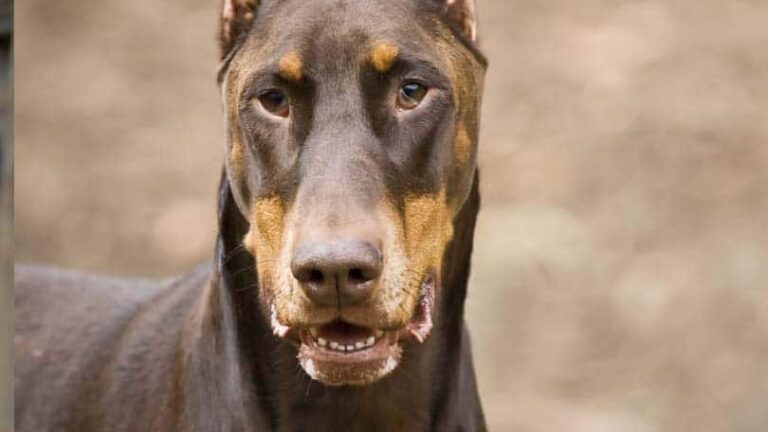
4. Doberman Pinscher

You may have already noticed that movies often feature Doberman Pinschers when they want to portray the most dangerous dog breeds, mainly due to the breed’s strong, intimidating presence. This breed is known to be one of the most aggressive dog breeds globally.
But surprisingly, sometimes they can be remarkably affectionate and gentle towards their family. The reason is probably their origins: they were originally bred to serve as guard dogs.
Nonetheless, the Doberman’s tremendous loyalty can unquestionably make it a potential threat to others. These dogs may not hesitate to attack anything they perceive as a danger to their loved ones. Therefore, Dobermans require appropriate socialization and a handler who is confident and assertive, as they may take the power into their paws if they sense uncertainty in their owner.
5. German Shepherds

The German Shepherd dog breed serves as a good example of a canine that could have a predisposition toward aggression, but through appropriate training and handling, it can transform into a more docile and helpful breed.
Today, German Shepherds are primarily recognized for their roles as service dogs, police dogs, and military working dogs. Their excellence in these tasks is attributed to their notable intelligence and strong work ethic, although they may necessitate additional training and careful introduction if adopted as a family pet.
Although they are considered one of the most dangerous dog breeds, German Shepherds often take on the role of guardians and exhibit a protective nature towards their families. Modern breeding practices have significantly reduced outward aggressiveness in these dogs.
However, the key concern with this breed lies in its physical strength. When not adequately trained or socialized, their bite and physical power can undoubtedly cause harm.
What Makes a Dog Breed Dangerous?
A dog breed may be labeled as having aggressive tendencies and hence be dangerous for a variety of reasons. Due to genetic background or purposeful breeding for particular features, some breeds tend to exhibit more characteristics that are frequently linked to aggression.
So, what makes a dog breed dangerous? The answer to this question is based on several important aspects presented below:
1. Genetics
Genetics plays a significant role, especially in the most dangerous dog breeds that were intentionally bred for tasks like guarding, hunting, or fighting. The size and strength of a dog, including their jaw power, are factors that contribute to their aggressiveness.
For instance, as already mentioned above, breeds like Rottweilers or Pit Bulls have genetic traits that make them more prone to aggressive behaviors.
Nevertheless, genetics is just one factor. You also need to be aware that responsible ownership can mitigate potential dangers, regardless of breed genetics.
2. Territorial behavior
A dog’s territorial behavior can indeed influence its aggression and danger. When a dog becomes overly protective of its territory, it may exhibit aggressive responses to perceived threats, potentially leading to dangerous situations.
To mitigate territorial aggression and ensure a dog’s behavior remains safe and controlled, you should unquestionably think about proper training.
3. Trainability
It’s conventional wisdom that dogs that are stubborn or challenging to control may exhibit more aggressive behaviors. That’s exactly why we put trainability as another aspect to consider while thinking about the reasons why the most dangerous dog breeds expose aggression.
Everyone agrees that while highly trainable dogs tend to respond well to commands and are easier to manage, less trainable dogs may exhibit behavioral issues. This misbehavior could lead to aggression if not properly addressed through training and socialization.
While trainability is just one factor for managing aggression in the most dangerous dog breeds, it plays a significant role in determining a dog’s overall potential for danger.
Is It Safe to Own Aggressive Dog Breeds?
It’s true that consistent and proper training can control aggression. But for certain breeds, seeking guidance from experts who specialize in behaviorally challenged dogs may be necessary.
If you have experience with dogs, you might be able to train some breeds yourself to prevent their aggressiveness. But still, remember that every dog is unique, and you might encounter one from a supposedly aggressive breed that has a gentler temperament.
By combining socialization, exercise, mental stimulation, and training, you can reduce the likelihood of aggressive behavior in your dog and make them comfortable in your home.
But whether it’s safe to own an aggressive breed depends on your comfort with risk and your willingness to invest time and effort into training and caring for your dog.
Final Thoughts
The most dangerous dog breeds listed in this article can be quite challenging to handle, so owners need to be extra cautious and consider that various factors can influence a dog’s likelihood of biting. For instance, male dogs of these breeds tend to be more prone to biting, and dogs that haven’t been neutered or spayed are often more aggressive and territorial.
However, it’s important to remember that every dog is unique, and their upbringing and environment play a significant role in their behavior. When raised in the right conditions and not exposed to stressful situations, even the most dangerous dog breeds in the world have a good chance of leading peaceful lives.
Other Breeds Often Named as Dangerous
Beyond the five breeds above, several other large, powerful breeds appear on banned or restricted lists in different countries. Most were bred for guarding, fighting or hunting big game.
| Breed | Original purpose | Why it is restricted |
|---|---|---|
| Japanese Tosa | Dog fighting | Very large and strong; banned in the UK and several other countries |
| Fila Brasileiro | Guarding and tracking | Wary of strangers; banned in the UK |
| XL Bully | Companion (recent breed) | Linked to a rise in serious UK attacks; restricted in England and Wales since 2024 |
| Presa Canario | Guarding livestock | Powerful guarding dog; restricted in some countries |
| Wolfdog hybrids | Crossbreeds with wolves | Unpredictable behaviour; regulated in many places |
Breed lists differ between countries, states and even cities, so anyone considering one of these dogs should check local laws first.
Not every banned breed is a risk in every home, and many experts argue that breed bans alone do not reduce bites as much as owner education and enforcement against irresponsible owners. Some places have replaced breed lists with laws that focus on the behaviour of individual dogs, so that any dog that attacks can be controlled, whatever its breed. Owners of restricted breeds in some countries must keep their dogs muzzled and on a lead in public, carry insurance and register them.
Warning Signs a Dog May Bite
Most dogs give clear signals before they bite. Learning them is one of the best ways to stay safe, especially for children.
- Body going stiff and still, or freezing in place
- Staring hard, or showing the whites of the eyes (“whale eye”)
- Ears pinned back, tail tucked or held high and stiff
- Lip licking, yawning or turning the head away when not tired
- Growling, snarling or lifting the lip to show teeth
- Raised hair along the back
If you see these signs, stop, stay calm and slowly move away without staring or turning to run. Never punish a dog for growling: it is a warning, and dogs punished for warning may bite without one.
Children often miss these signals or misread them. A wagging tail, for example, does not always mean a dog is friendly; a stiff, high wag can be a sign of tension. Teaching children to read dog body language, and to give a dog space when it walks away, prevents many bites. A dog that hides, moves away or tries to leave a room is asking to be left alone, and it should be allowed to go.
How to Stay Safe Around Dogs
Most bites come from a dog the victim knows, often the family dog, and young children are bitten most often, usually on the face. A few simple rules prevent many of them.
- Always ask the owner before touching a dog, and let it sniff you first.
- Never leave a baby or young child alone with any dog, even a gentle one.
- Leave dogs alone when they are eating, sleeping, chewing a toy or caring for puppies.
- Do not hug, kiss or put your face close to a dog’s face.
- If a strange dog approaches, stand still like a tree with arms folded and avoid eye contact.
- If knocked down, curl into a ball and protect your face and neck with your arms.
For owners, the biggest steps are early socialisation, reward-based training, secure fencing, using a lead in public and seeking help from a vet or qualified behaviourist at the first sign of aggression.
Teaching children to be calm and quiet around dogs, and never to tease them or pull ears and tails, is one of the best ways to protect both children and dogs.
Choosing a Safe Family Dog
Every dog can bite, but some choices make problems much less likely. When choosing a dog for a family, look at the individual animal as well as the breed.
- Meet the puppy’s parents if you can, and watch how they react to strangers.
- Choose a reputable breeder or rescue centre that tests temperament and knows the dog’s history.
- Match the dog’s size and energy to your home, experience and the time you have for exercise.
- Start puppy classes and socialisation between about 8 and 16 weeks of age, the key learning period.
- Use reward-based training rather than punishment, which can increase fear and aggression.
- Plan for vet checks, as pain is a common hidden cause of sudden aggression.
Breeds often recommended for families with children include Labrador Retrievers, Golden Retrievers, Beagles and Cavalier King Charles Spaniels, but even these need training and supervision. A well-raised dog of any breed is usually safer than a poorly raised dog of a so-called gentle breed.
Dangerous Dog Breeds FAQs
What dog breed has the most bite attacks?
In many studies of serious and fatal dog attacks in the United States, Pit Bull-type dogs and Rottweilers account for a large share of incidents. However, breed identification is often unreliable, and factors such as poor socialization, lack of training, and how dogs are kept strongly influence bite risk.
Which dog breeds are banned in the UK?
Under the UK’s Dangerous Dogs Act, banned types include the Pit Bull Terrier, Japanese Tosa, Dogo Argentino, Fila Brasileiro, and, since 2024, the XL Bully. Owning these dogs is illegal unless they are registered and exempted under strict conditions such as neutering, microchipping, and muzzling in public.
Are Rottweilers dangerous?
Rottweilers are powerful guard dogs and can be dangerous if poorly trained or socialized. With responsible ownership, early socialization, and consistent training, most Rottweilers are calm, loyal, and affectionate with their families. Their size and strength mean owners must be able to control them confidently.
Can an aggressive dog be trained?
Many aggressive dogs can improve with professional help. Work with a veterinarian to rule out pain or illness, and then with a qualified behaviorist using reward-based methods. Training focuses on managing triggers, building positive associations, and teaching alternative behaviors. Some dogs need lifelong management rather than a complete cure.
Does neutering reduce aggression in dogs?
Neutering can reduce some hormone-driven behaviors, such as roaming, marking, and aggression toward other male dogs, especially when done before those habits become established. It does not cure all aggression, particularly fear-based aggression, so training and socialization remain essential.

Nato is a content writer and researcher with a background in psychology who’s eager to explore the wonders of nature. As a travel enthusiast and animal lover, she hopes to inspire others to discover and cherish the beauty and importance of the natural world.