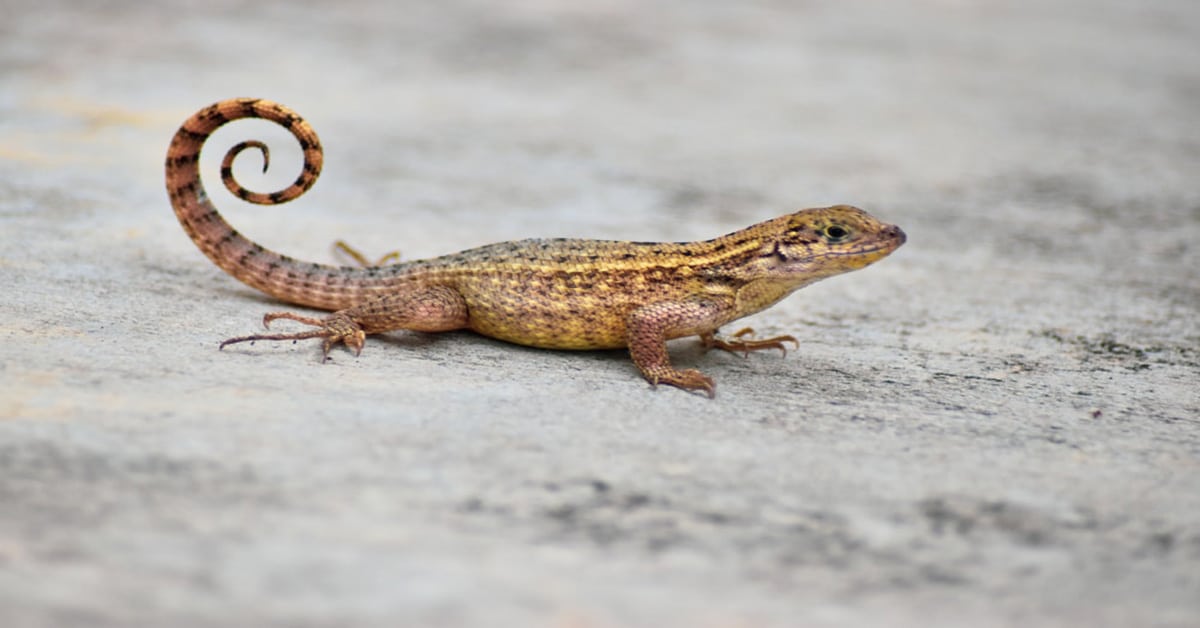
Curly Tail Lizard
Scientific Classification
| Kingdom: | Animalia |
| Phylum: | Chordata |
| Subphylum: | Vertebrata |
| Class: | Reptilia |
| Order: | Squamata |
| Suborder: | Iguania |
| Family: | Leiocephalidae |
| Genus: | Leiocephalus |
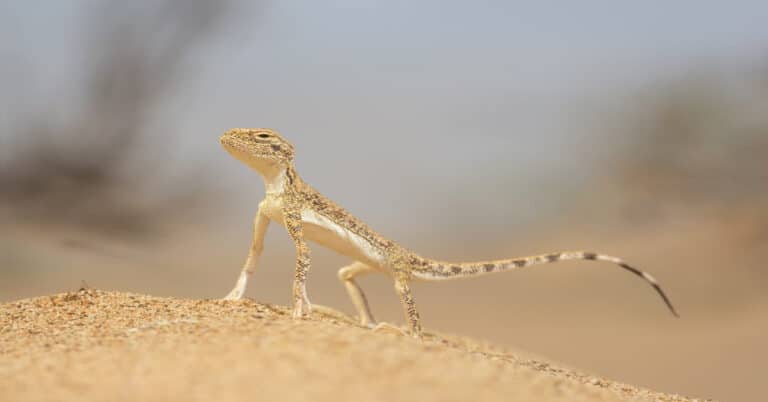
The curly-tailed lizard belongs to the Lizard family Leiocephalidae, they spread over a wide area in most of the regions of the Caribbean, but not much extensive study has covered these animals… Generally, everyone knows about them as curtly tail lizards, but scientifically, they belong to the iguana family.
Anatomy
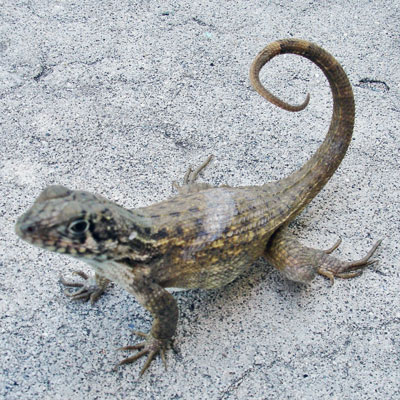
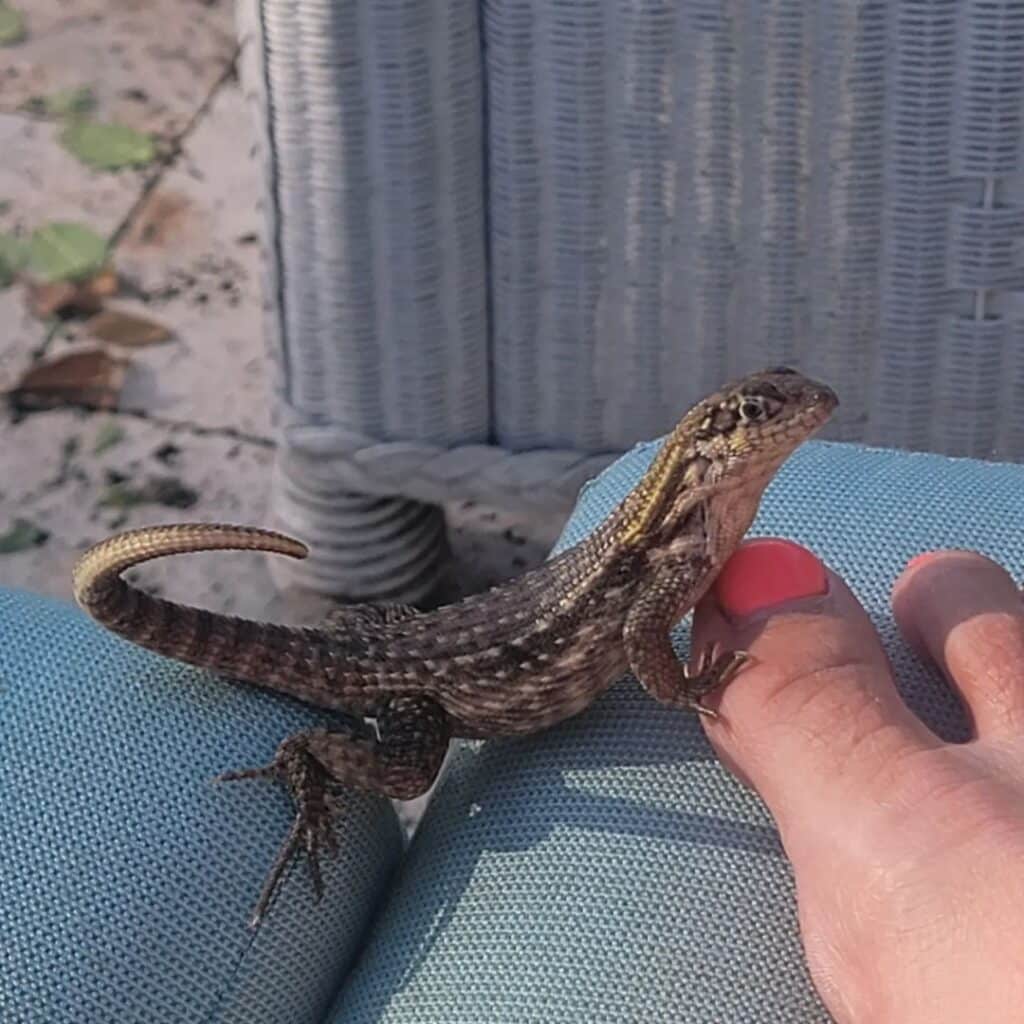
Curly tail lizards at times grow 28 cm (11 inches) long. They are strong and look healthy. You can recognize them easily by their curled-up tail which they hold high in the air. The curly tailed lizard is average sized and attains a standard total length of 18 cm (7 inches). Their species determine the marks that have; they show different variations on them. In the Bahamas, their color ranges from grayish to brown. In certain species the females are quite smaller in size than the males, and few of them exhibit a more prominent tinge than their male counterparts, especially when egg bearing, when they attain a gravid state(carrying young ones or eggs). The tail of this lizard curls over its dorsum just like that of scorpions. This striking feature lends the lizard its name.
Behavior
These predate by sitting and waiting; feeding on grasshoppers, crickets, beetles and ants. These launched animals create anxiety and fight with the natives such as the Green Anole
Habitat
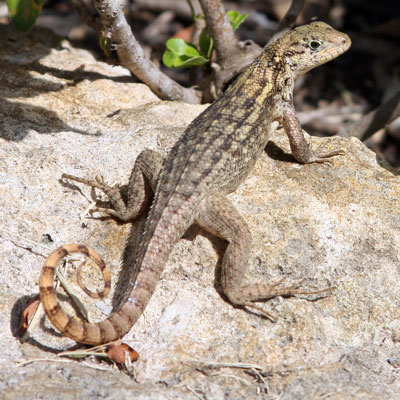
Their inclination to abruptly jerk their tails gives them their names. You can see them from Trinidad to Cuba. The curly tailed lizard species from the Bahamas has gained popularity in the pet trade. Someone introduced them into Florida in the 1940’s to fight sugar cane pests.
You can extensively find these xerophilic (arid loving) lizards in the Bahamas, right from the rocky and coastal areas to the pine lands and shrubs, not to speak of the human populated areas. Despite this, they choose coastal areas. These lizards fancy dwelling behind dead logs and pile of rocks. They dwell on the ground.
As a pet
Breeding
Once the shorter winter is over, curly tails are desperate to get into spring. They get pleasure when misted in the spring. Towards the end of summer, they lay eggs. Make an area that is convenient for them to dig. Be on the watch, males do argue. The heads of the males are large and they are bigger.
Housing
House a single lizard in a 20 gallon (26 to 30 “long) or even bigger terrarium. A larger terrarium is necessary for housing two females. Providing a temperature gradient (warm side/cool side) regulates the curly tail lizard’s body temperature. It is necessary to vary the temperature between night time hours and daytime hours.
In order to monitor the humidity level, facilitate the habitat with a hydrometer and two thermometers on either side.
- At day, keep the basking spot the warmest part. Place a high voltage heat bulb right above the heating spot for providing heat. Turn the light off at night.
- Maintain the temperature in the night by using a night heat lamp or a heat emitter.
Food
Even though a major part of their diet consists of insects, the curly tails are called omnivores because they vociferously eat flowers like the Railroad vine or the Beach Morning Glory (Ipomoea Pes-Caprae), small fruits, small crustaceans, seeds, Anole lizards, roaches, spiders, mosquitoes and ants. When in captivity, certain males show cannibalistic behavior.
Handling
The curly tail lizards favor being displayed, They do not like frequent handling. However, you will occasionally have to handle them while cage leaning and examination. Curly tails are smart and nimble reptiles, but they develop stress if you handle them by force.
Having discovered a fondness for insects while pursuing her degree in Biology, Randi Jones was quite bugged to know that people usually dismissed these little creatures as “creepy-crawlies”.