Toadhead Agamas
Scientific Classification
| Kingdom: | Animalia |
| Phylum: | Chordata |
| Subphylum: | Vertebrata |
| Class: | Reptilia |
| Order: | Squamata |
| Suborder: | Sauria |
| Family: | Agamidae |
| Subfamily: | Agaminae |
| Genus: | Phrynocephalus |
The genus Phrynocephalus consists of 44 species of gamid lizards, which are of medium size. These lizards are commonly known as toad head agamas (Agama Phrynocephalus Arabicus) or even as Toad-Headed Agamas. Toad-headed Agamas are terrestrial creatures. They live in dry, hot areas that are either rocky or sandy. These are aggressive creatures, who will fight off other lizards, including members of the same species and even snakes. The hottest part of the day, they spend underground in burrows. When they dig, they use both limbs on one side. When startled or agitated, they curl up their tails over the body and expose the bold striped patterns on the ventral surface. Most of the species in the genus are egg layers (Ovipoparous) that lay several clutches of eggs each year, having one to six eggs in a clutch. Species from the extreme northern areas and those living in higher elevations are ovoviviparous or creatures that retain the un-calcified eggs inside their body till they hatch. These lizards have another name, “the chameleons of the old world” since, like chameleons, they possess the ability to change their body color.
Anatomy
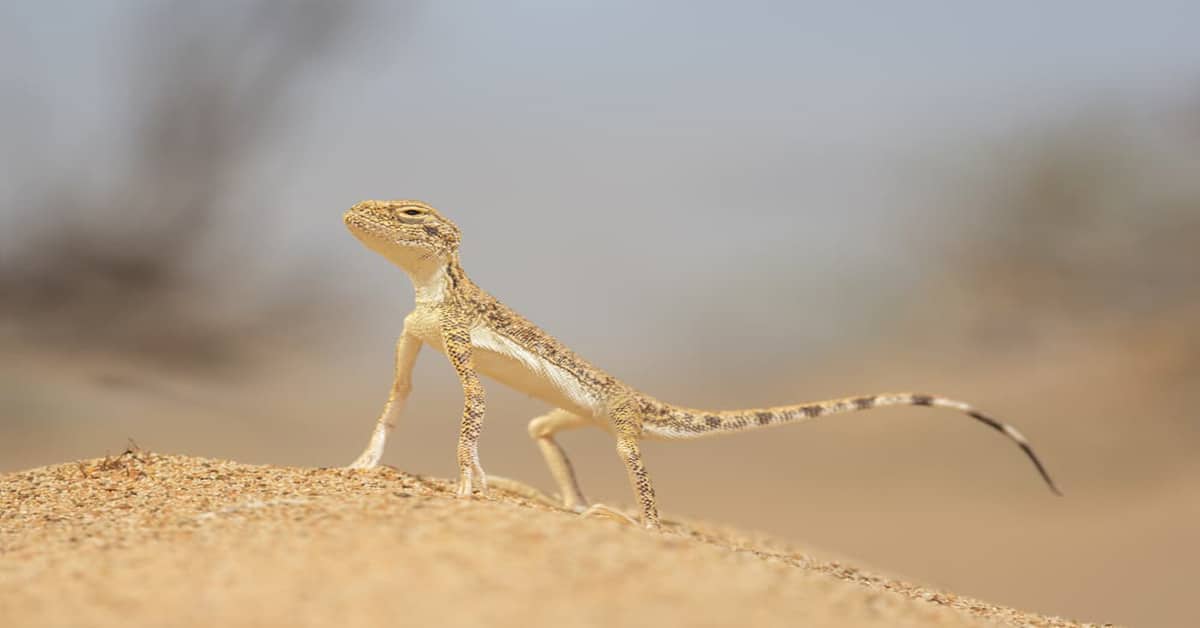
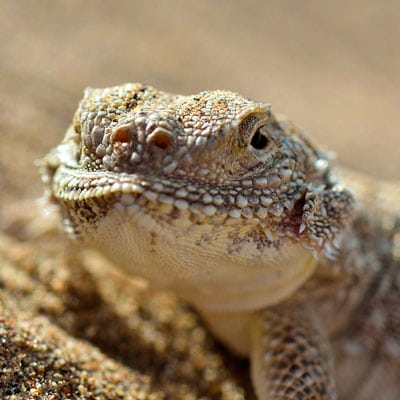
Arabian toad-headed lizards are fairly small lizards that are highly adapted to life on loose sand. They have no external ear openings. Fringes of scales around the eyes help to keep out the sand grains. It has a short and broad head, deep forehead and a snub nose. These lizards show a high variation in color, with different patterns in white, black and red to match the background color. As a rule, the lizards that you see on coastal sands appear seem to have less patterns in comparison with those on red inland sands. All the variables have in common a black tip on the tail’s underside. These tails, when raised are used in visual signals.
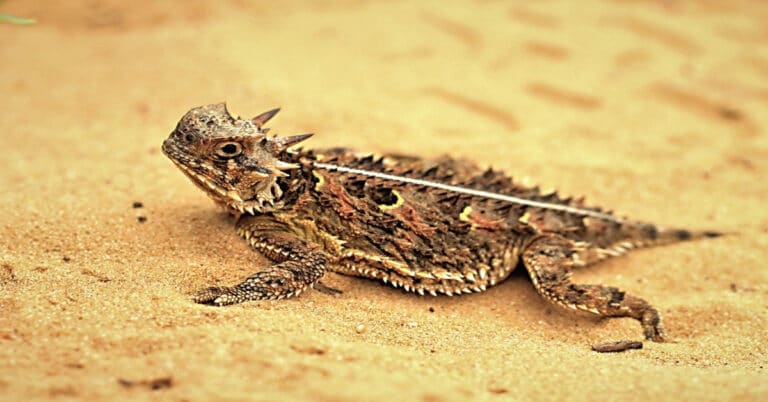
A rough skin and scales overlap on their wide, flattened strong body. They have a long flat tail, rounded at the base. The head is rather large and rounded across the snout. This lizard appears more similar to the U.S. horned toad than a lizard. The external hearing structure (tympanum) is covered by scales. They have partially fringed toes that help the creature to walk on the sand. The colors are browns and grays with lighter and darker markings.
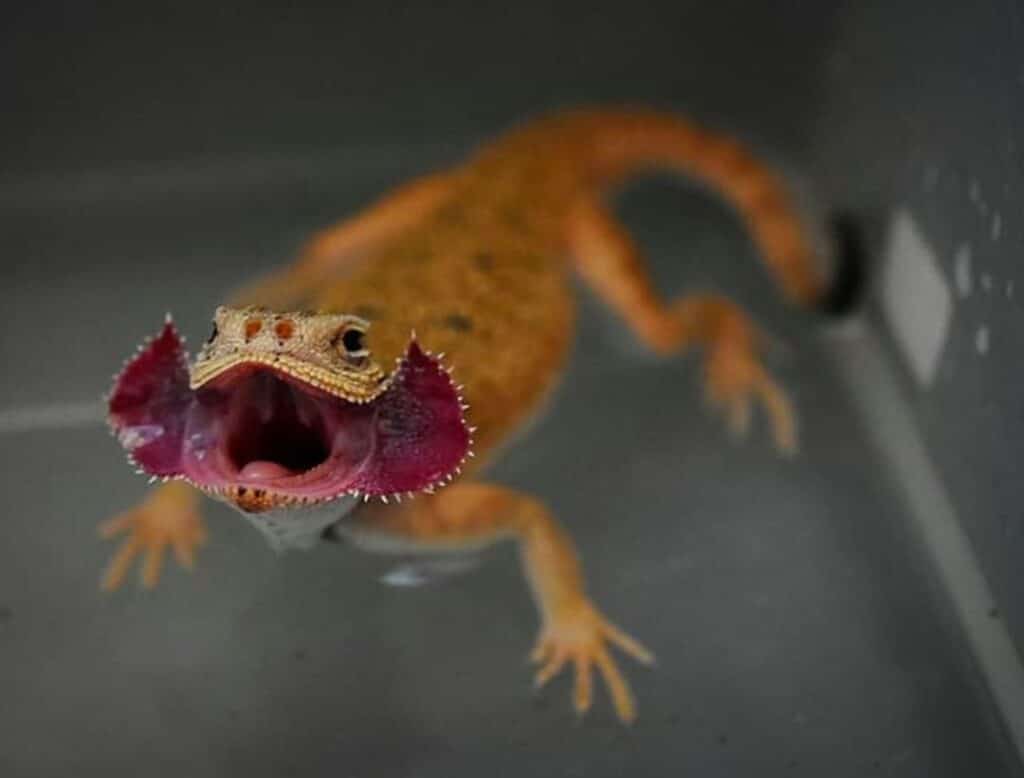
Behavior
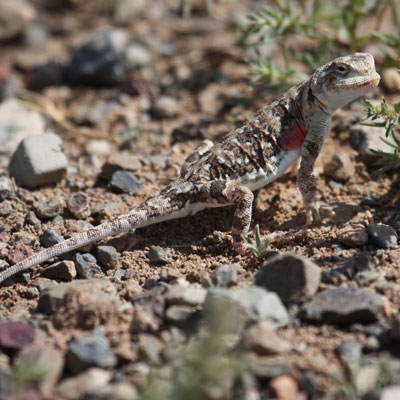
Like other members of the genus, these Toadhead Agama species have adopted what can be called a “sit and wait” hunting strategy. The lizards, very actively use visual orientation when watching for food.
A few particulars stand out in the behavior of the lizards. They include curling the tail as a defensive posture and burrowing the substrate in order to maintain warmth during cold nights, especially at high altitudes. They have the capillary drinking system like the horned toads and the thorny devil.
Habitat
We can find these lizards through and across the middle east to Manchuria. There are around 40 species of the lizard. You can find one species in the Himalayas at elevations above 5000’. Other species inhabit the semi-arid open environments of Asia and eastern Europe.
As a Pet
Housing
Provide housing similar to the ones provided for bearded dragons. The terrarium should be large, spacious and dry with a deep sand layer and some rocky slabs or tree barks for the lizards to perch on.
Temperatures
The daytime temperature gradient should range between 86 to 95 degees F and in the basking areas around 104 degrees F. You can retain the night time gradient around 65 to 70 degrees. You must winter the northern lizard species at 50-60 degrees F for 2-4 months.
Lighting and Heating
You must provide undertank heating on the warm side. UVB emitting Fluorescents are necessary.
Food
These lizards are basically insectivores. They feed on invertebrates, which include crickets, beetles, spiders and worms. The Larger ones of the species may eat day old pinky mice. You should spray the enclosures once in a while and provide a shallow container for the lizards to soak. Hey usually do not drink from still water.
Having discovered a fondness for insects while pursuing her degree in Biology, Randi Jones was quite bugged to know that people usually dismissed these little creatures as “creepy-crawlies”.