Yellow Spotted Lizard
Scientific Classification
| Kingdom: | Animalia |
| Phylum: | Chordata |
| Class: | Reptilia |
| Order: | Squamata |
| Family: | Xantusiidae |
| Genus: | Lepidophyma |
| Species: | L. flavimaculatum |
| Binomial name: | Lepidophyma flavimaculatum |
The yellow-spotted lizard (Lepidophyma flavimaculatum), lives in a habitat that extends from Texas to central Mexico and is a nocturnal lizard. They are divided into two subspecies, Lepidophyma flavimaculatum Obscurum, and Lepidophyma flavimaculatum flavimaculatum.
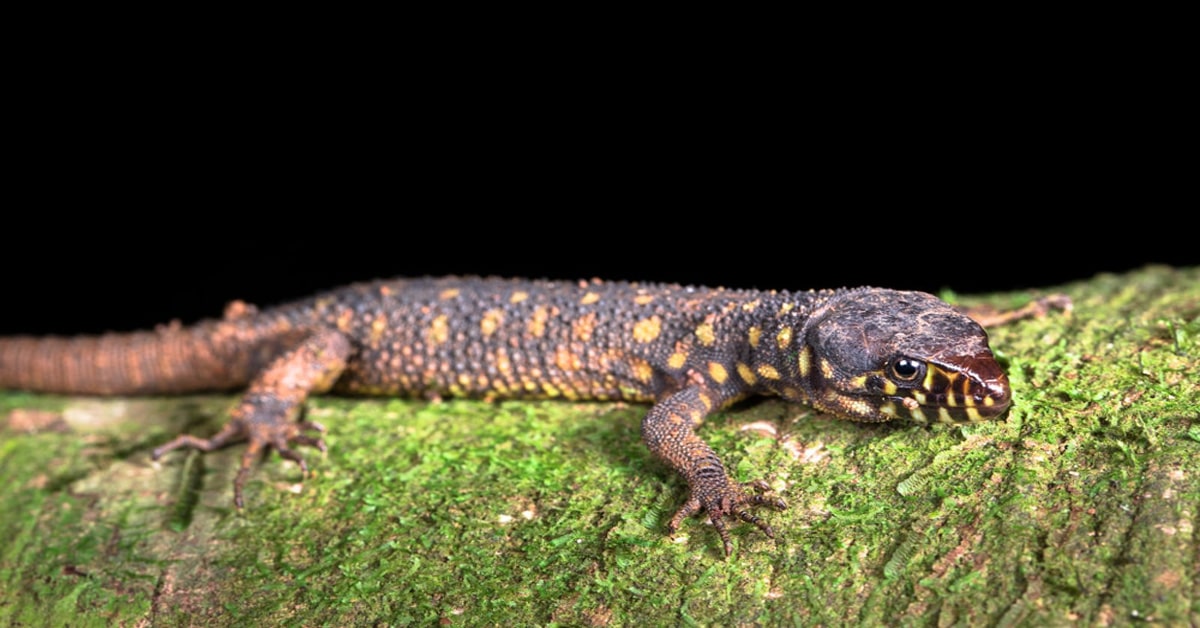
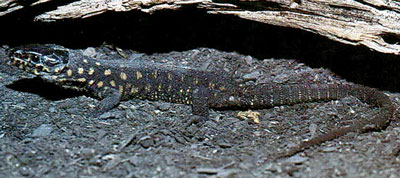
Yellow-spotted lizards are one among the night lizards. They grow to 12.69cm. (5.00 in). Their color is approximately black and they have an array of yellow spots distributed throughout their sides, extending from the tip of their snouts to their rear flanks. On their tail, the yellow spots are alternatively thin and faint bands. The color of their abdomen is also yellow. The head of the yellow-spotted lizard appears like that of a snake, and it is smooth, whereas they have a tough skin covering their body. The color of their tongue is milky white and their teeth, black.
The yellow spotted lizards are small crooks. The food of these poisonous lizards residing in the Camp Green Lake is blood they are tremendously dangerous. The length of these yellow spotted lizard ranges from 6 to ten inches and eleven spots cover its back. Their yellow-spotted body is slender and long. Their teeth are black and razor sharp, tongue milky white and eyes red in color. According to the book,”holes,”these yellow spotted lizards store enough deadly venom, to kill you. Thus, if a yellow- spotted lizard bites you, your death will be slow and agonizingly painful”.
However, they say that, contrary to this, these lizards are not poisonous.
Description
The length of a yellow spotted lizard ranges from 2 ½ “ to 5”. As their name implies, their back is deep brown or black, spotted with yellow dots. They have yellow bellies generally with brown blotches.
Habitat
The yellow spotted lizard inhabits the tropical and subtropical rain forests of Central America. We find them in the Pacific coastal areas and along the Atlantics at heights of 2,265 feet. The humidity ranges from 70 to 85 % and the temperature from 71 to 86°F.
Microhabitat
The yellow-spotted night lizards are microhabitat specialists. This implies that they stay near or in the same spot all their lives. Most of the time, you see them amidst rotten logs, on the floor of the forest, or beneath leaf litter. Still, few of them dwell in crevices and under rocks. Their flat bodies and heads enable them to squeeze into narrow cracks.
Food
The spotted lizard’s diet chiefly consists of ants, flies, spiders, centipedes, and scorpions. They find prey remaining in their microhabitats; Sometimes, the yellow spotted lizards come into sight to hunt, in necessity.
Yet, apart from depending on human blood for survival, these reptiles’ diet includes certain cactus thorns, shells of sunflower seeds, small animals and tarantulas. The campers at the Camp Green Lake dig several holes and the Yellow-spotted lizards use these to stay there to protect themselves from the powerful burning sun and from bird predatory. Over twenty lizards squeeze themselves into a single hole. Even if they are very dangerous, there is an easy way to ward off them off using onion. Frequent consumption of onion or plants connected to onions very efficiently ward off the lizards, this is because they dislike onions.
Reproduction
These lizards have an isolated population because they stay in their microhabitats. Luckily they need not go in search of their mates. Most of the yellow-spotted night lizards are females who reproduce through parthenogenesis The eggs develop without fertilization.. There are a few where males are present, in these cases, they reproduce sexually. In any case, they deliver the juvenile live, and do not hatch them from eggs.
As a Pet
Very few keepers rear Yellow spotted lizards as pets. There is not much information about their care in captivity, and it is not easy to maintain them. Almost all available specimens available in the pet trade are those caught in the wild and they are most likely stressed and parasite ridden. As such, these yellow spotted lizards are not the right pets for beginners or midway keepers. They are introverted and likely to bite when touched. They are so small that their bites will not have a grave effect, even though when their sharp teeth pierce you, you will shed few drops of blood.
Having discovered a fondness for insects while pursuing her degree in Biology, Randi Jones was quite bugged to know that people usually dismissed these little creatures as “creepy-crawlies”.