Spiderman Agama
Scientific Classification
| Kingdom: | Animalia |
| Phylum: | Chordata |
| Class: | Sauropsida |
| Order: | Squamata |
| Suborder: | Iguania |
| Family: | Agamidae |
| Subfamily: | Agamidae |
| Genus: | Agama |
| Species: | A. mwanzae |
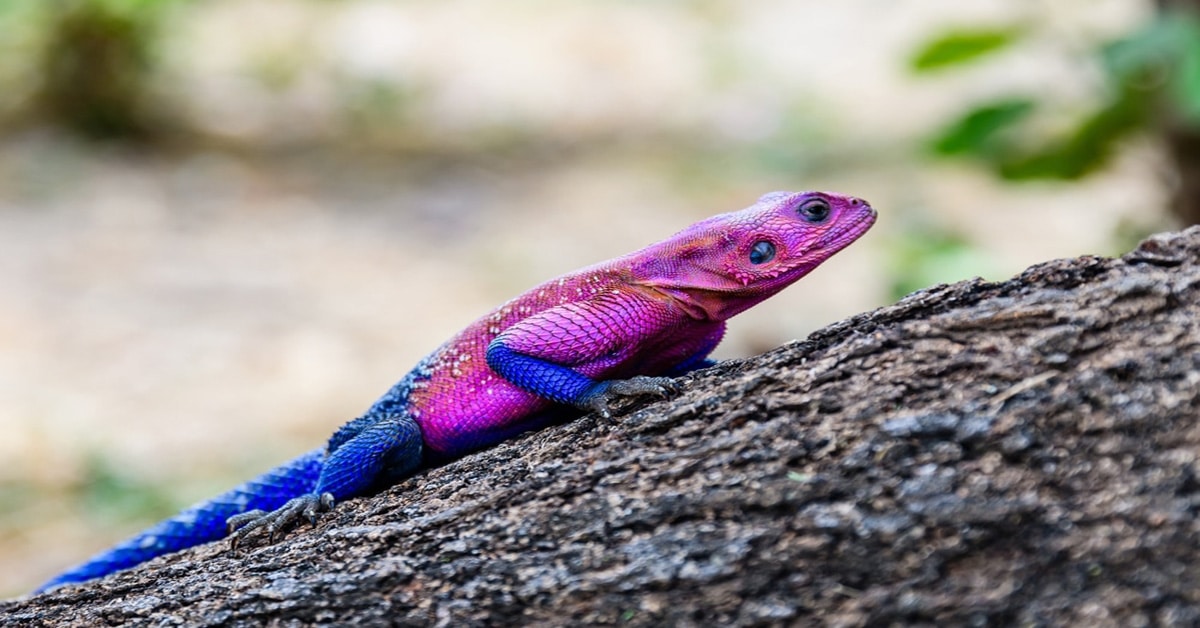
This Species Resemble the Superhero Spiderman in Comics
The Spider-Man Agama otherwise called Mwanza Flat-headed Agama or Agama Mwanza of the Agamidae family belongs to Tanzania, Kenya, and Rwanda.
Anatomy
The standard Spiderman agama males attain 6 to 9 inches; females are often smaller. This class of Agama, when properly cared for as a pet, lives for about fifteen years.
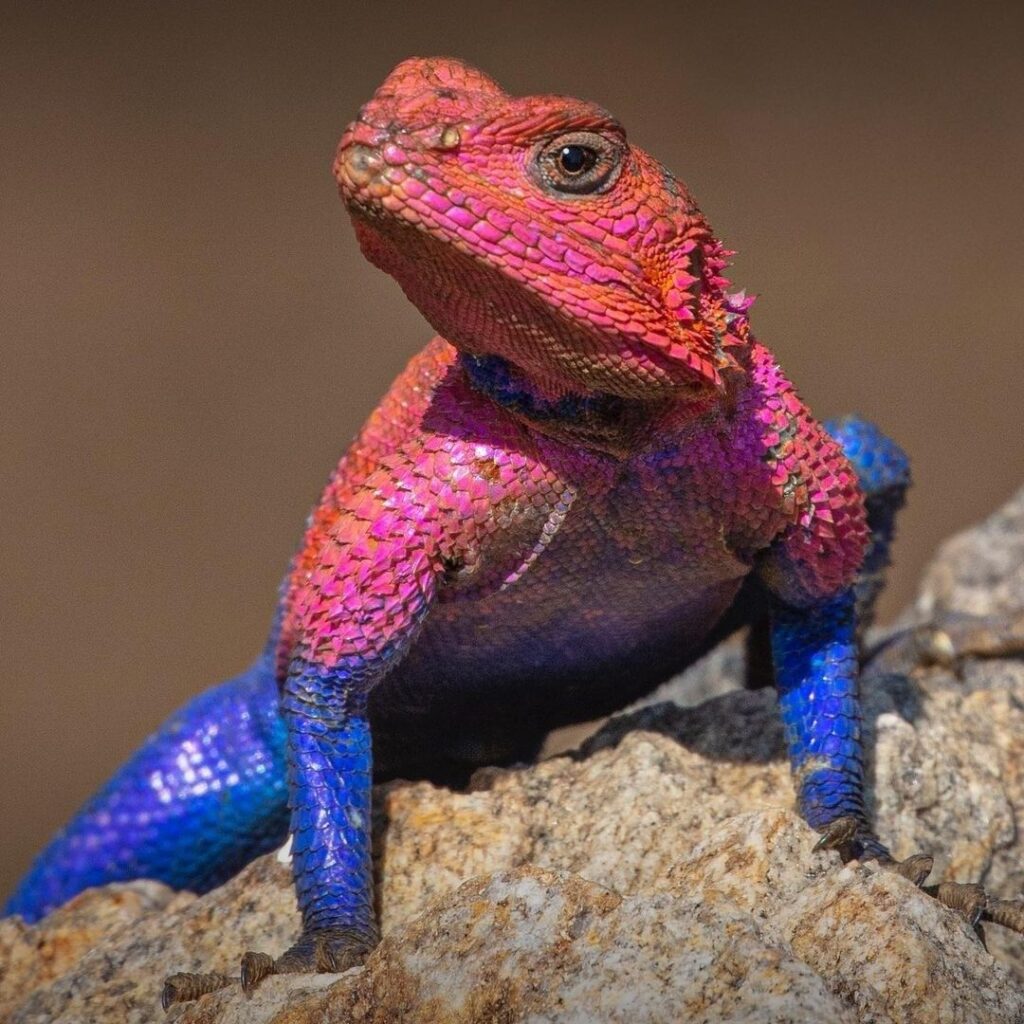
Natural Habitat
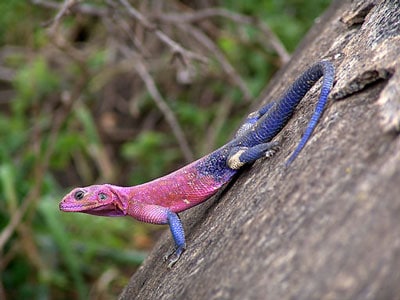
During the day heat, they bask on kopjes or rocks, as they live in partial deserts. The male’s head, shoulders and neck are deep red or violet in color but the body is dark blue. The females are normally brown in color and are indistinguishable from other varieties of female agamas. Many mistake this lizard for the redheaded Rock Agama (Agama agama). This variety is active during the day, and dwells in tall and short grassland and savannas. You can generally find them in the crevices of rocks. They also take shelter in the interspaces of large boulders or below exfoliated granite flakes. This species resembles the superhero Spiderman in comics, which makes it a trendy pet, because of its color.
As a Pet
Housing
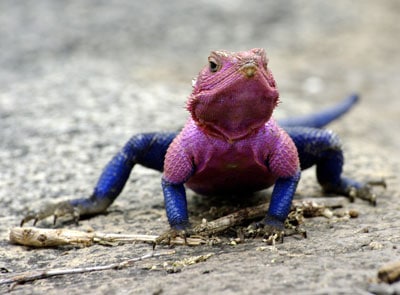
You can house the Spiderman agama in groups of threes. At the time of breeding, keep one extra male along with the group and watch the effect of dominance in captivity. The dominating male entices the female, thereby stimulating the process of breeding. You would do well to keep Agamas in a terrarium of size 36 x 18 x 18 inches. For making them active and interesting to watch, provide climbing and basking facilities by placing branches and hollows of corks to shield them from the heat and provide space for hiding.
Substrate
Use desert or river sand as substrate
Heating and lighting
Maintain a heat of about 100-115 degrees F for the Agamas. These desert dwelling reptiles need bright lighting facilities in the cage. Mercury Vapor lamps serve the purpose well.
Water and Humidity
Make sure that you provide and replenish a shallow bowl of water throughout the day. This arid-adapted Spiderman Agama, unlike other desert lizards, consumes unusual amounts of water. Mist the enclosures every morning and the droplets appear as morning dew, permitting the agamas to lick the water from the glass terrarium and furnishings in the cage.
Feeding
Feed them with crickets and different types of insects, roaches and worms as food. Dust the live food with calcium and multivitamin many times a week. Supplements like rep Cal herptavite and rep Cal calcium w d3 are ideal for these lizards. Make certain that you gut-load the insects that you propose to feed your pets with nutritious food.
Handling
You would do well to handle the spider agama lizards only occasionally, as they are very quick. In spider agama care, they recommend you to exercise extreme caution while cleaning the cage as these Spiderman agamas are great escapists. Male lizards do get along in company, where female lizards build a hierarchy with the ideal combination of two females kept with one male.
Having discovered a fondness for insects while pursuing her degree in Biology, Randi Jones was quite bugged to know that people usually dismissed these little creatures as “creepy-crawlies”.