Quaker Parrot
The Quaker Parrot, commonly known as Monk Parakeet, belongs to the Psittacidae family. This group consists of small green parrots, and it is the only species in the Myiopsitta genus. It is endemic to regions from Argentina’s subtropical areas to the temperate regions and the nearby countries situated in South America. The normal lifespan of these birds is 15 to 20 years, whereas the highest recorded age for these birds is 25 to 30.
Description
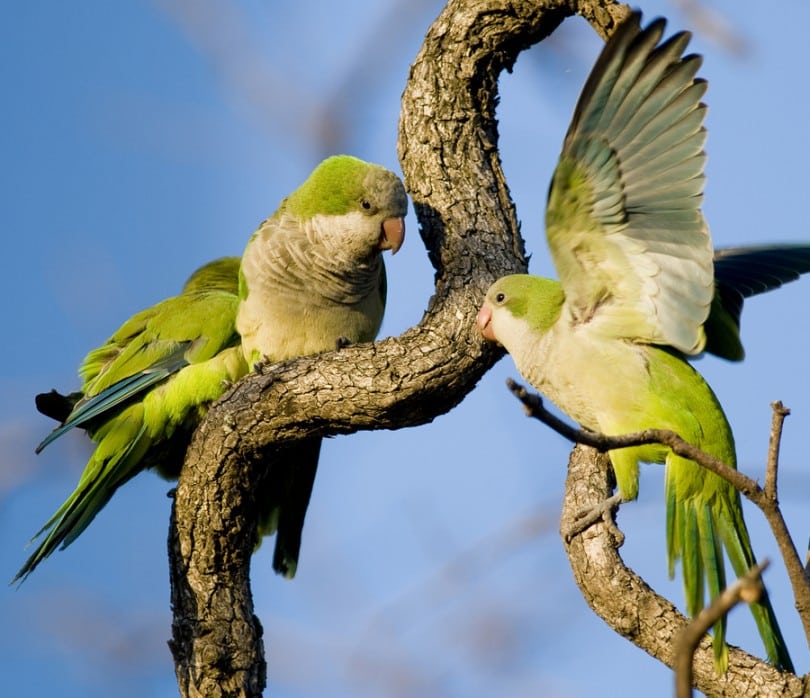
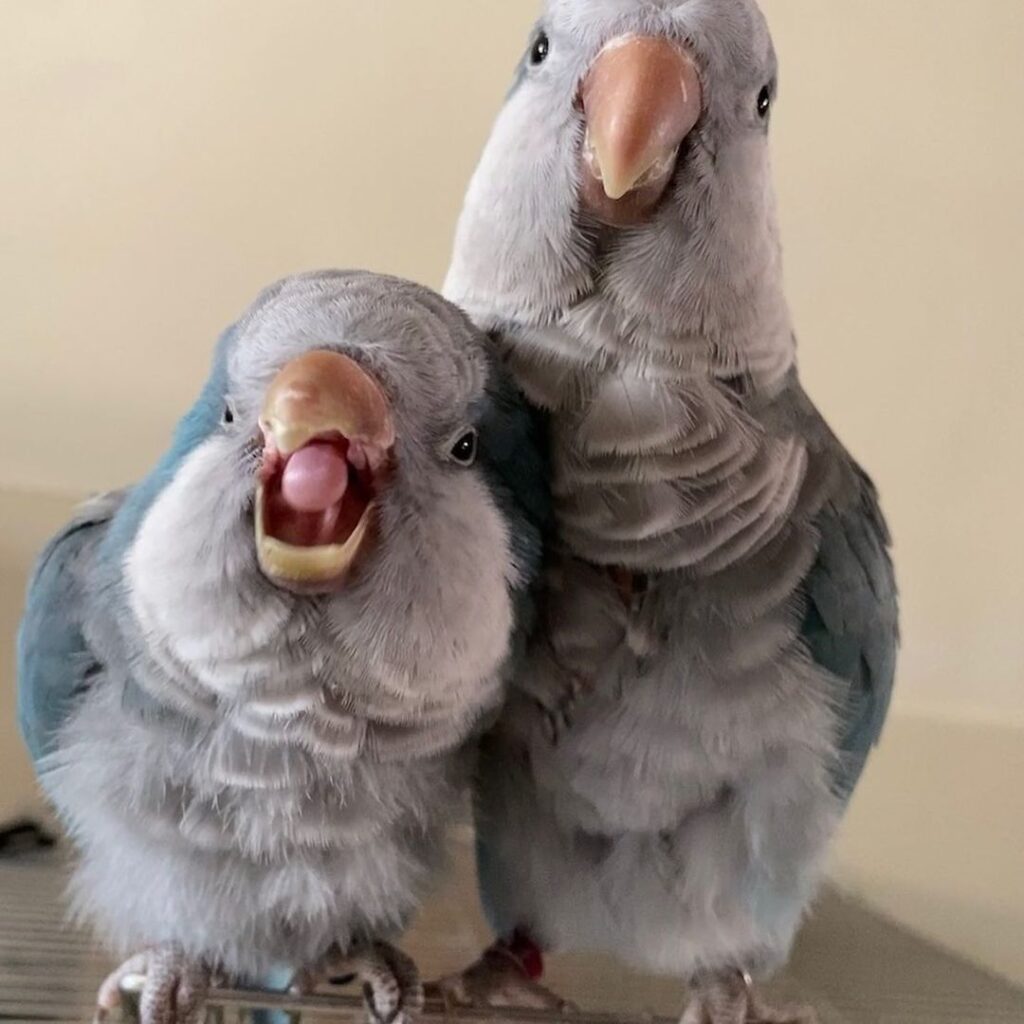
Generally, these birds are 29 cm long and weigh around 100g. They have a wingspan of 19 inches. The Female birds are 20% smaller than the males in all the aspects. They have a bright green exterior body color and a grayish chest with a greenish-yellow shade on the stomach. The tail tapers towards the end and is lengthy. The bill is an orange shade, and the remiges are shaded in blue. The domesticated species are available in a varied variety of plumage colors like white, yellow and blue that replaces the normal green color. The color of the beak is brownish or horn colored, and the eyes have a dark brown shade with a dark gray eye ring. The adults have a gray forehead, which is green in juveniles, except that, the juveniles resemble the matured birds in all sense. The male and the female birds are similar in appearance except the size.
Habitat
These birds are very common around the globe; especially some species like the Cliff Parakeets that are the most common birds. In places like Uruguay, Argentina and Brazil, they are termed as agricultural pests. The eucalyptus forest developed in the South America for the production of paper has increased the population of these parakeets manifolds. These birds create a safe and protected nesting in the artificially created forest.
Reproduction
In the wild, the Quaker Parrot is the only species that builds its own nest with sticks, instead of using the hollows of any tree. Usually, the female birds build the nests. Sometimes, the male juveniles brooded in the last clutch may help in constructing the nest. As a pet, you can also provide nest boxes or breeding cases, as those have been successful in some experiments. These birds reach sexual maturity by 2 years of age. Generally, the female bird lays one egg every alternate day to make 4 to 8 snow white eggs in a single clutch, and this breeding process takes place twice a year. Both birds of the pair incubate the eggs for about 24 to 28 days.
Behavior
The Quaker Parakeets are very energetic and social birds, and have a predictable behavior. They are very intelligent and skilled. They have the capability to learn fast and pick up words that they hear around them. They start talking at the age of 6 months, and the clarity of their speech has entitled them to be the best talkers among the small parrots. They love to whistle and chatter often; they have a very loud voice. They love playing, swinging or climbing inside the cage; they are full of energy and enthusiasm.
Types of Quaker Parrots
The Quaker Parrots are categorized in 4 subspecies depending on the habitat and size. Following are the subspecies
Myiopsitta monachus monachus
This species is the recommended type among the Quaker Parrot group. They are endemic to the places starting from the Argentina situated in the southeast Santiago del Estereo area to the Rio Salado, continuing from the Parana basins towards the Buenos Aires region. It is also found in some parts of Uruguay. This is the largest form of Quaker Parrots.
Myiopsitta Monarchs Calita
This species of birds are smaller than the Monachus form. This Parrot’s wing is mainly blue in color, and the color of the head is dark gray. The lower belly of these species has shades of blue. They are commonly found in ranges from south-eastern Bolivia to the Paraguay region and the north-western part of Argentina, Andean foothills and in the lowlands of Rio Negro and Chubut region.
Myiopsitta monachus cotorra
These birds resemble to the birds of the Calita subspecies in appearance, but the upper part of the plumage has a bright green color, and the belly has a pale yellow shade. They are found mostly in the south-west Brazil region.
Myiopsitta Monachus Luchsi, Cliff Parakeet
This species has acquired its name Cliff Parakeet due to its nesting behavior. These birds build their nests in the crevices on the cliffs instead of building nests with twigs like other species. The forehead and the chest of these species are gray in color. They are mainly found in Andean Valley, situated in central Bolivia, at an elevation of 1000 to 2000 m above sea lrnrl, and from the south-eastern part of La Paz to the northern region of Chuquisaca province.
Quaker Parrots At Home
Food
Like other birds, these pets should also be given a good healthy and nutritious diet. A seed diet is essential in Quaker parrot’s daily diet. Look for a good quality seed-diet that does not contain any preservatives and artificial colors. Along with that, make sure to include pulses, vegetables and fruits in their daily diet. They prefer eating cooked grains, brown rice, barley or millet. Legumes like chickpeas, kidney beans, black and navy beans, peas and lentils are their favorite. Nuts like almonds, pecans, walnuts and cashew nuts can also be provided. A good pellet mix consisting of all the essential nutrients should be given to cover any inadequacy of nutrients in their diet. Do not forget to provide fresh water every day.
Cage
The cage is the place, where the pets feel safe and secure; hence it should be spacious, clean and warm. It should be spacious enough for the birds to move around. A cage made of wrought-iron, which is free from chips and rust, is the best option. The cage should have a minimum size of 24 x 30 x 24 inches. The bar spacing should not be more than ½ an inch. More space between the bars may cause choking of the bird’s legs or wings. A square shaped cage is optimal, as it will provide more space than a round shaped cage. There should be a removable tray for easier cleaning. It should also consist of toys, perches and food dishes.
Care
The Quaker Parrot should be misted regularly with a spray water bottle. They enjoy the water spray, but never spray directly on to the bird’s face. It should also be provided with a birdbath twice a week, but only under supervision. The water provided for the bird for drinking or bathing should be free from chlorine and metals. Regularly, clean the cage and dishes with disinfectants. Daily change the floor paper in the cage. Spend some time with your Quaker pets, as they are great attention seekers.
Having discovered a fondness for insects while pursuing her degree in Biology, Randi Jones was quite bugged to know that people usually dismissed these little creatures as “creepy-crawlies”.