Indian Ringneck
The Rose Ringed Parakeet, also known as Indian Ringneck Parakeet, is a lovely parrot from the Psittaculidae family. These birds are biologically termed “Psittacula Krameri.” They love to fly, and hence, they prefer an aviary ambiance instead of a cage. They are endemic to Afro-Asian areas and have a vast range. Due to its social nature, and talking ability, it is preferred as a pet bird in many countries.
Description
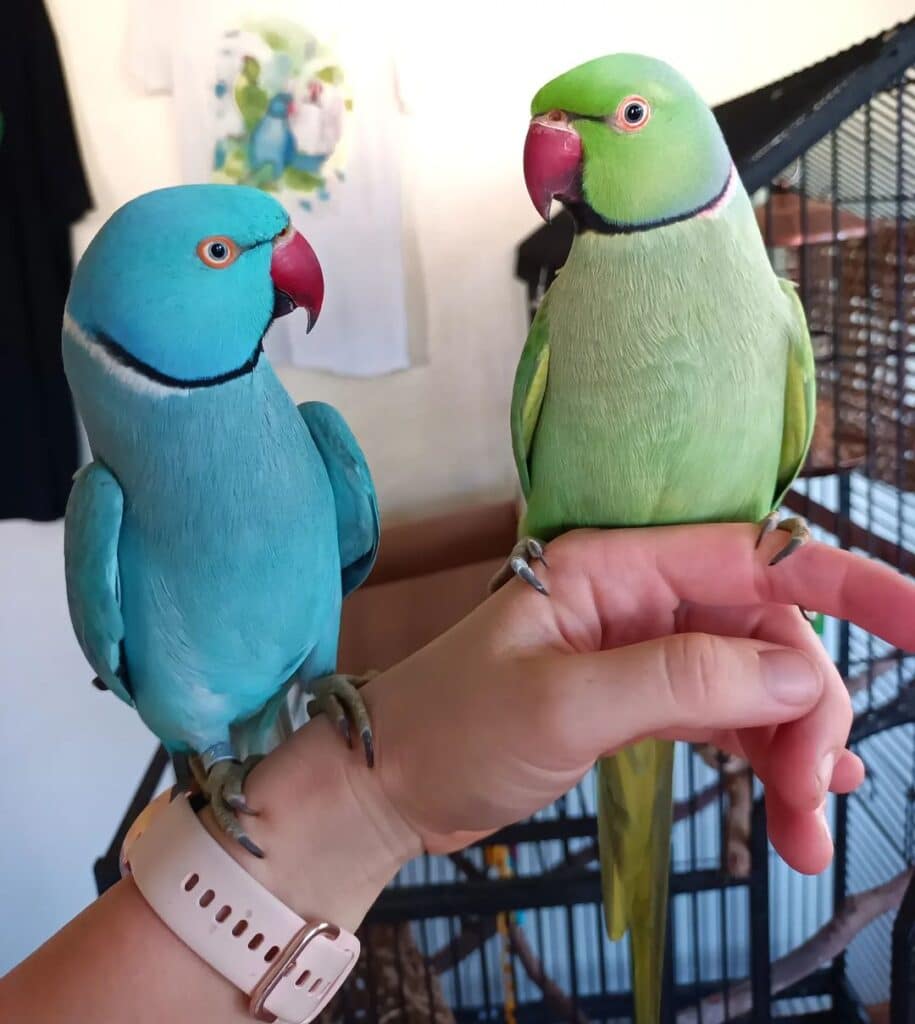
These birds are smaller parrots, and hence are known as parakeets. They grow up to a minimum of 40cm in height, and have a wing span of 15 to 17.5 cm. The beak is hooked and red in color. The male and female have large tails and it comprise of 12 feathers. The two big feathers in the tail are blue shaded and the body of the bird is mainly green in color. The male bird displays a ring like black line around the nape of the neck and a nape band of pink shade. The female bird has a pale gray colored ring shape around the neck. Their life expectancy is around 15 years, but many have lived up to 25 years also.
Habitat
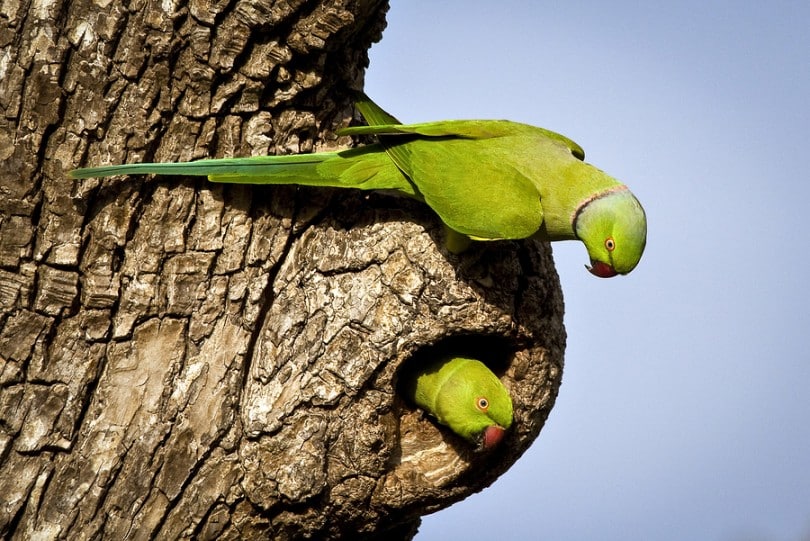
These birds inhabit semi-desert, forested or wooded areas. But now they have adapted well to the disturbed human settlements like farmlands, cities, gardens, town and villages. They have originated from Sri Lanka. It is also found in India, Nepal, Afghanistan, Pakistan and Vietnam. They are highly populated in these areas.
Reproduction
Before mating, both the male and female Indian Ringneck parakeets involve in courtship for a long time in which, the male tries to impress the female by dancing, bowing and feeding her. In India, the mating season of this bird is between September and December. They are not monogamous, and change their partners during every mating season. In the wild, they nest in the tree cavities. But at home, you should provide a spacious nest box. The female lays whitish eggs about 2 to 6 numbers in a clutch. She incubates them for around 22 to 24 days. At the time of egg-laying, the female bird should be provided with pea crop, which is rich in nutrients. The young ones fledge after 6 to 7 months.
Indian Ring Neck At home
Cage
The cage selected for these birds should be spacious and convenient. The bottom of the cage should have paper, which should be changed weekly. While selecting the material for the cage, make sure they are of premium quality and painted with non-toxic paint. The convenient cage should have a bottom grate of wire and an easily removable tray, which will make cleaning easier. Place enough perches and toys for these birds, and there should also be enough space to keep food and water dishes. The perfect size of the cage is 30 x 36 x 30 inches.
Food
Always introduce varieties of food to your Indian Ringnecked pets. Provide with a premium quality food mix that consist of grains, seeds and nuts. Supplement their diet with plenty of fruits and vegetables. They should also be encouraged to eat green leafy vegetables. Fruits like apples, pears, grapes, figs, bananas and pomegranates should be given. A pellet diet is also suitable for these birds as they comprise all the nutrients. Provide plenty of fresh water that is free from chlorine and other heavy metals.
Care
Indian Ringneck birds are very social, and always require enough attention. Never leave them in a closed room. If you cannot spend enough time with them, then, the best option is to get a pair for them. Place their cage where they get enough sunlight. Take them regularly to a veterinary doctor to keep their health updates.
Having discovered a fondness for insects while pursuing her degree in Biology, Randi Jones was quite bugged to know that people usually dismissed these little creatures as “creepy-crawlies”.