Kuhli Loach Fish
Scientific Classification
| Kingdom: | Animalia |
| Phylum: | Chordata |
| Class: | Actinopterygii |
| Order: | Cypriniformes |
| Family: | Cobitidae |
| Genus: | Pangio |
| Species: | P. Kuhlii |
| Binomial name: | Pangio Kuhlii |
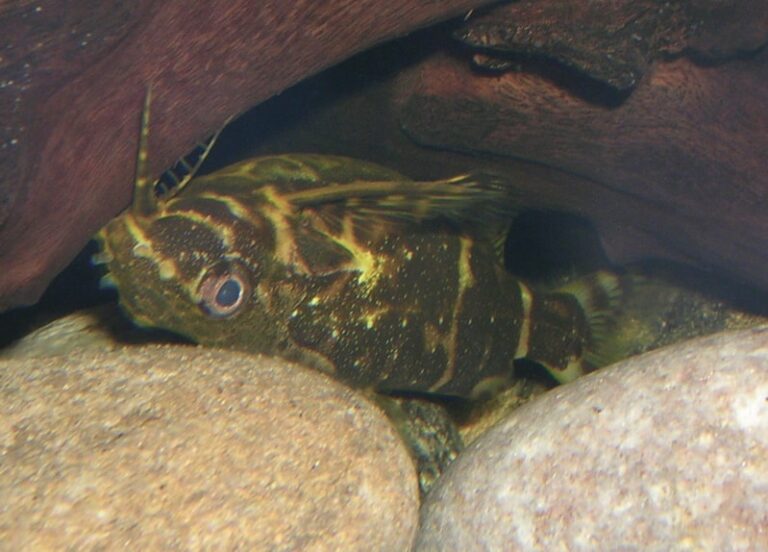
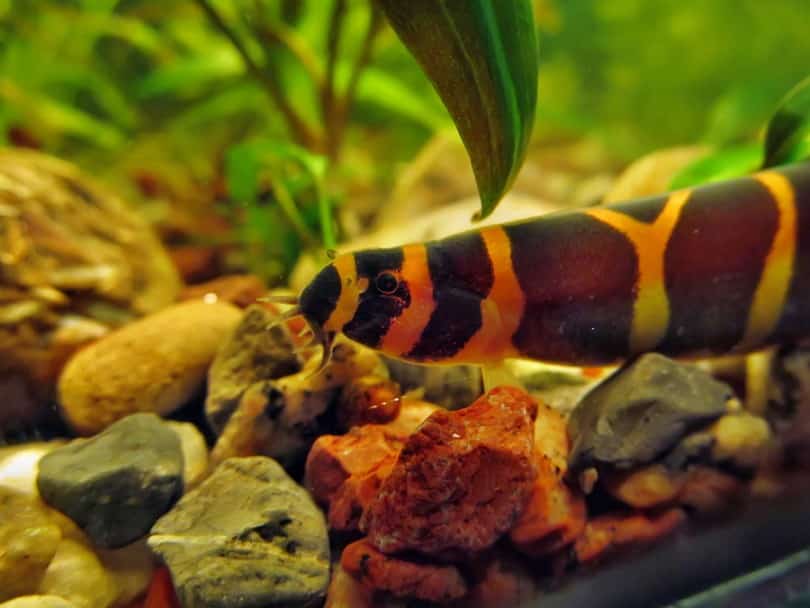
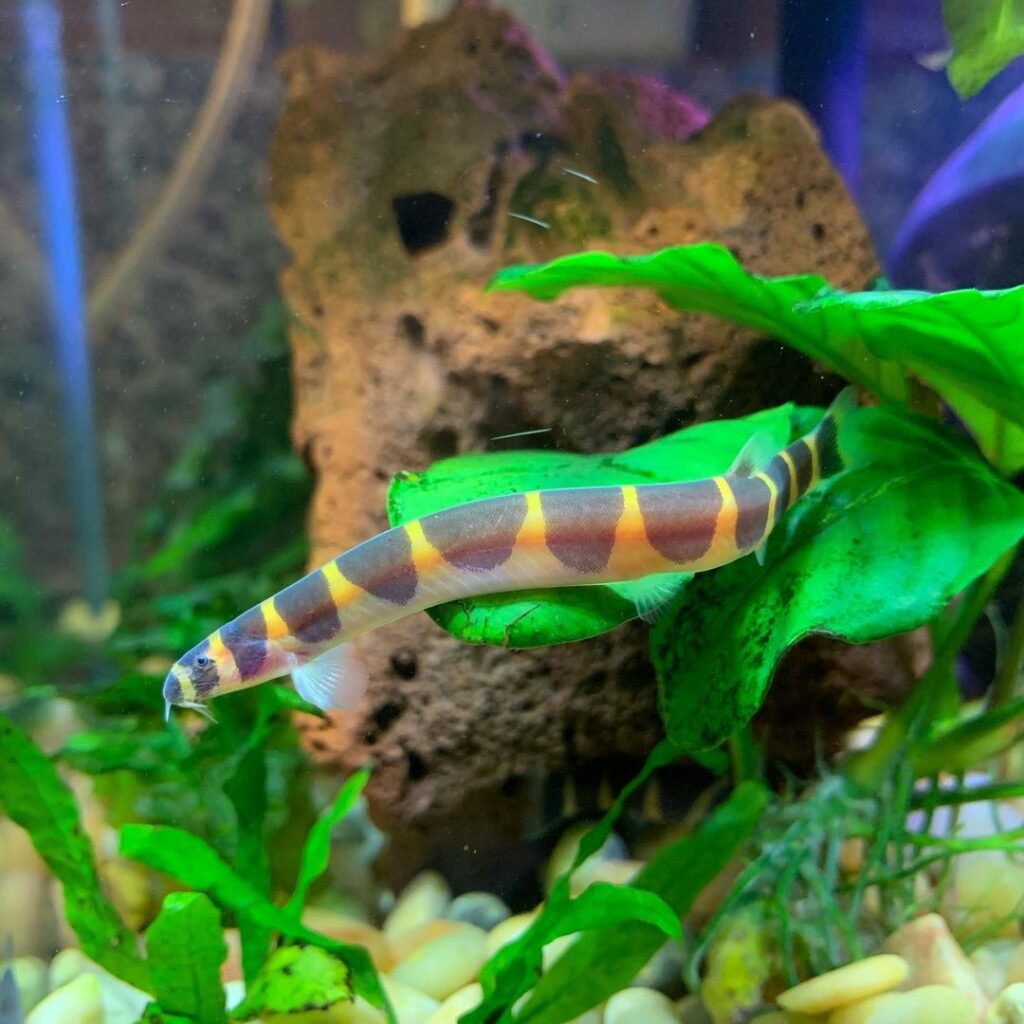
The Kuhli Loach, scientifically named Pangio Kuhlii, is a tiny eel-like fish in freshwater that comes from the Loach family Cobitidae. This fish is originally from the Malay Peninsula and Indonesia. This Kulhi Loach fish, which resembles a snake, is nocturnal and appears very slim in an aquarium. The Kuhli Loach fish remain secluded, and on the least disturbance, darts below the decorations in the aquarium and hides, provided smooth gravel or fine sand substrate is placed in the aquarium.
Habitat and Range
We find these Kuhli Loach fish in Sumatra, Southeast Asia, Western Malaysia, Singapore, Thailand, Borneo and Java. We don’t find this variety in the IUCN Red list. They are also known by several other names, such as Coolie Loach, Prickly Eye, Cinnamon Loach, Leopard Loach and Giant Coolie Loach.
The Kuhli Loach dwells in mountain streams among a litter of leaves and sandy locations where the rivers move slowly. Their habitats are in general remote from the sun due to the canopy of the forest. In the wild, the Khuli Loach is seen in tiny groups, but they do not belong to the schooling fish variety.
Description
The Kulhi Loach is tiny as a worm that grows in a range of 3 to 4 ½ in. (7,8 to 12 cm.) long. When in the aquarium, their length is a little smaller. They normally survive up to 10 years and there are reports of them living still longer.
The principal color of its body is pink with a yellow tint, with 12 to 17 vertical dark colored bars across, and its head has three bars. Its head is void of scales. Its eyes are enveloped, and has a transparent skin, and in front of the eye is provided with a tiny spine. Besides, they have three pairs of barbells-like whiskers.
Breeding
It is difficult to breed these Kuhli Loach fishes at homes in the aquariums. The eggs get buried underneath the root surface where they get stuck up. The breeding, mostly are not planned. When several coolies are gathered in the tank, mating sometimes takes place naturally. The ideal way of breeding them is putting a group of them in the aquarium having a filter, under gravel and let only the coolies in the tank on their own for a period of some weeks, and continue to regularly maintain the aquarium.
Tank
The benefit of the Kuhli Loach over several of the other Loach is that their growth is limited to a length of almost 8 to 11 cm. (3 to 5 in.). Besides, their bioload (amount of life existing in an aquarium) is too tiny for a Loach. The Kulhi Loach is capable of squeezing out through tiny openings, hence keep the tank always securely closed. They need a tank of at least 20 gallons (37 liters).
Water Condition
This cute little Kuhli Loach is quite easy to manage at homes in aquariums. It requires water of medium soft quality, with a pH of medium quality almost 6 to 7. Even then it accommodates water of almost all qualities. Its position in the water is at the base, it is here that it searches for food. It needs a temperature in the range of 75 to 85°F (24 to 29°C)
Nutrition
The Coolie Loaches love live food as their diet’ even then they eat all kinds of food, which includes tablets, frozen and dried feed, flakes and wafers. Most importantly, they require the food in tiny form that settle down at the tank bottom so that they can feed at night.
The live foods include blood worms (most liked), and Tubifex, as well as Daphnia. The next preference of theirs is frozen varieties. Frozen or live food is supplemented for dry food once or twice a week.
Setup
Most of the time the Kuhli Loach are seen swimming at the base of the tank; however, at night, they swim everywhere in the tank. The Kuhli Loach need pristine water, so do not put these Kuhli Loaches in an arrangement which is biologically not developed. They are adjustable to an aquarium of average size (best nearly 20 gallons). Where the water is a bit acidic, and with passive lighting The Kuhli Loach requires good water currents for generating sufficient oxygen.
It is essential that the water turnover takes place at a minimum of 10 to 15 times an hour. A filter below the gravel is an option for generating good oxygen all over the aquarium and also for decreasing the waste. Supplementing a power head or canister filter to the arrangement gives good current for the Kuhli Loach fishes.
Having discovered a fondness for insects while pursuing her degree in Biology, Randi Jones was quite bugged to know that people usually dismissed these little creatures as “creepy-crawlies”.