Congo Tetra
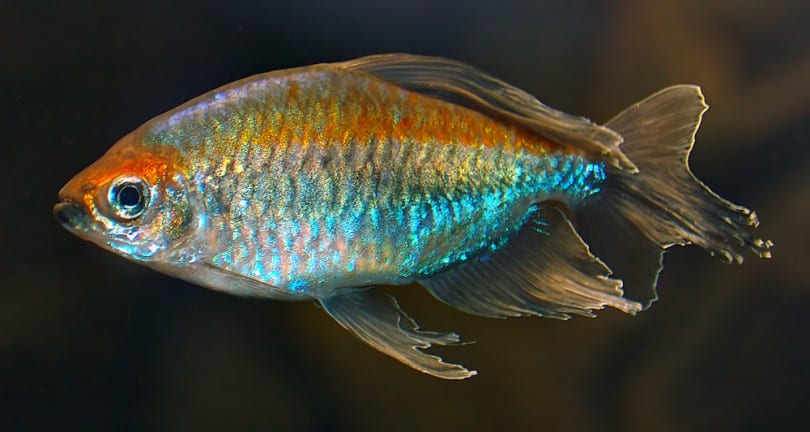
The Congo Tetra, biologically called Phenacogrammus Interruptus, is an incredible and gorgeous species of Tetra fish from the African Characin family. The body of this Tetra species displays an array of rainbow colors that will glow in your fish tank. This unique color combination and beautiful body structure make them the most preferred Tetra by fish hobbyists. It originated from the central River Basin of Congo, Africa.
Description
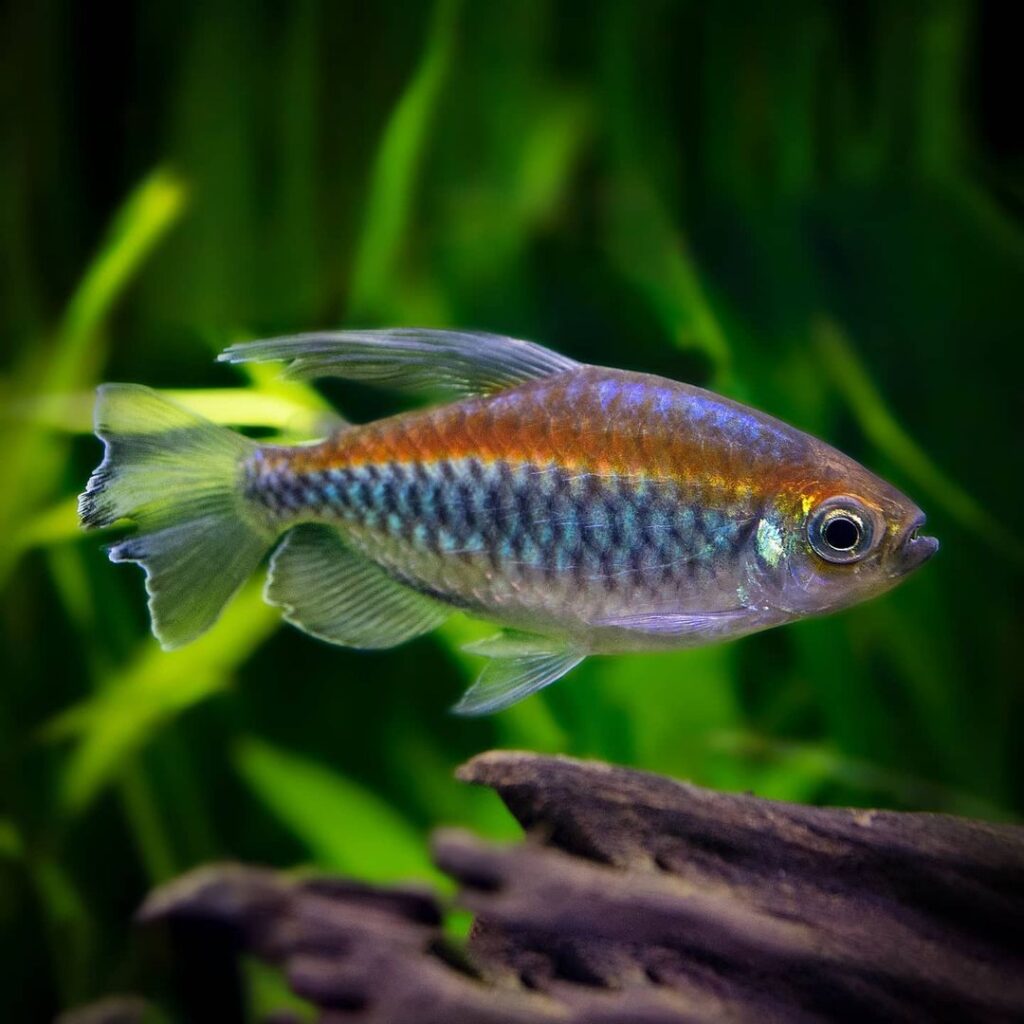
The body shape of these Congo tetras is typically a full-bodied tetra pattern along with big scales. The coloration on its body when mature are more beautiful with iridescent colors running throughout the body from the front to the posterior portion. The blue starts from the front and changes into bright red while reaching the middle portion, and then turns into yellow-gold. The yellow band ends with a blue shade near the belly area. Along with its body, the tail fins are also attractive with distinct coloration. The grayish-violet feather like appendage that includes white shade on the edges is the most stunning part. The maximum body length of the male is 3 inches and that of the female is 2.75 inches. The male looks bigger than the female, and also possesses a bigger dorsal and tail fin than that of the female.
Habitat
The Congo River drainage and basin in the Democratic Republic of Congo have a dense population of the Congo Tetra fish. The Congo Tetras available in the market for sale are mostly developed in the Eastern Europe and other eastern areas.
Reproduction
Similar to the other Tetras, these ones also require a breeding tank comprising of bottom plants. The suitable condition is soft and acidic water. The Female Congo Tetra lays about 300 eggs on and nearby the plants. Their peculiar behavior is that, at the first minute of the daylight, they like to disperse their eggs everywhere. These eggs require at least 6 days to hatch.
Congo Tetra Fish in Aquariums
Food
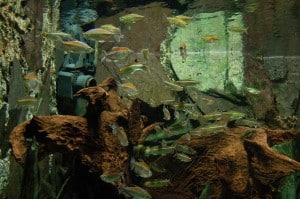
The Congo Tetra Fish is omnivorous in nature. In the natural habitat, these Tetra fish, predominantly consume insects, plant matter, crustaceans and worms. At home, they can be provided with flakes, live and frozen food. The essential nutrients can be attained only by providing a nutritious flake diet every day. Occasionally you can provide brine shrimp and blood worms. Tablet pellet and vegetable food are also a healthy source of nutrients for these creatures. The exact manner is to provide food several times a day, but in small quantities that can be consumed within 3 minutes at each feeding.
Water
Like all other Tetras, they too prefer clean and clear water. They come from slightly acidic and soft water habitat, hence providing the same will be beneficial for their health. They will stay active and healthy if provided with an environment similar to their natural one. The pH level should be about 6.0 to 6.2, and the temperature should be between 75 and 81 degree F.
Tank
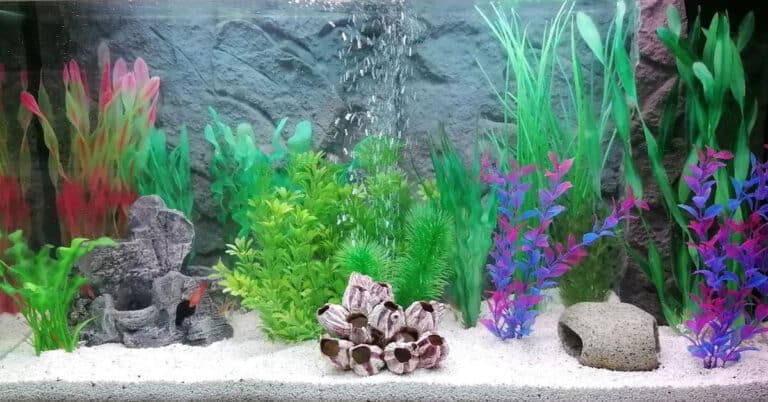
The Congo Tetras do not prefer to stay alone; hence they should always be kept with more than 6 tank mates. For this reason, you would do well to have a fish tank of at least 30 gallons. When they are kept in less numbers, they feel insecure and less protected. They require a lot of space to swim and hide. They also prefer a lot of hardy plants inside the tank. You can place plastic as well as live plants to decorate and mimic their original habitat. Filtration and heaters are a must to maintain the quality of the water and the level of temperature.
Having discovered a fondness for insects while pursuing her degree in Biology, Randi Jones was quite bugged to know that people usually dismissed these little creatures as “creepy-crawlies”.