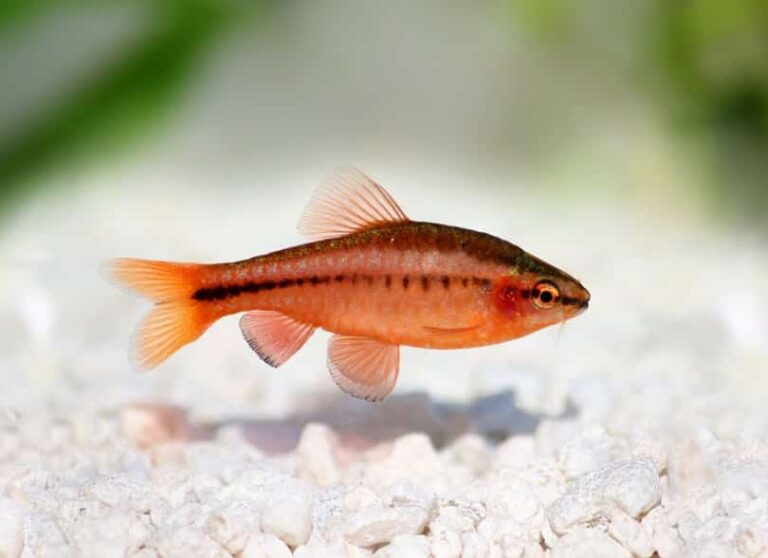
Glowlight Tetra
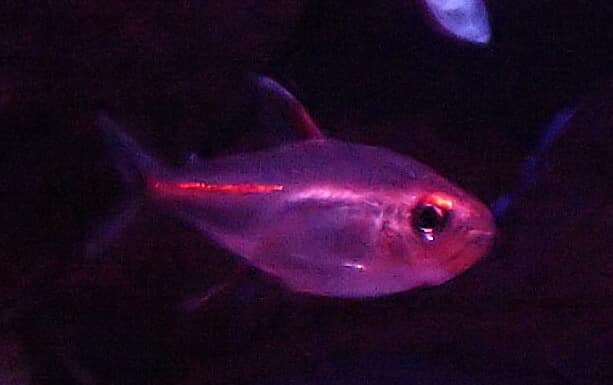
The glowlight tetra (Hemigrammus erythrozonus) is a small, peaceful freshwater fish from South America with a shining orange-red stripe along its body. It comes from the Essequibo River in Guyana and is one of the most popular fish for community aquariums.
Glowlight tetra Quick Facts
| Common name | Glowlight tetra |
| Scientific name | Hemigrammus erythrozonus |
| Kingdom | Animalia |
| Phylum | Chordata |
| Order | Characiformes |
| Family | Characidae |
| Genus | Hemigrammus |
| Conservation status | Least Concern |
| Type | Tiny freshwater tetra |
| Diet | Omnivore: flakes, dry food, vegetables |
| Habitat | Fast rivers, from mountains to savannas |
| Native range | Essequibo River, Guyana |
| Size | About 3.3-4 cm long |
| Colours | Silver with a glowing orange-red stripe |
| Special feature | Peaceful, shoaling fish |

Where Glowlight Tetras Live
In the wild, glowlight tetras live in the Essequibo River basin in Guyana. The Essequibo is the longest river in Guyana. It starts in the Acarai Mountains near the border with Brazil and flows north to the Atlantic Ocean, passing through rainforest and savanna on the way.
Glowlights live in the quieter parts of this river system: slow, shaded streams and backwaters full of plants, fallen leaves and roots. The water there is usually soft, slightly acidic and often stained brown by leaves. They swim in the middle and lower levels of the water.
Rivers like the Essequibo face threats from pollution. In 1995 a dam holding waste from a gold mine burst and released water containing cyanide into a branch of the Essequibo, one of the worst mining spills in South America. Most glowlight tetras sold in pet shops today are bred on fish farms rather than caught in the wild.
What Glowlight Tetras Look Like
Glowlight tetras are tiny, growing to only about 1.5 inches (around 4 cm) long. Their bodies are slightly see-through and silvery, with a bright orange-red line running from the snout all the way to the base of the tail. The front of the top (dorsal) fin is the same glowing color, and the other fins are clear, often with little white tips.
They are about the same size as the neon tetra, or slightly bigger. Breeders also produce an albino form, which is pale pink with the same orange stripe.
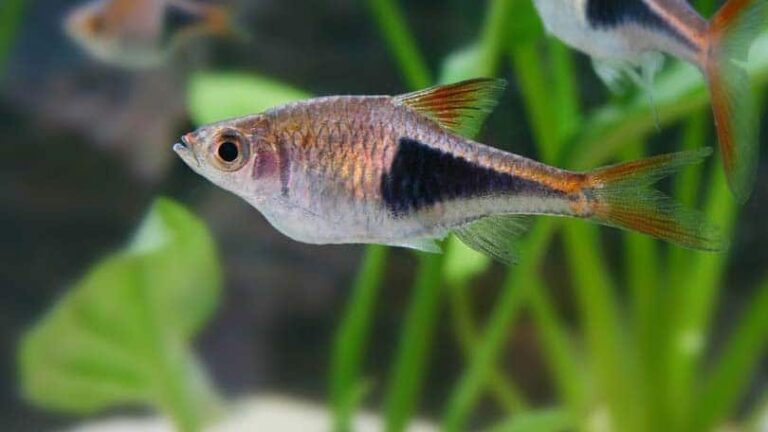
Another fish, the redline rasbora from Malaysia and Indonesia, looks a lot like the glowlight tetra, with a similar glowing stripe. But it is not a close relative: it belongs to the carp and minnow family, while tetras belong to a different family called Characidae.
Behavior
Glowlight tetras are calm, gentle fish that live in groups called shoals. A group swimming together, with all those little stripes catching the light, is a lovely sight. Alone or in pairs they become shy and stressed, so they should always be kept in groups of at least six, and more is even better.
Breeding
Glowlight tetras are egg scatterers. During spawning, the male and female swim side by side, often flipping upside down together, and the female releases her eggs among fine-leaved plants or moss. A female can lay up to about 150 eggs in one spawning. The eggs hatch in about a day, and the tiny fry start swimming freely a few days later.
Adult tetras will eat their own eggs, so breeders usually move the parents out right after spawning. Breeding works best in soft, slightly acidic water kept in a dimly lit tank.
Keeping Glowlight Tetras at Home

Glowlight tetras are hardy and a good choice for beginners who have learned the basics of fishkeeping. Like all fish, they need a tank that has been set up and cycled before they arrive, so that helpful bacteria are ready to break down waste.
Tank
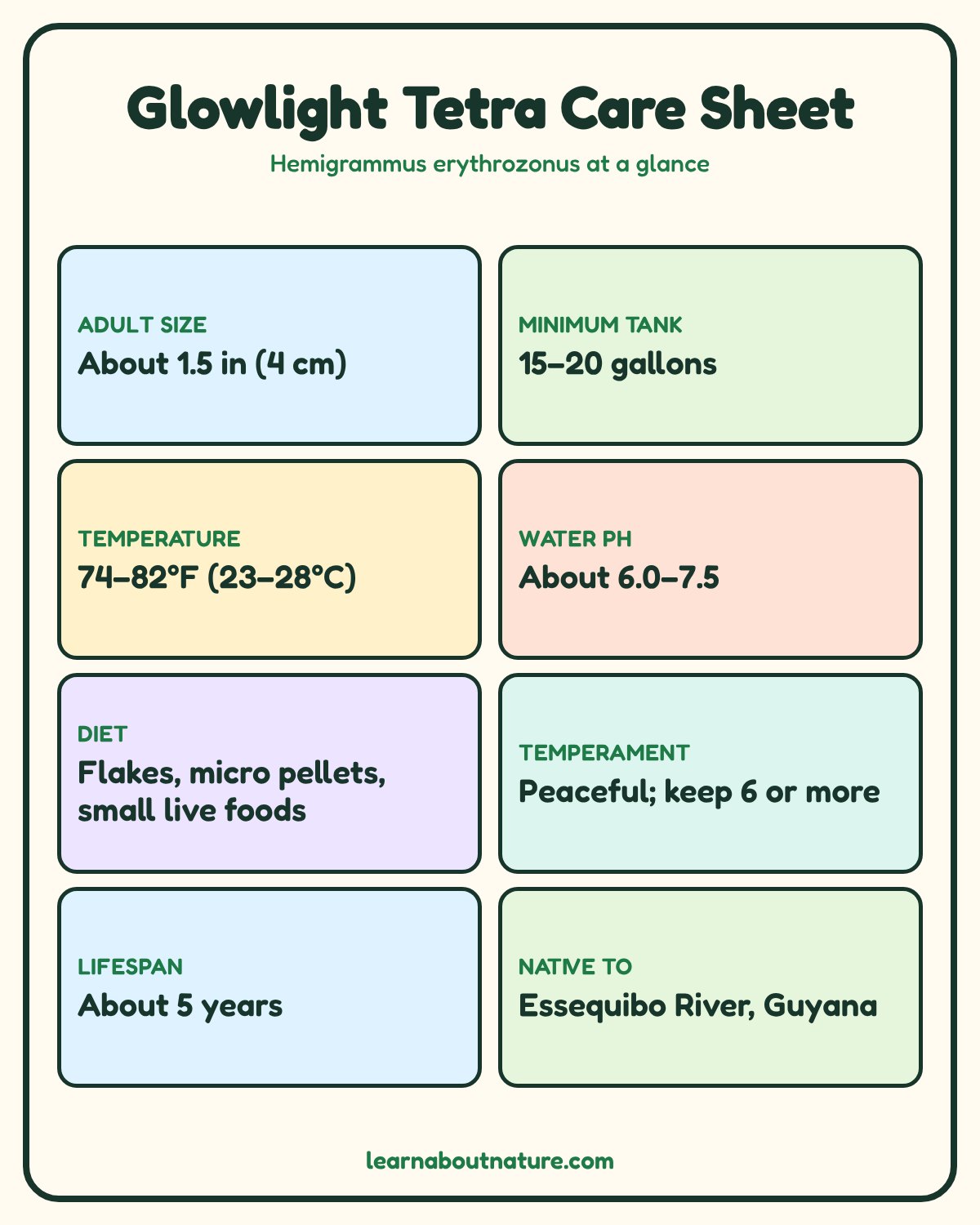
A tank at least 24 inches (60 cm) long, holding around 15 to 20 gallons (55 to 75 liters), is a good size for a small group. A bigger tank is easier to keep stable and gives the fish more swimming room. Use a filter with a gentle flow and a heater, and keep a lid on the tank.
Water Conditions
- Temperature: about 75 to 82 F (24 to 28 C).
- pH: about 6.0 to 7.5, ideally slightly acidic.
- Hardness: soft to moderately hard water. Glowlights adapt to a range of water, but breeding needs soft water.
- Change part of the water (about a quarter) every week or two, and treat tap water with a dechlorinator.
Food
Glowlight tetras are omnivores. In an aquarium they happily eat good-quality flakes and small pellets. Give them a varied diet by adding small live or frozen foods such as brine shrimp or daphnia a few times a week, plus a little vegetable-based food. Feed only what they can eat in a couple of minutes.
Setting Up the Tank
Try to make the tank look like their natural home. Add plenty of live plants, especially fine-leaved ones, but leave an open area in the middle for swimming. A dark gravel or sand bottom, a dark background and soft lighting make their colors glow much more brightly.
Good tankmates are other small, peaceful fish such as other tetras, rasboras, corydoras catfish and small gouramis. Avoid big or aggressive fish that might bully or eat them.
Glowlight tetra FAQs
Why is it called a glowlight tetra?
It has a brilliant orange-red stripe that shimmers along its silver body from the snout to the tail, which looks like it glows.
How big do glowlight tetras get?
They are tiny, about 3.3 to 4 cm (1.3 to 1.6 inches) long.
Where do glowlight tetras come from?
They come from the Essequibo River in Guyana, South America. This river has fast-moving water and waterfalls.
What do glowlight tetras eat?
They are omnivores. In an aquarium they eat flaked and dry food, and vegetables now and then to add variety.
Are glowlight tetras peaceful?
Yes. They are peaceful fish that live in shoals, so they do best with other non-aggressive fish of a similar size.

Randi Jones is the owner and founder of the Nature Gift Store, an online retailer specializing in nature-themed gifts, educational science projects, live animal nature kits and real butterfly artwork. A biology graduate who fell in love with insects, she founded the company in 2001 to make active learning about nature fun, accessible and engaging for children and adults. Her store offers real butterfly frames, home and garden decor and educational live animal kits, including ant farms, worm farms, tadpoles, ladybugs and hermit crabs, and she runs a bug museum in Washington featuring live animals like Eddie the Iguana alongside other reptiles and insects. Randi wrote most of the guides on this site. They first appeared on her long-running nature sites, including Monarch-Butterfly.com, Ladybug-Life-Cycle.com, Frog-Life-Cycle.com, Dragonfly-Site.com and Butterfly Pictures, which have now been brought together here at Learn About Nature.