Green Sea Turtle
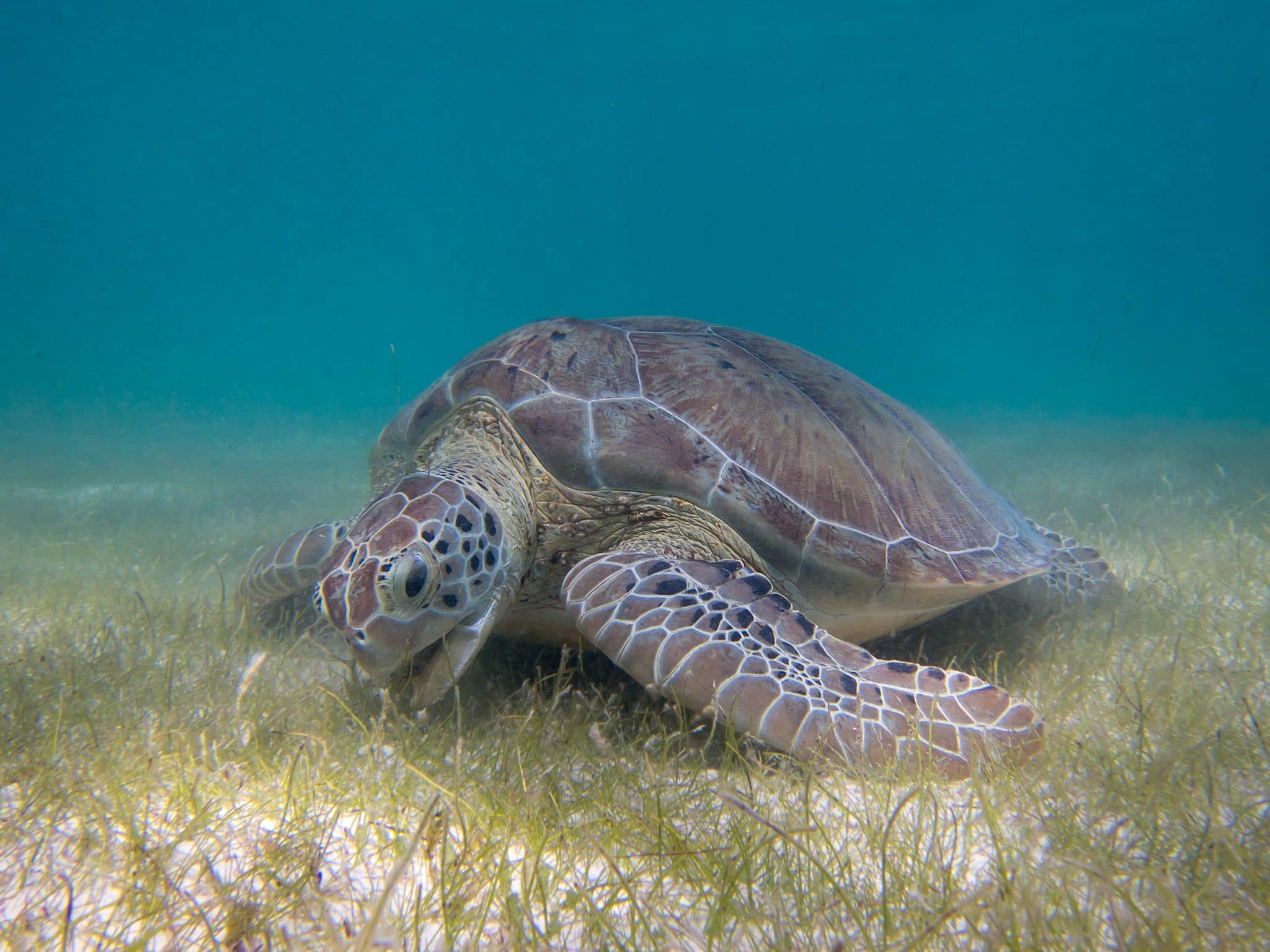
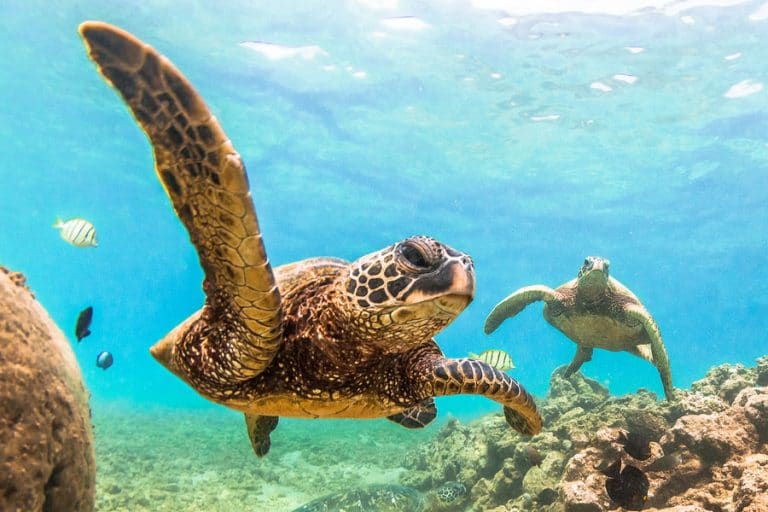
The green sea turtle (Chelonia mydas) is a large sea turtle that lives in warm oceans around the world. It is the biggest of the hard-shelled sea turtles, and as an adult it is the only sea turtle that eats mostly plants, grazing on seagrass and algae.
Scientific Classification & Quick Facts
| Common name | Green sea turtle |
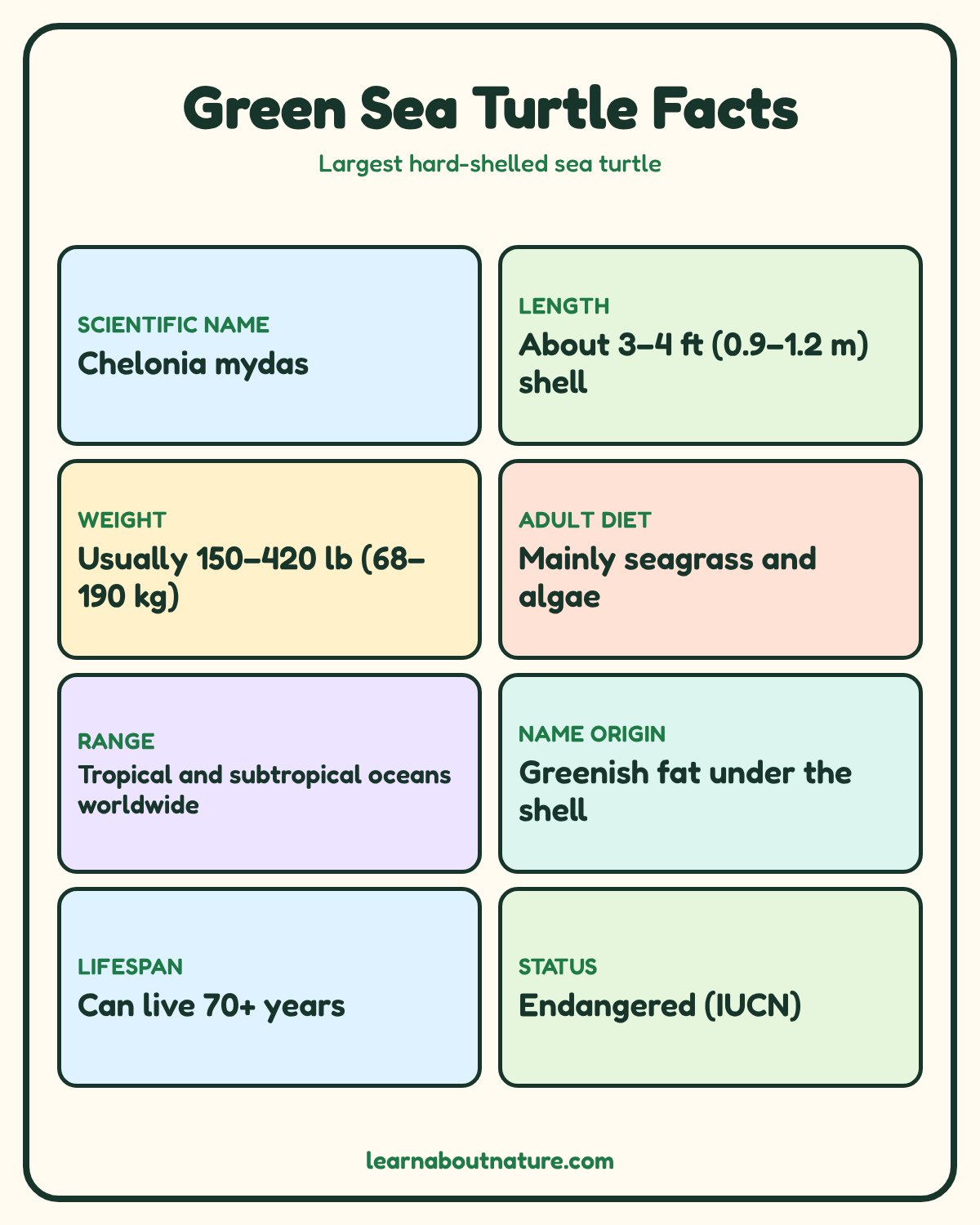
| Scientific name | Chelonia mydas |
| Kingdom | Animalia |
| Phylum | Chordata |
| Class | Testudines |
| Family | Cheloniidae |
| Genus | Chelonia |
| Conservation status | Least Concern |
| Type | Reptile (large sea turtle) |
| Diet | Adults eat algae and seagrass; young eat small animals |
| Habitat | Coastal shallows, bays and seagrass beds |
| Native range | Tropical and subtropical seas worldwide |
| Size | Shell 83–114 cm (3–4 ft) long |
| Weight | 110–190 kg (240–420 lb) |
| Special feature | Only sea turtle that is a plant eater as an adult |
An Ancient Reptile
Green turtles are reptiles, like snakes and lizards. The ancestors of today’s sea turtles lived on land, and their relatives moved into the oceans more than 100 million years ago. That means sea turtles were swimming in the seas while dinosaurs still walked the Earth.
Why Is It Called “Green”?
Surprisingly, the green turtle is not named for the color of its shell. It gets its name from the greenish color of the fat and cartilage under its shell, which may come from its plant-based diet. In parts of the eastern Pacific, a darker form of the green turtle is called the black turtle.
Description
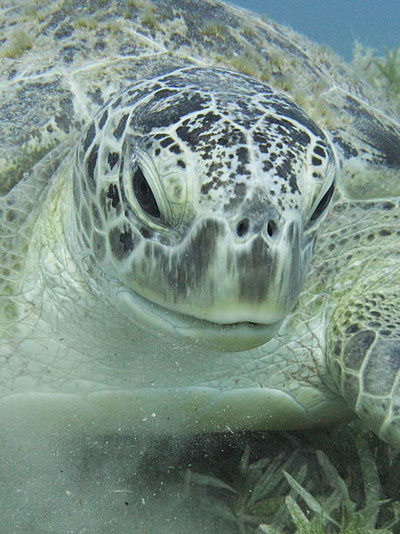
The green turtle has a smooth, oval, fairly flat shell without ridges. Its carapace can be olive, brown, gray or nearly black, often with streaks or spots, while the lower shell is pale yellow or white. Its head is small and blunt compared with its body.
A handy way to identify a green turtle is to look at its face. Most sea turtles have two pairs of scales in front of their eyes, called prefrontal scales, but the green turtle has just one pair. It also has a jaw with a jagged, saw-like edge, perfect for cutting seagrass.
- Shell length: adults are usually about 80 to 120 cm (3 to 4 feet) long.
- Weight: adults usually weigh about 110 to 190 kg (240 to 420 pounds), and some much more. The biggest ever recorded weighed about 395 kg (871 pounds).
Diet
Young green turtles are omnivores. While they drift in the open ocean, they eat jellyfish, small crustaceans, worms, sponges and algae.
As they grow and move to shallow coastal waters, they switch to a diet of mostly seagrass and algae. Grazing turtles act like underwater lawnmowers, trimming seagrass meadows and helping them stay healthy.
Habitat
Green turtles live in tropical and subtropical waters of the Atlantic, Pacific and Indian Oceans. Adults spend most of their time in shallow coastal areas, such as bays, lagoons, coral reefs and around islands, especially where there are seagrass beds. They may swim thousands of kilometers between their feeding areas and the beaches where they nest.
Breeding
Green turtles grow slowly and may take 20 to 40 years or more to become adults. Females usually nest every two to four years, often returning to the same beach where they hatched.
In a nesting season, a female crawls ashore at night several times, usually three to five, to lay her eggs. Each clutch has about 100 to 115 eggs on average. The eggs incubate in the warm sand for about two months. Warmer sand produces more female hatchlings, and cooler sand produces more males.
Conservation Status
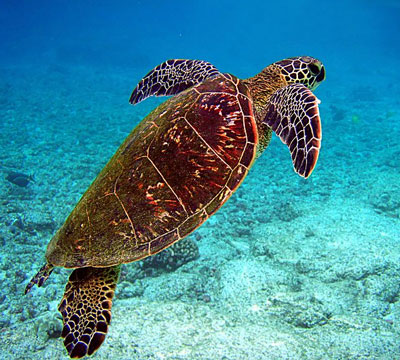
The International Union for Conservation of Nature (IUCN) lists the green turtle as Endangered worldwide. In the United States, green turtles are protected under the Endangered Species Act, with some populations listed as endangered and others as threatened.
Scientists estimate that only tens of thousands of females nest each year around the world, far fewer than in the past. With protection, some nesting populations, such as those in Florida and Hawaii, have been slowly recovering.
Threats to Survival
- Hunting and egg collection – for centuries, green turtles were hunted for meat, and their eggs were taken from nests. This still happens in some places.
- Bycatch – turtles drown after getting caught in fishing nets, including shrimp trawls, and on fishing lines.
- Habitat loss – building on beaches destroys nesting sites, and damage to seagrass beds and coral reefs reduces feeding areas.
- Pollution and plastic – turtles can swallow plastic or get tangled in it.
- Disease – a disease called fibropapillomatosis causes tumors on some turtles.
- Climate change – rising sand temperatures can mean almost all hatchlings are female, and rising seas can wash away nesting beaches.
Can You Keep One as a Pet?
No. Green sea turtles are protected by law in the United States and in many other countries, and it is illegal to keep them as pets or to disturb them. They also need the open ocean to survive. The best way to see one is in the wild, from a respectful distance, or at an aquarium or rescue center that helps injured turtles.
Green sea turtle FAQs
Why is it called the green sea turtle?
It is named for the green colour of the fat under its shell, which comes from its plant diet. In some places it is also called the black sea turtle.
What do green sea turtles eat?
Young green turtles eat small crustaceans, worms and insects as well as algae. Once they grow bigger than about 10 inches, they eat mostly seagrass and algae, which makes them the only plant-eating adult sea turtle.
How big do green sea turtles get?
Adults have a shell about 3 to 4 feet (83 to 114 cm) long and weigh 240 to 420 pounds. They are the largest hard-shelled sea turtle.
Where do green sea turtles live?
They live in warm tropical and subtropical seas all around the world, especially the Pacific and Atlantic Oceans. They stay close to coasts and islands, near seagrass beds.
How many eggs does a green sea turtle lay?
A female lays about 115 eggs at a time and nests several times in a season. The eggs hatch after about 60 days.

Randi Jones is the owner and founder of the Nature Gift Store, an online retailer specializing in nature-themed gifts, educational science projects, live animal nature kits and real butterfly artwork. A biology graduate who fell in love with insects, she founded the company in 2001 to make active learning about nature fun, accessible and engaging for children and adults. Her store offers real butterfly frames, home and garden decor and educational live animal kits, including ant farms, worm farms, tadpoles, ladybugs and hermit crabs, and she runs a bug museum in Washington featuring live animals like Eddie the Iguana alongside other reptiles and insects. Randi wrote most of the guides on this site. They first appeared on her long-running nature sites, including Monarch-Butterfly.com, Ladybug-Life-Cycle.com, Frog-Life-Cycle.com, Dragonfly-Site.com and Butterfly Pictures, which have now been brought together here at Learn About Nature.