
Elongated Tortoise
Scientific Classification
| Kingdom: | Animalia |
| Phylum: | Chordata |
| Subphylum: | Vertebrata |
| Class: | Reptilia |
| Order: | Testudines |
| Family: | Testudinidae |
| Genus: | Indotestudo |
| Species: | I. elongata |
| Binomial name: | Indotestudo elongata |
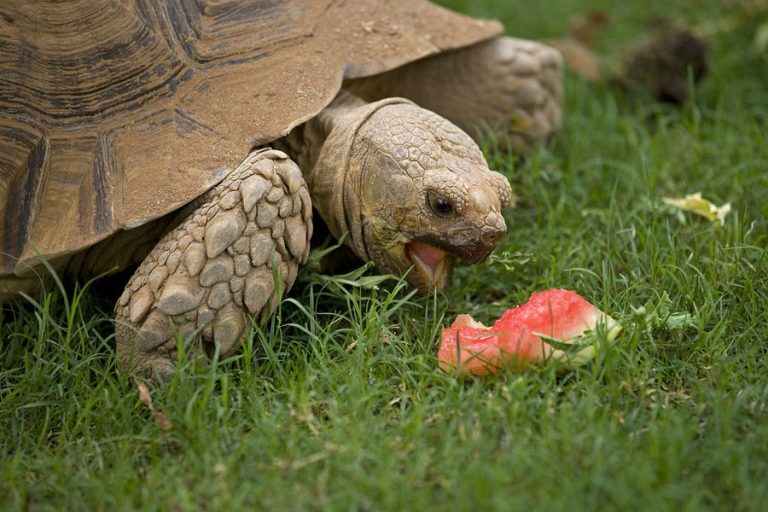
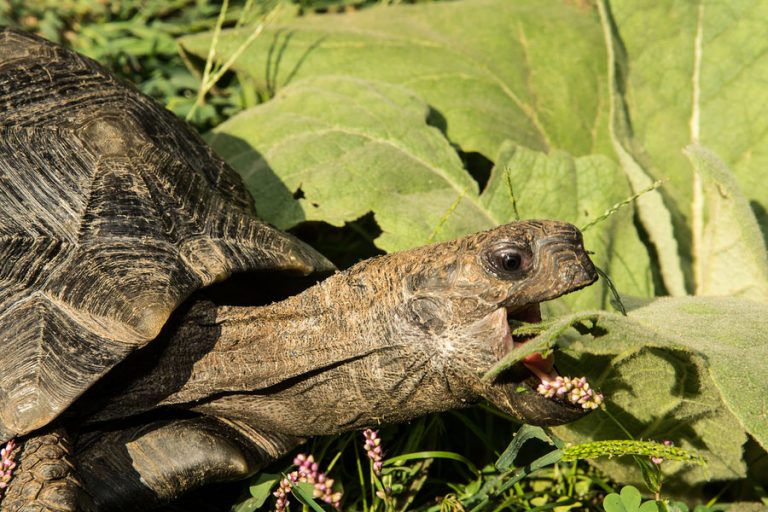
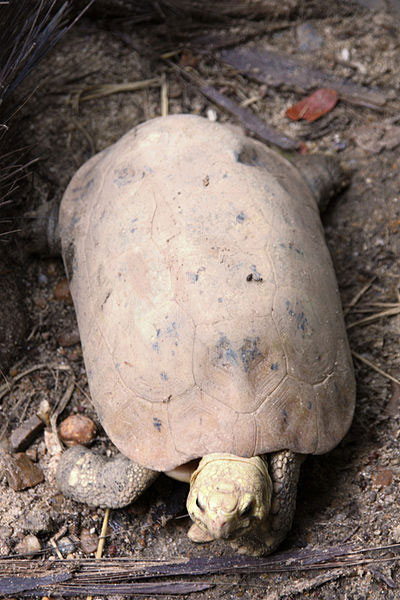
The Elongated tortoise Indotestudo elongate has a distinct and narrow carapace or upper shell that gives it this name.
Anatomy
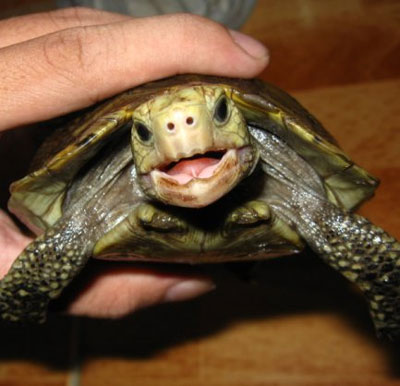
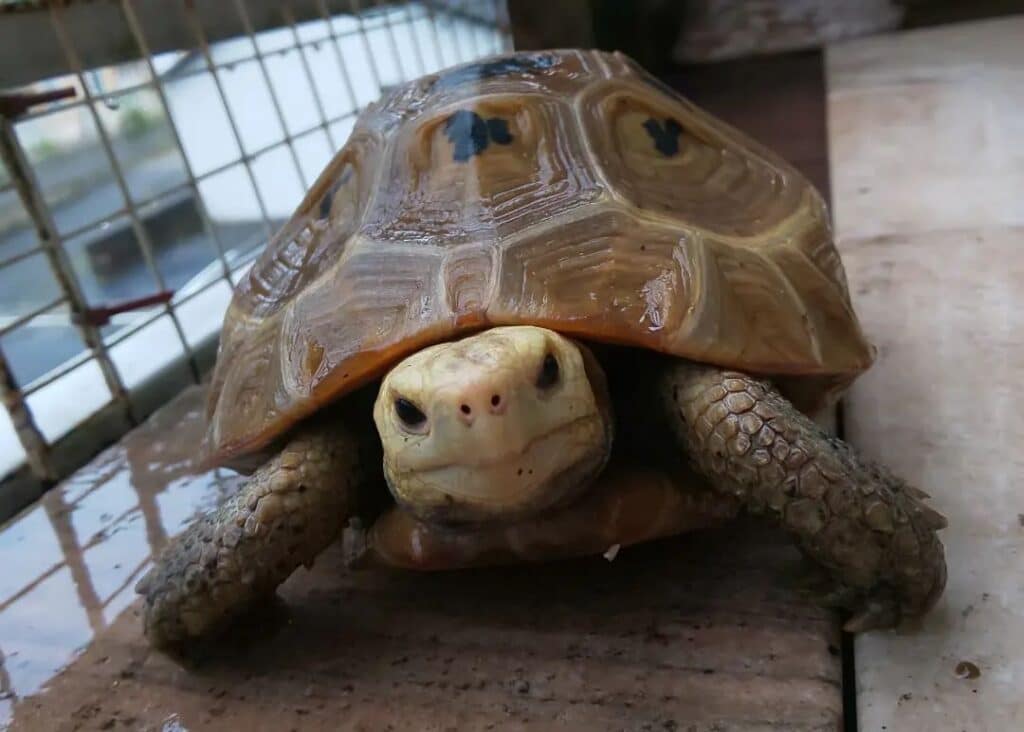
The color of the carapace ranges from caramel to yellowish–dark brown color. You can see dark blotches on every scute. The color of the head is pale yellow. Both the males and females develop a pink color around the eyes and nostrils during the breeding season. The males are narrower with shorter tails and more concave plastrons. The female posses longer and more curved hind claws,. This seems to be an adaptation of nest building.
Behavior
Elongated tortoises are crepuscular (very active during dawn and dusk) creatures. They possess large eyes that adapt well to low light. Males of the species display aggressive, almost sadistic, sexual behavior. Ramming the female from behind, biting her around the neck, head and hind legs are common features.
Habitat
You can find the elongated tortoise in southern and southeast Asia, north east India, Myanmar, Nepal, Bangladesh, Laos, Cambodia, Thailand and the Malaysian peninsula. They inhabit teak forests with high humidity. You can sometimes come upon them basking in hot, dry conditions on Indian open grounds.
As a Pet
Breeding
Breeding continues throughout summer and autumn. The nose and eye areas of both males and females develop reddish pink hues. Courtship is not a silent affair for elongated tortoises. The later part of the day is full of terrible ramming sounds emanating from the yard. Courtship is a rough affair. The male follows the female closely ramming her violently when she stops. It is wonderful how the shells withstand such violent ramming. Apart from exhibiting sadistic behavior, the male vocalizes loudly at actual mating.
Housing
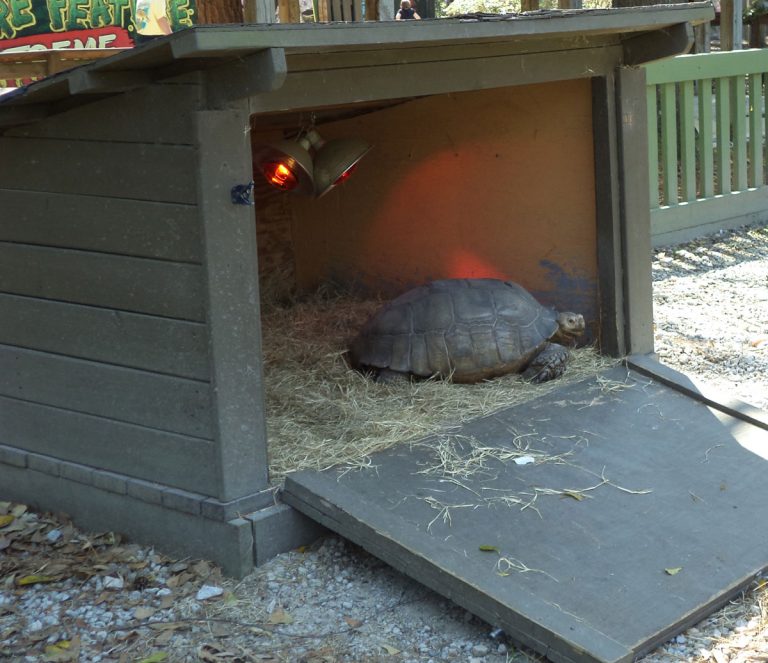
Elongated tortoises are tropical creatures. Tortoise care recommends that you should house them in vivariums with daytime temperatures that range from 80 to 88 Degrees F. You have to provide a bathing pool (a cat litter tray can do the job) since the tortoises need humidity and enjoy bathing long and often.
When you maintain the elongated tortoise in a vivarium, it is imperative that you provide the proper UVB lighting to aid vitamin D3 production and use. You should also give calcium additives like Nutrobal to supplement the calcium intake. You can put your tortoise in an outside enclosure during summer so that it can benefit from natural sunlight. You should also provide a shaded area. Clumps of hay or grass will do the job.
Food
You can provide a diet that consists of 80% green matter and 20% fruit matter. The greens should include kale, Brussel tops, watercress, spinach and parsley. The 20% Fruit matter should include banana, grape, melon and tomato. Some tortoises love mushrooms.
You should not feed your pet with Iceberg or round lettuce. You can, however, provide mixed lettuce available in supermarkets. Lettuce need not be part of the daily diet. You should daily supplement all foods with Nutrobal. Make sure to provide fresh water at all times.
The other alternatives available to feed your tortoise are Zoo Ned Tortoise Food, T- Rex Dry tortoise formula, etc. You can use these occasionally when you are not in a position to chop fresh food, or when you need a handy fallback.
Having discovered a fondness for insects while pursuing her degree in Biology, Randi Jones was quite bugged to know that people usually dismissed these little creatures as “creepy-crawlies”.