Indochinese Tortoises (Manouria)

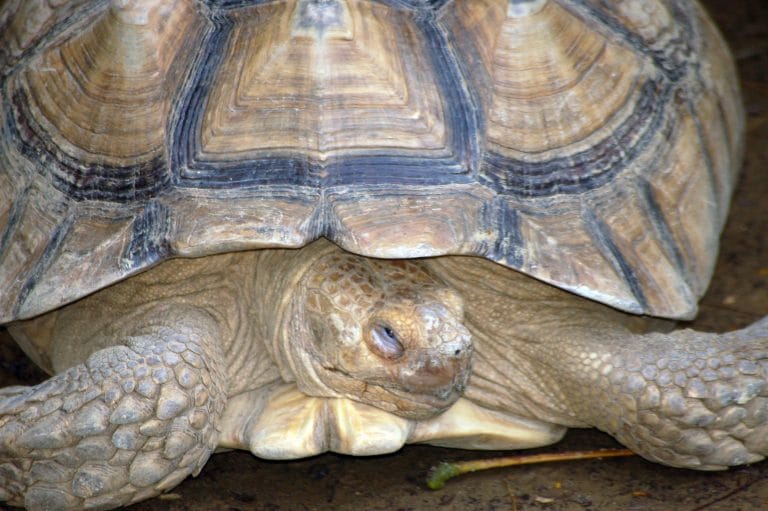
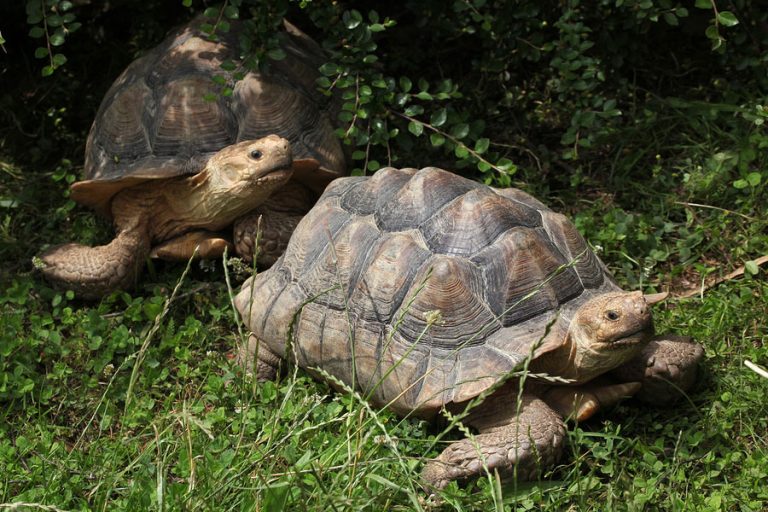
Manouria tortoises are large forest tortoises from Southeast Asia, and they belong to one of the oldest living groups of tortoises. The genus Manouria contains two species: the Asian forest tortoise (also called the Burmese mountain tortoise or Asian giant tortoise) and the smaller impressed tortoise. Unlike most tortoises, they love cool, damp, shady places.
Scientific Classification & Quick Facts
| Common name | Manouria tortoises |
| Scientific name | Manouria |
| Kingdom | Animalia |
| Phylum | Chordata |
| Class | Testudines |
| Family | Testudinidae |
| Type | Reptile (genus of Asian tortoises) |
| Diet | Plants, flowers, fruit and mushrooms |
| Habitat | Cool, humid evergreen and bamboo forests |
| Native range | South and Southeast Asia |
| Size | Burmese mountain up to 60 cm; impressed up to 30 cm |
| Special feature | Big thigh scales earn the name ‘six-legged tortoise’ |
Meet the Manouria Tortoises
Manouria tortoises live in humid forests, usually in hills and mountains and often near streams. They do not hibernate (brumate) or go into a summer resting state (aestivate), but they struggle in hot, dry weather and can become seriously ill if they overheat.
Big, thick scales on the back of their thighs look like little spurs. On the Asian forest tortoise these are so large that the tortoise is sometimes called the “six-legged tortoise.”
The members of the genus are:
- Manouria emys emys, the Asian brown tortoise
- Manouria emys phayrei, the Burmese black tortoise
- Manouria impressa, the impressed tortoise
Asian Forest Tortoise (Burmese Mountain Tortoise)
The Asian forest tortoise (Manouria emys) is the largest tortoise in mainland Asia. Its shell can reach about 24 inches (60 cm) long, and big adults can weigh over 50 pounds (23 kg).
Its shell is fairly flat and usually dark brown to black, with thick scutes (shell plates) that show clear growth rings. The plastron, or bottom shell, is a similar dark color. Its legs are covered in big, heavy scales. Of the two subspecies, the Burmese black tortoise (M. e. phayrei) is darker and grows larger than the Asian brown tortoise (M. e. emys).
Asian forest tortoises live in northeastern India, Bangladesh, Myanmar, Thailand, Malaysia, Sumatra and Borneo. Their home is cool, humid evergreen forest with well-drained soil, often in hilly areas. They spend much of their time hidden in leaf litter and sometimes dig shallow burrows.
Impressed Tortoise
The impressed tortoise (Manouria impressa) is smaller, growing to about 12 inches (30 cm) long. Its shell can be yellowish-brown, mustard-colored or darker brown with red and orange tones. The scutes on its back are flat or slightly sunken in the middle, as if they had been pressed in, which gives the tortoise its name.
The edges of its shell are jagged, like a saw, and flare outward at the front and back. Its plastron is brown to beige, and its head is often yellow or reddish. Like its cousin, it has large scales on its legs and thighs.
Impressed tortoises live in hill and mountain forests of Myanmar, Thailand, Laos, Cambodia, Vietnam, Malaysia and southern China, often among bamboo, at elevations of roughly 2,000 to 6,500 feet (600 to 2,000 m). They often hide in leaf litter.
Breeding
Asian forest tortoises do not seem to have a strict breeding season, though they are more active during rainy weather. Courtship is fairly gentle compared with some tortoises. Males bob their heads, and both males and females may make grunting or hissing sounds.
This species has one of the most unusual nesting habits of any tortoise. Instead of digging a hole, the female scrapes together a big mound of dead leaves and soil and lays her eggs inside it. A clutch is often 20 to 50 round eggs, about 2 inches (5 cm) across, which is one of the largest clutches of any tortoise.
Even more surprising, the female often stays to guard her nest for days after laying, something almost no other tortoise does. She may rebuild the mound and chase away animals that come too close, including monitor lizards and even people. The eggs take around two to three months to hatch.
Manouria Tortoises as Pets

Asian forest tortoises are sometimes kept by experienced reptile keepers, and owners often say they become calm and friendly with the people who care for them. However, they grow large and have special needs. Impressed tortoises are especially hard to keep alive in captivity and are best left to zoos and expert breeders.
Both species are threatened in the wild by hunting and habitat loss, and they are protected by international trade laws. Always choose a captive-bred tortoise. Wild-caught tortoises are often stressed and full of parasites. Any new tortoise should see a reptile vet for a full checkup.
Indoor Housing
A hatchling can start in a tub or tank of at least about 20 gallons. When it reaches about 6 inches (15 cm) long, it will need at least 40 gallons, and adults need a much larger enclosure, at least 8 by 4 feet (2.4 by 1.2 m). Indoor enclosures should be secure and waterproof.
Use a moisture-holding substrate such as hardwood mulch, cypress mulch or fir bark like the kind sold as orchid bark. Piles of leaf litter make great hiding places, which these shy tortoises need. Safe, non-toxic plants can be added, but expect them to be trampled or eaten.
Outdoor Housing
In a suitable climate, an outdoor pen is ideal. It must be secure against predators and thieves, and escape-proof. Include shade, edible plants, clean water and plenty of hiding spots such as piles of leaves.
Manouria tortoises are surprisingly good climbers. Give outdoor pens a roof or an overhanging lip, avoid fences they can climb such as chain-link, and cover the corners so they cannot shimmy up them.
Provide a heated shelter when the temperature drops below about 60 to 65°F (16 to 18°C), and use sprinklers or misting when the weather is hot or dry.
Temperature and Humidity
These tortoises need a shady, humid and warm, but not hot, home.
- Temperature: The ideal range is about 68 to 79°F (20 to 26°C). They can handle about 60°F (16°C) for short periods but should not be kept above about 86°F (30°C).
- Humidity: Keep it high, around 80 to 100 percent. Rain or misting makes them more active and helps their appetite.
- Lighting: Use gentle lighting with a low-level UVB lamp indoors. Tortoises that spend time outdoors in natural sunlight get UVB from the sun.
Water
Always provide a wide, shallow dish of clean water that is easy to clean, with its rim level with the substrate so the tortoise can climb in and out. Asian forest tortoises especially enjoy soaking.
What Do Manouria Tortoises Eat?
In the wild, Manouria tortoises eat plants, fallen fruit, fungi and the occasional small animal. In captivity, most of their diet should be leafy greens, weeds, grasses and safe flowers and leaves, such as mulberry leaves and hibiscus. Feed a wide variety rather than the same few foods every day, and do not rely on cabbage, spinach or iceberg lettuce, which are poor staple foods.
- Fruit and vegetables: Squash, pumpkin, bell pepper and shredded carrot make good extras. Fruit such as papaya, figs, kiwi and apple can be offered. Keep sweet fruits like grapes, bananas and citrus to small amounts.
- Mushrooms: Some experts believe the impressed tortoise eats a lot of mushrooms in the wild, and both species enjoy them. Store-bought oyster mushrooms are a good choice. Never feed wild-picked mushrooms, because some are poisonous.
- Protein: Asian forest tortoises eat some animal food. Keep it to about 10 percent of the diet or less, using foods such as earthworms, snails and slugs from pesticide-free areas, or a small piece of plain cooked egg or chicken.
Feed young tortoises daily and remove any leftovers. To avoid overfeeding, limit rich foods such as fruit and protein. A good rule of thumb is to offer a portion of these foods no bigger than the tortoise’s head. A reptile vet can help you plan the best diet for your tortoise.
Manouria tortoises FAQs
What are Manouria tortoises?
Manouria is a small group of old Asian tortoises with a long fossil history. The two living species are the Asian forest (Burmese mountain) tortoise and the impressed tortoise.
Why are they called six-legged tortoises?
They have big, bulging scales on their back thighs that look like an extra pair of small legs.
Where do Manouria tortoises live?
They live in the cool, damp, mountain forests of southern Asia, in places such as Thailand, Vietnam, Myanmar and Malaysia.
How big do Manouria tortoises get?
The Burmese mountain tortoise grows up to about 24 inches (60 cm) long, and the impressed tortoise up to about 12 inches (30 cm).
How do Manouria tortoises look after their nests?
The females build a big nest of leaves and guard it fiercely for days or weeks. They have been known to chase away monitor lizards and even people.

Randi Jones is the owner and founder of the Nature Gift Store, an online retailer specializing in nature-themed gifts, educational science projects, live animal nature kits and real butterfly artwork. A biology graduate who fell in love with insects, she founded the company in 2001 to make active learning about nature fun, accessible and engaging for children and adults. Her store offers real butterfly frames, home and garden decor and educational live animal kits, including ant farms, worm farms, tadpoles, ladybugs and hermit crabs, and she runs a bug museum in Washington featuring live animals like Eddie the Iguana alongside other reptiles and insects.