Jumping Spider

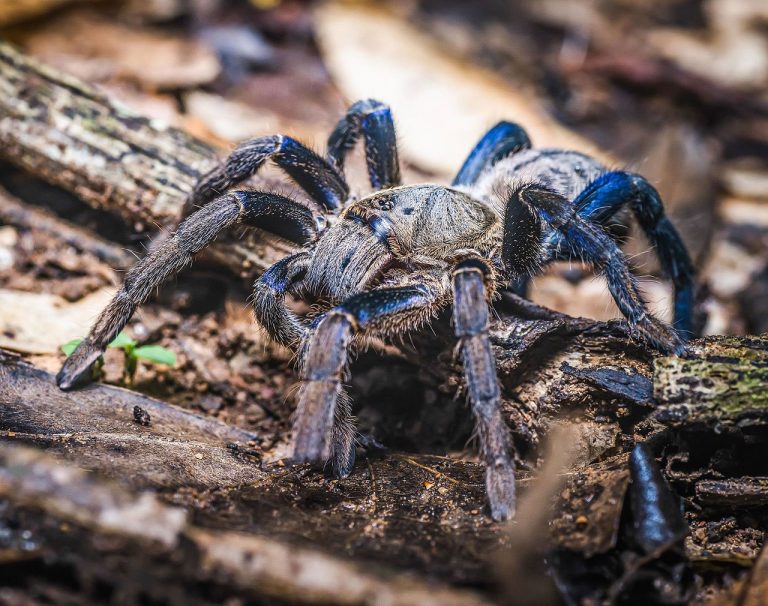
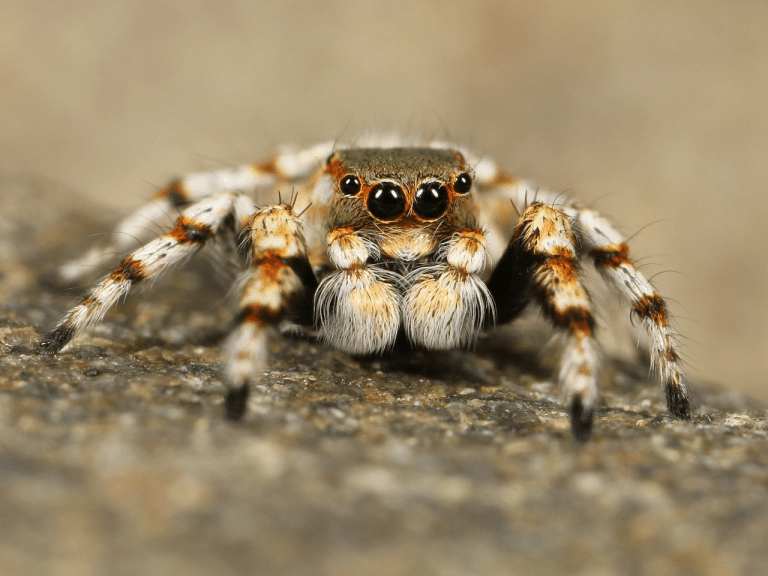
Jumping spiders are small, fuzzy, big-eyed spiders that hunt by leaping onto their prey. They belong to the family Salticidae, the largest spider family in the world, with more than 6,000 known species living almost everywhere except the coldest places.
Jumping spider Quick Facts
| Common name | Jumping spider |
| Scientific name | Salticidae |
| Kingdom | Animalia |
| Phylum | Arthropoda |
| Class | Arachnida |
| Order | Araneae |
| Type | Arachnid (spider) |
| Diet | Crickets, moths, black flies and other insects |
| Lifespan | 6 months to 2 years; up to 3 in captivity |
| Special feature | Excellent eyesight and big leaps to catch prey |

The Biology of a Jumping Spider
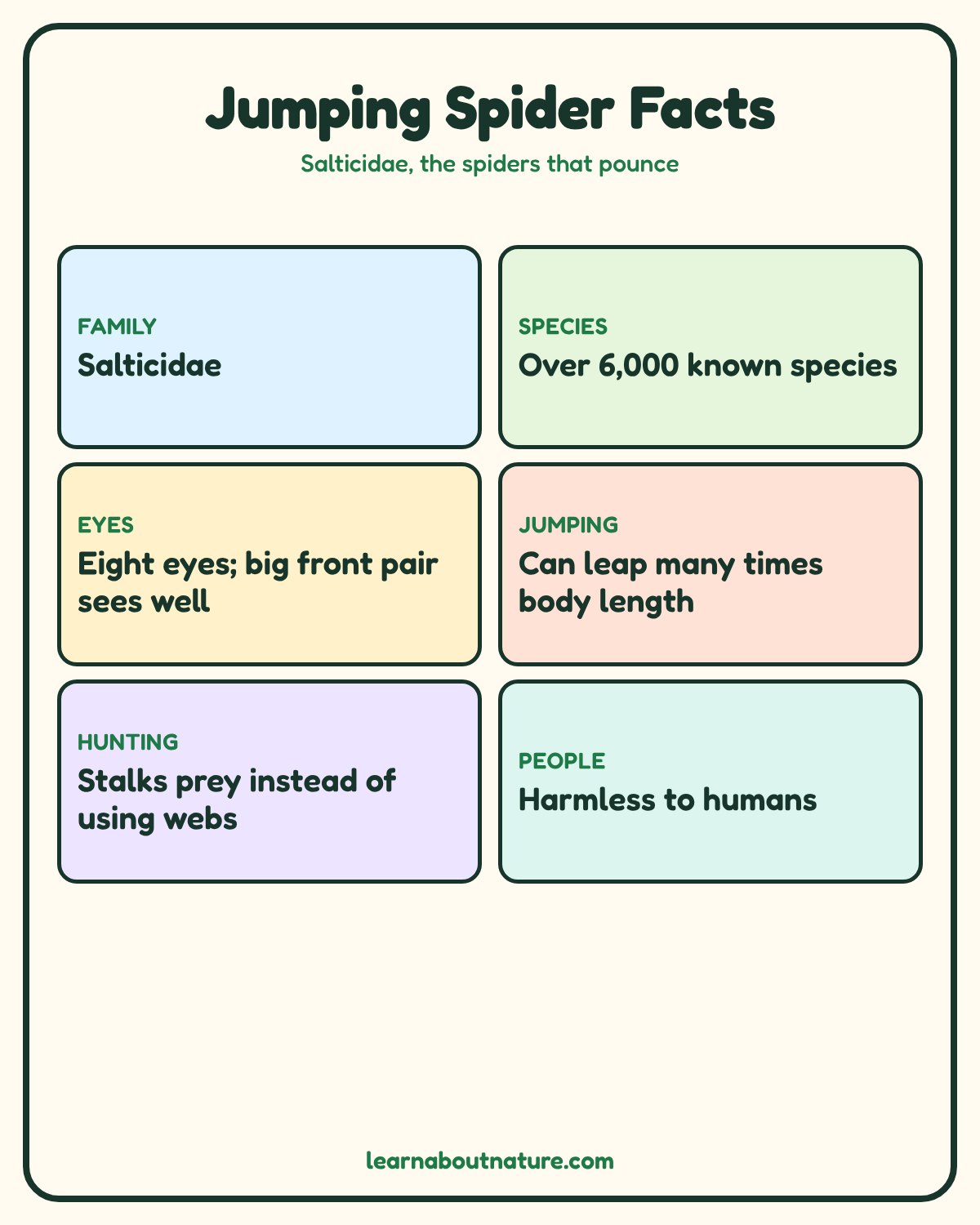
Jumping spiders are amazing acrobats. Many can jump several times their own body length, and some can leap far more than that. But unlike grasshoppers, they don’t have big, muscly jumping legs.
Instead, they use a kind of hydraulic power. Muscles in the body quickly squeeze fluid into the legs, which makes the back legs straighten in a flash and launch the spider into the air.
Before jumping, a jumping spider usually attaches a silk safety line, called a dragline, to the surface. If it misses its target, it can climb back up the line. Jumping spiders don’t build webs to catch food, but they do use silk for safety lines and to make small silk shelters, called retreats, where they rest at night, molt and lay eggs.
Super Eyesight
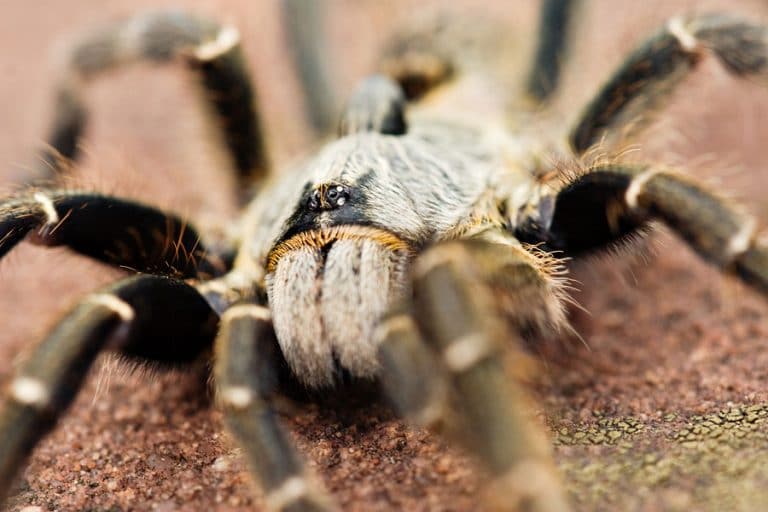
Jumping spiders have the best eyesight of any spider. They have eight eyes. The two big eyes at the front, called the principal eyes, see sharp detail and some colors, a bit like a telephoto camera. The other six eyes are smaller and spot movement all around the spider.
Here’s a cool fact: the spider can move the retinas inside its principal eyes to look around without turning its head. If you look closely at some jumping spiders, you can even see their eyes seem to change color as the retinas shift.

Prey and Hunting
Jumping spiders hunt during the day. They eat insects such as flies, mosquitoes, moths and crickets, as well as other spiders. A few species even sip flower nectar.
When a jumping spider spots prey, it creeps closer, much like a cat stalking a mouse. Then it pounces, grabs its prey with its front legs and bites, injecting venom to stop it moving.
Jumping spiders are curious. Instead of running away, they often turn to watch people, and may even hop onto a hand.
The Life Cycle of a Jumping Spider
Jumping spiders grow through four main stages: egg, egg sac, spiderling and adult. Many species live about one year, though some can live up to two or three years, especially in captivity. Females usually live longer than males.
One well-known species, the bold jumping spider (Phidippus audax), is common across North America and is sometimes kept as a pet. With good care, females can live for around two years.
Egg
Male jumping spiders often perform colorful dances to win over females, waving their legs and showing off bright markings. After mating, a female stores the male’s sperm until she is ready to lay eggs.
The number of eggs depends on the species and the female’s size. Many jumping spiders lay somewhere from a few dozen to a couple hundred eggs at a time.
Egg Sac
The female wraps her eggs in a silk egg sac inside a silk retreat, often under bark, in a curled leaf or in a crack. Many jumping spider mothers stay with their eggs and guard them from predators until the young hatch. In cold places, some species spend winter as eggs or young spiderlings, then become active in spring.
Spiderlings
Spiderlings look like tiny versions of the adults. After they leave the egg sac, they spread out to find their own hunting grounds. Some travel by “ballooning”: they climb to a high point, raise their bodies and let out silk threads that catch the breeze and carry them away.
Like all spiders, spiderlings have a hard outer skeleton that cannot stretch. To grow, they molt, or shed their old skin, usually several times. They are soft and helpless right after each molt, so they hide in their silk retreats until their new skin hardens.
Adult
After their final molt, jumping spiders are adults and ready to mate, and the cycle begins again. Males often wander in search of females and usually die sooner, while females live on to lay eggs.
Are Jumping Spiders Dangerous?
No. Jumping spiders are not aggressive toward people, and they very rarely bite. A bite usually only happens if the spider is squeezed or trapped. Most species are too small to break human skin, and those that do usually cause only mild, short-lived pain, like a mosquito bite. As with any small wound, wash a bite with soap and water.
Jumping spiders are helpful too, because they eat many garden and household pests. With their big eyes and curious behavior, they are some of the most fascinating spiders to watch.
Jumping spider FAQs
How long do jumping spiders live?
Jumping spiders live from about 6 months to 2 years. In captivity they can live up to 3 years, and females live longer than males.
How far can a jumping spider jump?
Jumping spiders can leap many times the height of their body. They do it by quickly pushing fluid into their back legs so the legs straighten fast.
What do jumping spiders eat?
Jumping spiders eat insects such as crickets, moths and black flies. They sneak up like a cat and then pounce.
Do jumping spiders use webs to catch food?
No. They hunt by stalking and leaping. They only use silk for safety or to build a shelter.
Are jumping spiders dangerous?
No, they are not aggressive and only bite if trapped. Most have jaws too weak to break the skin, and a bite causes only mild discomfort.

Randi Jones is the owner and founder of the Nature Gift Store, an online retailer specializing in nature-themed gifts, educational science projects, live animal nature kits and real butterfly artwork. A biology graduate who fell in love with insects, she founded the company in 2001 to make active learning about nature fun, accessible and engaging for children and adults. Her store offers real butterfly frames, home and garden decor and educational live animal kits, including ant farms, worm farms, tadpoles, ladybugs and hermit crabs, and she runs a bug museum in Washington featuring live animals like Eddie the Iguana alongside other reptiles and insects. Randi wrote most of the guides on this site. They first appeared on her long-running nature sites, including Monarch-Butterfly.com, Ladybug-Life-Cycle.com, Frog-Life-Cycle.com, Dragonfly-Site.com and Butterfly Pictures, which have now been brought together here at Learn About Nature.