Garden Spider

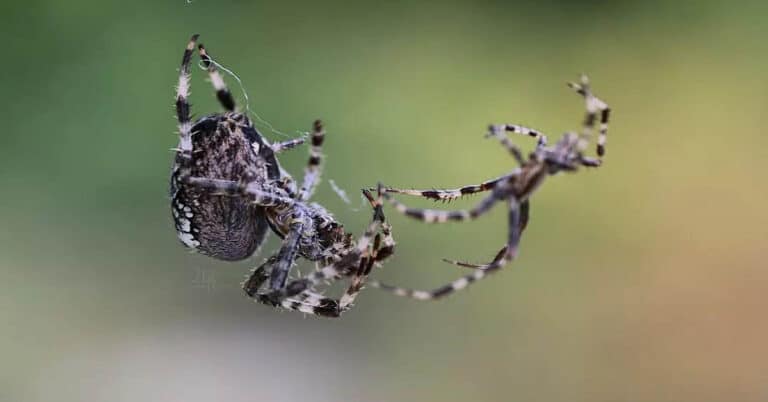
The garden spider, also called the yellow garden spider or black-and-yellow argiope (Argiope aurantia), is a large orb-weaving spider found across much of North America. It is famous for its bold black-and-yellow body and the thick zigzag of silk it weaves into the middle of its web.
Garden spider Quick Facts
| Common name | Garden spider |
| Scientific name | Araneidae |
| Kingdom | Animalia |
| Phylum | Arthropoda |
| Class | Arachnida |
| Order | Araneae |
| Type | Arachnid (web-spinning spider) |
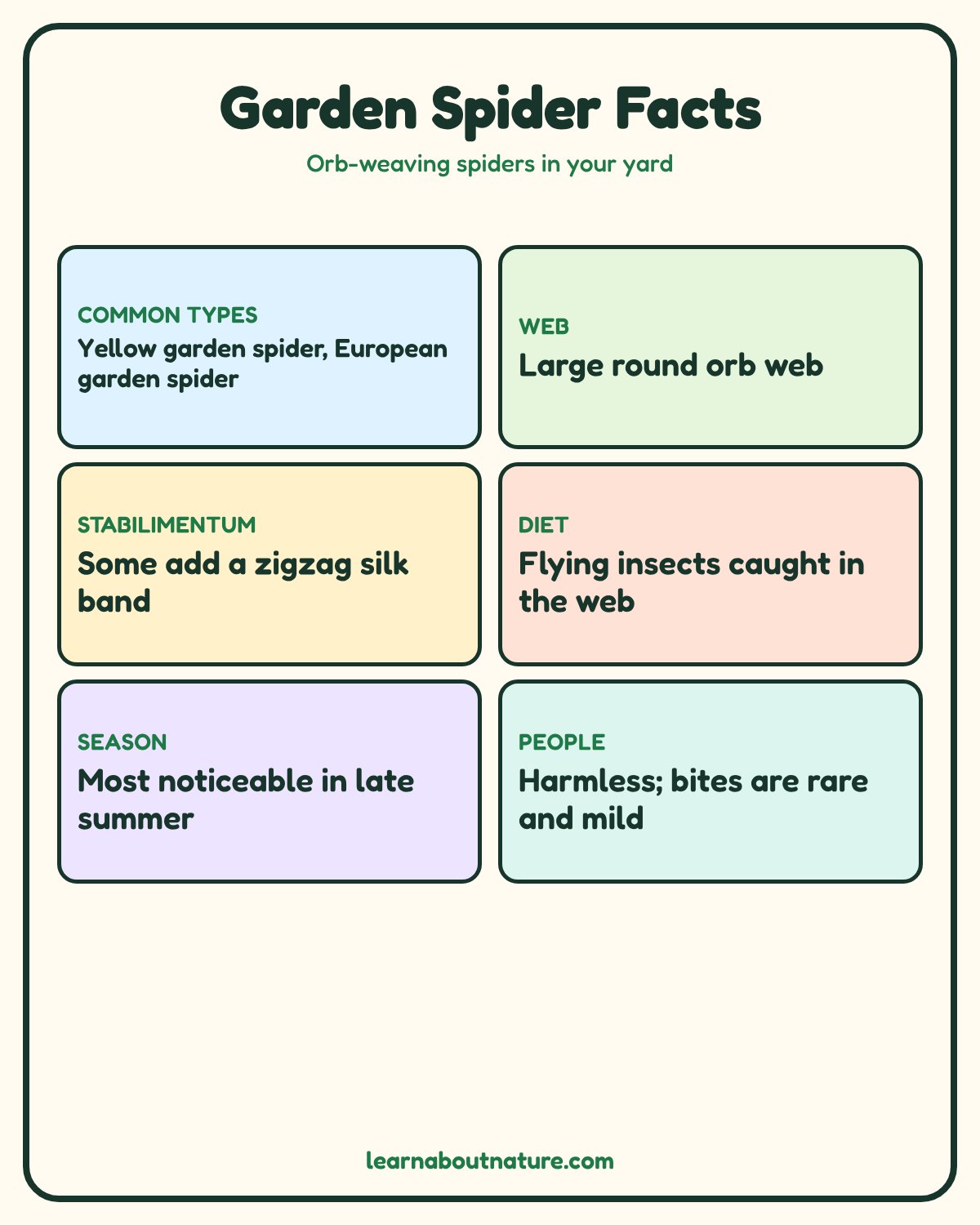
| Diet | Butterflies, honeybees and other flying insects |
| Habitat | Gardens and yards with trees for webs |
| Native range | USA, Canada and Mexico |
| Size | Females 6-20 mm, males 5-13 mm |
| Lifespan | About one year |
| Special feature | Weaves a zigzag pattern in its web |
Where Garden Spiders Live
Garden spiders live in southern Canada, across the United States, and in Mexico and Central America. They like sunny spots with tall plants, shrubs or fences to hang their webs on. You can find them in meadows, along field edges and very often in backyards and gardens.
Once a female finds a good spot, she usually stays there for most of her adult life. That means the whole life cycle of a garden spider can happen right in your backyard.
Size and Appearance
Females are much larger than males. A female’s body is usually about 0.75 to 1.1 inches (19 to 28 mm) long, not counting her legs, while males are only about 0.2 to 0.35 inches (5 to 9 mm). Females have an egg-shaped abdomen with black and bright yellow markings, and long black legs with orange or yellow bands. Males are smaller and paler.
The Life Cycle of a Garden Spider
Most garden spiders live for about one year. Their life cycle follows the seasons, starting and ending in the fall.
Silken Home: The Egg Sac
A garden spider’s life begins inside an egg sac. In late summer or fall, the female spins a round, papery sac about the size of a marble or a little bigger, and hangs it near her web among plants. Inside, she lays hundreds of eggs, sometimes more than a thousand.
She wraps the sac in several layers of tough brown silk to protect the eggs from cold, rain and predators. She often guards it for a short while, but she usually dies with the first hard frosts of fall.
Winter Inside the Sac
The eggs hatch in the fall, but the tiny spiderlings do not leave. They stay snug inside the egg sac all winter, protected by its silk walls.
Spiderlings
In spring, when the weather warms, the spiderlings chew their way out. They are tiny and look quite different from their colorful mother. Many of them travel by ballooning: they climb to a high point, release a strand of silk, and let the breeze carry them away to a new home.
Each spiderling spins its own small web and catches tiny insects. Like all spiders, they have a hard outer skeleton, so they must molt, or shed their skin, several times to grow.
Summer: Growing Up
By mid to late summer, the spiders are adults. Females build big, round orb webs that can be up to about 2 feet across. Each web has a thick zigzag band of silk running through the center, called a stabilimentum.
Scientists still debate what the zigzag is for. It might warn birds not to fly through the web, it might help attract insects, or it might help hide the spider. It may do more than one of these things.
Autumn: Finding a Mate
In late summer and fall, adult males leave their small webs and wander in search of females. A male usually builds his own little web near a female’s. To approach her safely, he plucks the silk threads of her web in a special pattern, signaling that he is a mate, not a meal.
Mating is risky for males. Many die during or soon after mating, and some are eaten by the female. After mating, the female stores the sperm and uses it to fertilize her eggs when she makes her egg sac. Then the cycle begins again.
How Garden Spiders Hunt
The garden spider usually sits head-down in the center of her web, waiting. When an insect gets stuck, she feels the vibrations through the silk, rushes over and bites it. Her venom paralyzes the prey, and she quickly wraps it in silk.
Like other spiders, she cannot chew. Instead, her venom and digestive juices turn the inside of her prey into liquid, which she sucks up.
Garden spiders often rebuild the sticky spiral of their web every day or night, because it gets damaged and loses its stickiness. Before spinning a new one, the spider eats the old silk to recycle the protein inside it.
Diet
Garden spiders eat flying and jumping insects that blunder into their webs, including flies, grasshoppers, moths, beetles, wasps and bees. Because they eat so many insects, they help keep pest numbers down in gardens.
Are Garden Spiders Dangerous?
No. Garden spiders are shy and harmless to people. They would rather drop from their web or shake it to look bigger than bite. If one is grabbed, it might bite, but the bite is about as painful as a bee sting and usually causes only mild redness and swelling. The best plan is simply to watch these beautiful spiders from a respectful distance.
Garden spider FAQs
How long do garden spiders live?
Garden spiders usually live about one year, starting and ending their lives in spring. A few females can live longer where winters are mild.
What do garden spiders eat?
Garden spiders catch flying insects such as butterflies and honeybees in their webs. They wrap the prey in silk and eat it.
Are garden spiders dangerous?
No. A garden spider’s venom is safe for people. It is only used to hold still the insects that get stuck in the web.
What is the zigzag in a garden spider’s web?
It is called a stabilimentum. Scientists are not sure what it is for, but it may warn flying animals that the web is there so it does not get damaged.
Where do garden spiders lay their eggs?
In autumn the female makes a silky egg sac, like a flattened yellow cover, in a safe corner or crack. The spiderlings hatch in spring.

Randi Jones is the owner and founder of the Nature Gift Store, an online retailer specializing in nature-themed gifts, educational science projects, live animal nature kits and real butterfly artwork. A biology graduate who fell in love with insects, she founded the company in 2001 to make active learning about nature fun, accessible and engaging for children and adults. Her store offers real butterfly frames, home and garden decor and educational live animal kits, including ant farms, worm farms, tadpoles, ladybugs and hermit crabs, and she runs a bug museum in Washington featuring live animals like Eddie the Iguana alongside other reptiles and insects. Randi wrote most of the guides on this site. They first appeared on her long-running nature sites, including Monarch-Butterfly.com, Ladybug-Life-Cycle.com, Frog-Life-Cycle.com, Dragonfly-Site.com and Butterfly Pictures, which have now been brought together here at Learn About Nature.