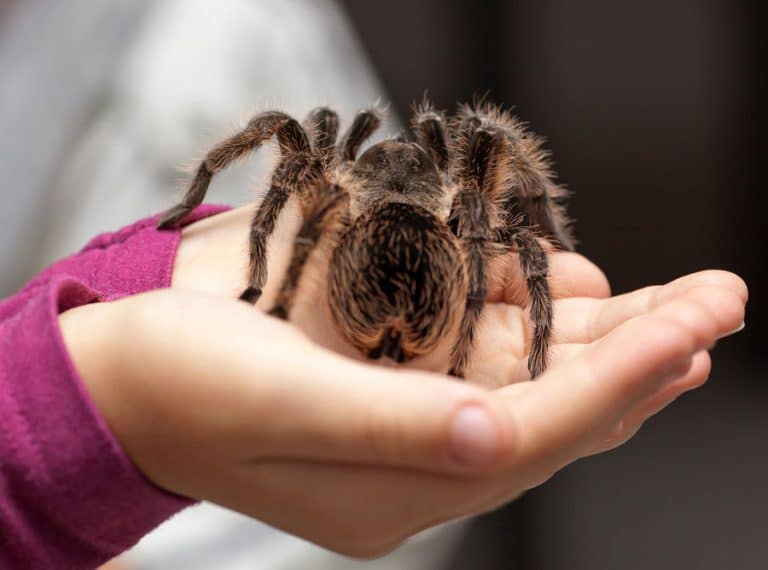
Bird Eating Tarantula
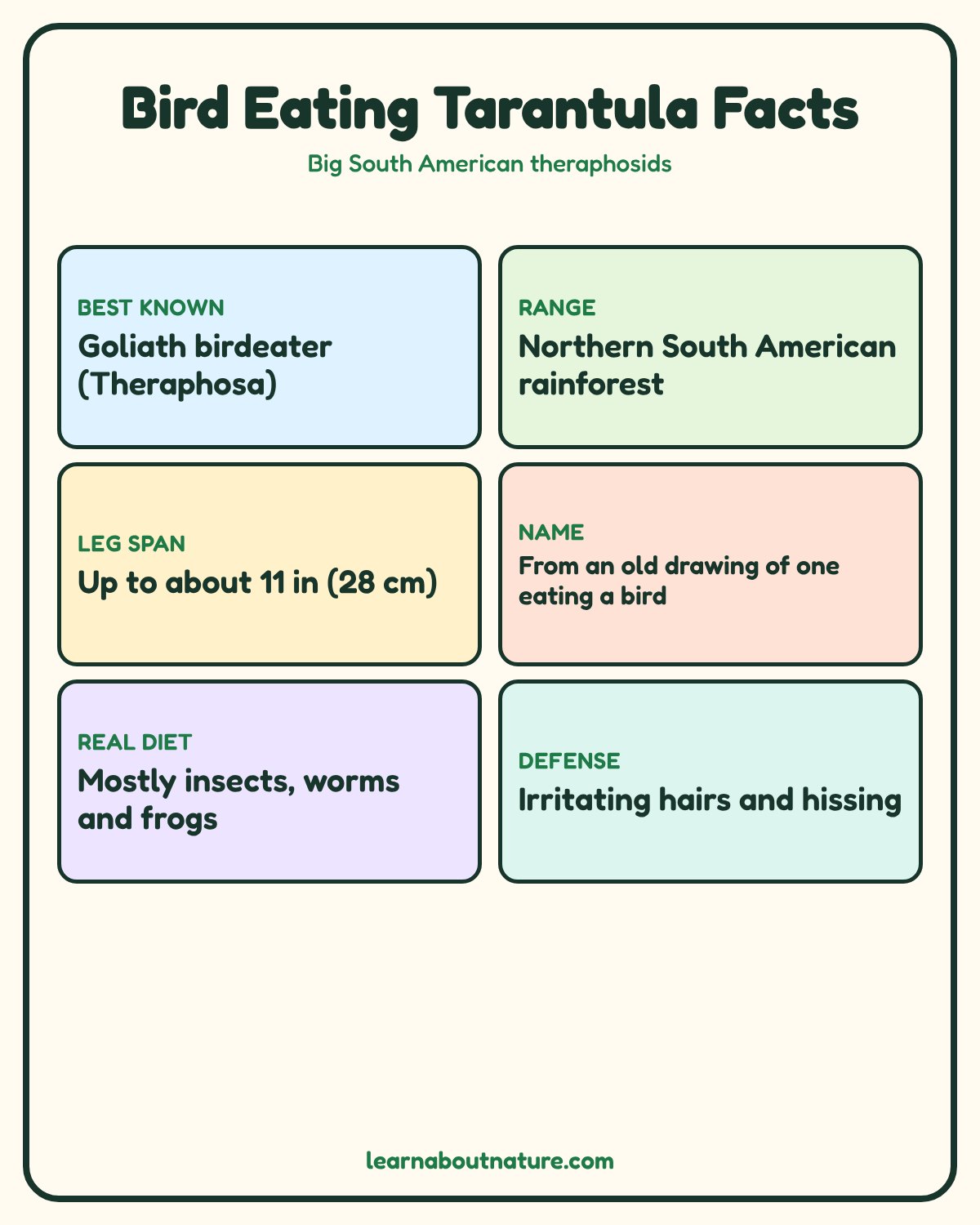
Goliath bird-eating tarantula Quick Facts
| Common name | Goliath bird-eating tarantula |
| Scientific name | Theraphosa blondi |
| Kingdom | Animalia |
| Phylum | Arthropoda |
| Class | Arachnida |
| Order | Araneae |
| Family | Theraphosidae |
| Genus | Theraphosa |
| Type | Arachnid (tarantula) |
| Diet | Beetles, small snakes, lizards, frogs, bats and young birds |
| Habitat | Deep hideaways in rainforest |
| Native range | Northern South America, including Guyana and Suriname |
| Size | Leg span about 10 inches |
| Weight | More than 6 ounces |
| Special feature | Hisses by rubbing leg bristles together |
The Biggest of Them All
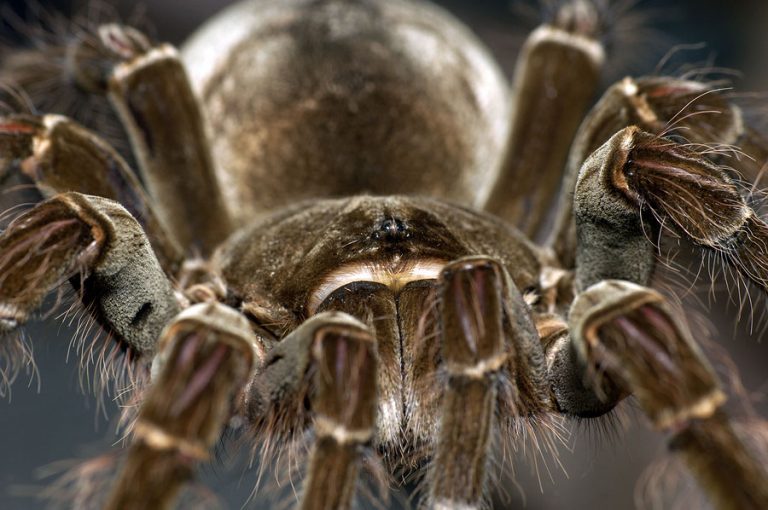
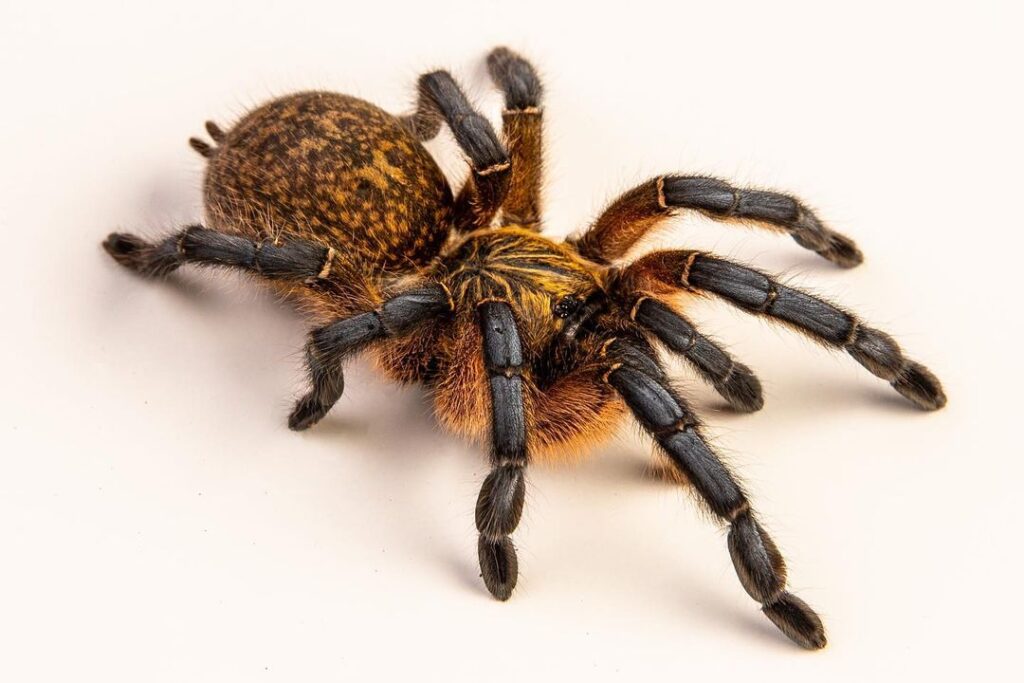
Among the more than nine hundred known species of tarantula inhabiting our earth, the Goliath Bird Eating tarantula spider is the biggest of them all. Its leg span is ten inches and it weighs more than six ounces. Like other arachnids, these also possess eight legs, enclosed in dark brown hair that become nearly white at each of the joints.
Anatomy
The Goliath bird-eating tarantula has two attachments in the neighborhood of its fangs that look like its legs, which they are not. In fact, these attachments, called pedipalps, are their sensing organs that help pushing down the food to spider’s mouth. Like other tarantulas, the mouth of the Goliath comprises of jaws, which move up and down, quite unlike the side-to-side movement in case of other spiders. Reddish hairs cover its head and abdomen, giving it a golden blond look. It is because of this color that they call this spider also as blondi, the Latin equivalent of golden.
Like most arachnids, the bird eating tarantula’ body consists of two parts, the prosoma or the cephalothorax and the abdomen or the opisthosoma. A pedicle or a pregenital somite connects these two parts.
Despite its eight minute eyes, the Goliath has a poor eyesight, just enough to allow it to distinguish between light and dark, making it rather difficult for it at the time of mating.
Diet
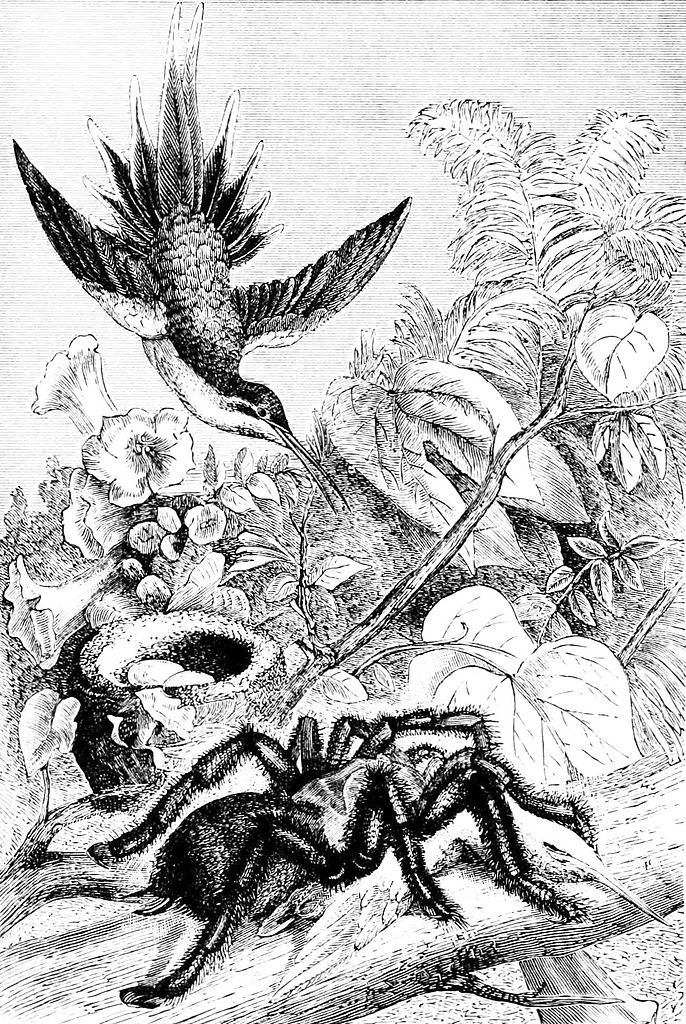
The diet of bird eating tarantula comprises of beetles, small snakes, lizards, frogs and bats. These spiders are in the habit of taking away young birds from their nests, and hence the name “bird eater.” The spider creeps onto its prey and seizes it, injecting it with venom, released through its fangs.
Habitat
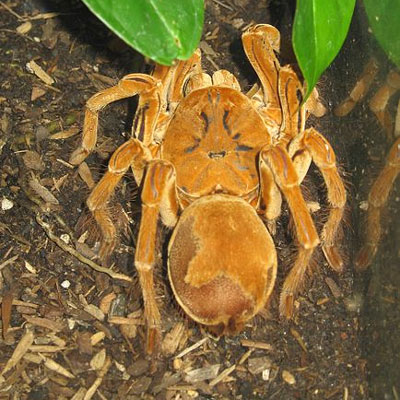
The Goliath inhabits coastal rainforest of South America and Surinam, Guyana, and French Guiana.
This spider has many enemies, the most dangerous being wasps, known as the Pepsis or the tarantula hawk. The wasp paralyzes the Goliath and hauls it back to its nest. The Goliath Bird Eating tarantula spider is a spider of the night and lives in deep hideaway. They do not prepare their own hideaway but live in hideaway abandoned by rodents or small animals.
Self Protection
This variety of spiders do not fashion partnerships and befriend other adult spiders only for mating. The Goliath is very hostile and has built-in defense mechanisms for safeguarding it. On sensing danger, the Goliath creates a loud hissing noise by rubbing together the bristles on its legs. It can also obscure the attacker by pushing its hairs at the attacker. The pointed hairs cause extreme pain and irritation.
Breeding
With the early advent of spring or early summer, the male bird-eating tarantula lures the female from the depths of the burrow to the entrance, to mate. After an interval of several days, the female lays her eggs in a silk woven sack with a diameter of about 30 millimeters. She spins a thick layer of silk, and protects her eggs in the burrow. Surprisingly, she always carries the sack with her when she goes hunting outside the burrow. After a period of about two to three months, the eggs hatch more than 100 spiderlings. These little ones stay in the mother’s burrow for hardly a few weeks before they move out to find independent burrows of their own.
Goliath bird-eating tarantula FAQs
How big is a Goliath bird-eating tarantula?
It is the biggest tarantula. Its leg span is about 10 inches and it can weigh more than 6 ounces.
What does a Goliath bird-eating tarantula eat?
It eats beetles, small snakes, lizards, frogs and bats. It also sometimes takes young birds from their nests, which is how it got its name.
Where do Goliath bird-eating tarantulas live?
They live in the rainforests of northern South America, such as Guyana, Suriname and French Guiana. They hide in deep burrows left by rodents or other small animals.
How does a Goliath tarantula defend itself?
It makes a loud hissing sound by rubbing the bristles on its legs together. It can also flick hairs at an attacker, and these cause severe pain and irritation.
What are the enemies of the Goliath bird-eating tarantula?
Its most dangerous enemy is the tarantula hawk wasp, which paralyses the spider and drags it to its nest.

Randi Jones is the owner and founder of the Nature Gift Store, an online retailer specializing in nature-themed gifts, educational science projects, live animal nature kits and real butterfly artwork. A biology graduate who fell in love with insects, she founded the company in 2001 to make active learning about nature fun, accessible and engaging for children and adults. Her store offers real butterfly frames, home and garden decor and educational live animal kits, including ant farms, worm farms, tadpoles, ladybugs and hermit crabs, and she runs a bug museum in Washington featuring live animals like Eddie the Iguana alongside other reptiles and insects. Randi wrote most of the guides on this site. They first appeared on her long-running nature sites, including Monarch-Butterfly.com, Ladybug-Life-Cycle.com, Frog-Life-Cycle.com, Dragonfly-Site.com and Butterfly Pictures, which have now been brought together here at Learn About Nature.