Tribulus Terrestris
Scientific Classification & Quick Facts
| Common name | Tribulus terrestris |
| Scientific name | Tribulus terrestris |
| Kingdom | Plantae |
| Phylum | Tracheophyta |
| Class | Magnoliopsida |
| Order | Zygophyllales |
| Family | Zygophyllaceae |
| Genus | Tribulus |
| Conservation status | Least Concern |
| Type | Herbaceous perennial, often a weed |
| Habitat | Arid regions, deserts, sandy soil |
| Native range | Warm regions of southern Asia, southern Europe, Africa, Australia |
| Colours | Lemon-yellow flowers |
| Height | Up to 2 feet |
| Special feature | Spiny fruit splits into 5 sharp nutlets |
Tribulus terrestris has many common names, including puncture vine, goathead, caltrop, bindii, devil’s thorn and tackweed. It is a low-growing plant with a taproot, and its stems spread along the ground in a mat that can be about 1 meter across. It gets names like puncture vine and goathead from its hard, spiny seed cases, which are sharp enough to hurt bare feet and even puncture bicycle tires! Its fruit, roots and leaves have traditionally been used in Ayurvedic and Chinese medicine. In the United States and Australia it is a common weed of roadsides, fields and vacant lots.
History
In Sanskrit, the Tribulus Terrestris plant is known as Gokshura. This word comes from two Sanskrit words Go means Cow and Kshura means barb or razor. For many centuries, in India, its fruit has been used in Ayurvedic medicines and also in traditional Chinese medicines to treat diseases. In Ancient times, the Greeks used it as a general tonic.
Anatomy
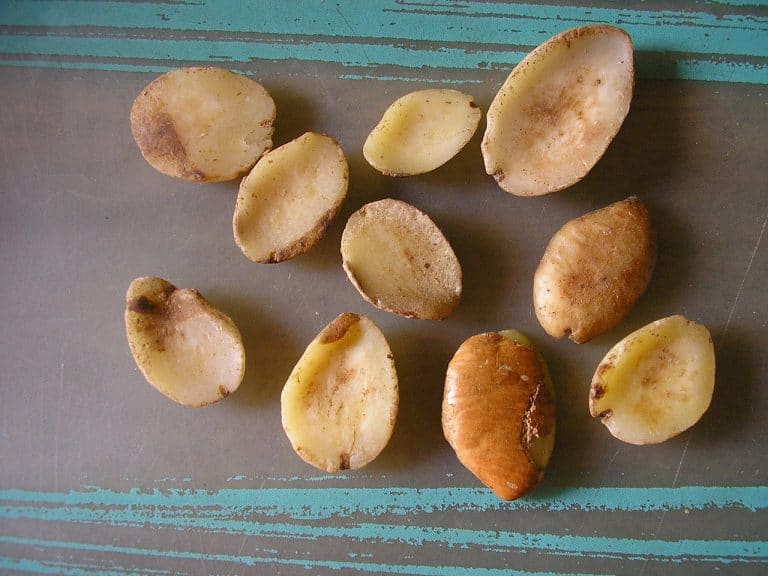
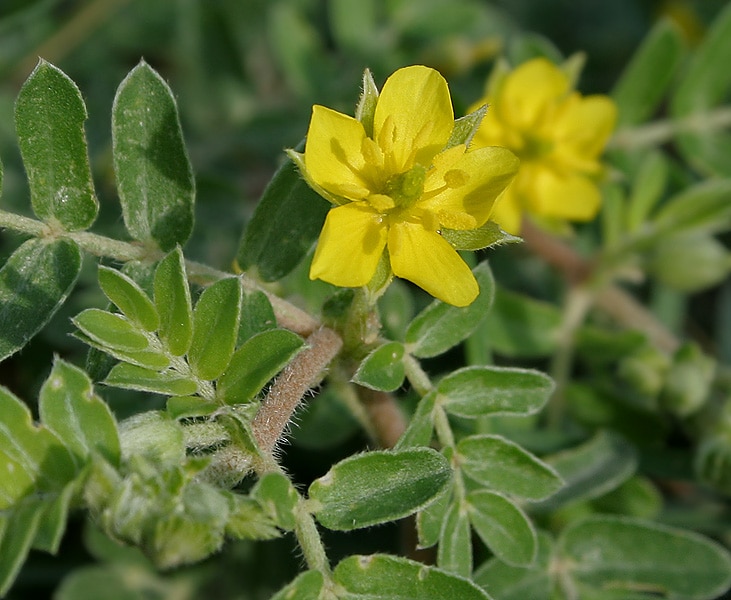
The stems of Tribulus terrestris are hairy and branch out from the center of the plant, spreading along the ground. Its leaves are pinnately compound, made of several pairs of small, hairy leaflets, each less than about 1 cm (under half an inch) long. The flowers are small, about 5 to 10 mm wide, with five lemon-yellow petals, ten stamens and five sepals. Each flower turns into a fruit that breaks into five hard sections, called nutlets, each with two to four sharp spines. A single plant can make hundreds of these spiny fruits through summer and autumn.
Habitat
Soil for Planting
Tribulus Terrestris prefers well drained soil. Sandy, clayey and loamy soil is suitable for this plant. It prefers moist and dry soil. It has the ability to tolerate maritime exposure and many soil conditions but does well in sandy soil.
Planting
Planting of the Tribulus Terrestris plant is done by seeds. It is propagated by seeds. Before planting, the seeds should be stratified for one to three months. The seeds should be covered with moist sand and should be placed in the refrigerator till the germination process takes place. After the seeds sprout, it can be transplanted to a warm and sunny location where it receives enough daylight and sun, it prefers a south and southeast direction where the temperature is warm. It should be planted about half an inch deep in the soil at a gap of 3 to 4 feet from all sides as it requires a roomy space to grow and. The preferable soil is sandy with a good drainage system, or sand can be mixed with the top layer of the garden soil to make it sandy. The seeds should be sown in the spring season.
Watering
Regular watering is essential for the Tribulus Terrestris plant.. Newly planted seedlings require watering every day till they can reach a height of 6 inches. Once established, it needs very little water to survive. In dry conditions, watering in a week is necessary.
Temperature and Humidity
Tribulus Terrestris requires high temperature for the germination and growth of the plant.
Flowering and Maturing Care
This plant requires less care and maintenance. It requires direct and full sunlight. It does not require fertilizers.
Harvest
When the Tribulus Terrestris plant begins to bloom, its healthy parts are harvested for the use of medicines. Its outer portion of the stem which contains flower buds and young leaves are harvested. The flowers are harvested when they are in full bloom. Harvesting of this plant is done when its seed pods are ripe and green. For removing these seed pods Gloves are used or they are bushed with another tool.
Pests and Pesticides
Pests and diseases cause damage to the Tribulus Terrestris plant. During the vegetation period, mildew attacks the plant. Caterpillars and cotton Aphid pests can also cause damage. Mildew causes brown spots on the leaves of the plant. Spider Mite pest also attacks and harm the plant.
Dosage
There is no proven safe or effective dose for this herb. Products made from it, such as capsules and tinctures, are sold as supplements, but they are not approved to treat any illness and the amounts in them vary. Anyone thinking about using it should ask a doctor first.
Side Effects
There is little reliable information about the safety of this herb. It may affect blood sugar and blood pressure, so children, pregnant women, women who are breastfeeding and people with diabetes, heart disease or high blood pressure should not use it without a doctor’s advice.
Uses
The roots, leaf and fruits of the Tribulus Terrestris plant have been used in traditional medicine. In Ayurvedic and traditional Chinese medicine, the fruit has been used as a tonic and for problems of the kidneys, urinary tract, liver and digestion. Its seeds can be dried and powdered for use as a tea or put into capsules. Supplements made from it are sold in several countries, but scientific studies have not shown that it cures any disease.
Tribulus terrestris FAQs
What is Tribulus terrestris?
It is a fast-growing, low plant with a long taproot and hairy stems. People also call it puncture vine, caltrop, devil’s thorn or goathead.
Why is Tribulus terrestris called puncture vine?
Its fruit breaks into 5 nutlets, each with 2 to 4 sharp, hard spines. These can poke into feet and tyres.
Where does Tribulus terrestris grow?
It is native to warm regions of southern Asia, southern Europe, Africa and Australia. It grows in dry places and deserts, and is a roadside weed in the United States.
How tall does Tribulus terrestris grow?
It grows quickly and can reach about 2 feet tall. A single plant can make around 400 fruits.
What is Tribulus terrestris used for?
For over 3,000 years its fruit and roots have been used in Ayurvedic and traditional Chinese medicine. Some people should not take it, including pregnant women and people with diabetes.

Randi Jones is the owner and founder of the Nature Gift Store, an online retailer specializing in nature-themed gifts, educational science projects, live animal nature kits and real butterfly artwork. A biology graduate who fell in love with insects, she founded the company in 2001 to make active learning about nature fun, accessible and engaging for children and adults. Her store offers real butterfly frames, home and garden decor and educational live animal kits, including ant farms, worm farms, tadpoles, ladybugs and hermit crabs, and she runs a bug museum in Washington featuring live animals like Eddie the Iguana alongside other reptiles and insects.