Acacia Tree

Scientific Classification & Quick Facts
| Common name | Acacia |
| Scientific name | Acacia |
| Kingdom | Plantae |
| Phylum | Tracheophyta |
| Class | Magnoliopsida |
| Order | Fabales |
| Family | Fabaceae |
| Type | Trees and shrubs in the pea family |
| Habitat | Dry climates, full sun, well-drained soil |
| Native range | Australia, Africa, the Pacific islands and the Americas |
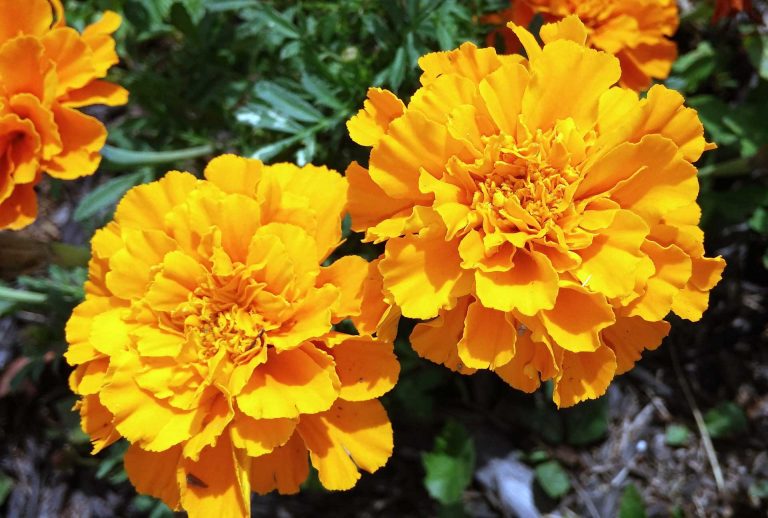
| Colours | Fuzzy yellow flowers, sometimes white |
| Edible parts | Young shoots, eaten in Southeast Asia |
| Special feature | Adds nitrogen to the soil |
Acacia is a large group of about 1,300 species of shrubs and trees found in the world (in the older, broad sense of the name; many African and American species have since been moved to the genera Vachellia and Senegalia). This plant comprises of a genus (Acacia) that basically belongs to the family of peas, scientifically called the Fabaceae. These species belong to the tropical regions and are also found in the sub-tropical regions around the world. They are particularly natives of the Australian regions. In this area they are called as the Wattles and they are also found also in the regions of the Africa. The characteristics of the leaves are many and they have very characteristic looks. The leaves are small and very finely and neatly divided into leaflets which give the leaves a fern-like appearance. The leaf stalks are feathery in appearance. The leaves of the Acacias and their looks and texture vary from place to place. In the Australian region and the pacific region species, the leaflets are not discernable or they look as if the leaflets are suppressed. The flattened leaf stalks play an important role in the physiological functions of leaves. The arrangement of the leaves is vertical and we can find thorns and very sharp spines at the base of the leaves. Yet another feature of the Acacias is that they have very beautiful, but smaller flowers. The flowers have a pleasant fragrance, and are arranged in a cluster form which is cylindrical in shape. The flowers are usually yellow in color, but sometimes they are white in color. The flowers are arranged in a very compact round shape. The flowers of the Acacias look fuzzy.
Around 1,000 species are native to Australia, and many belong to the Pacific Ocean Islands. Most of the rest belong to the African or American regions of the world. Acacias are abundantly found in the plains of the southern and the eastern parts of the African continent where they appear as landmarks in the Veld (Rural open landscape) and the savannas.
What Is an Acacia Tree?
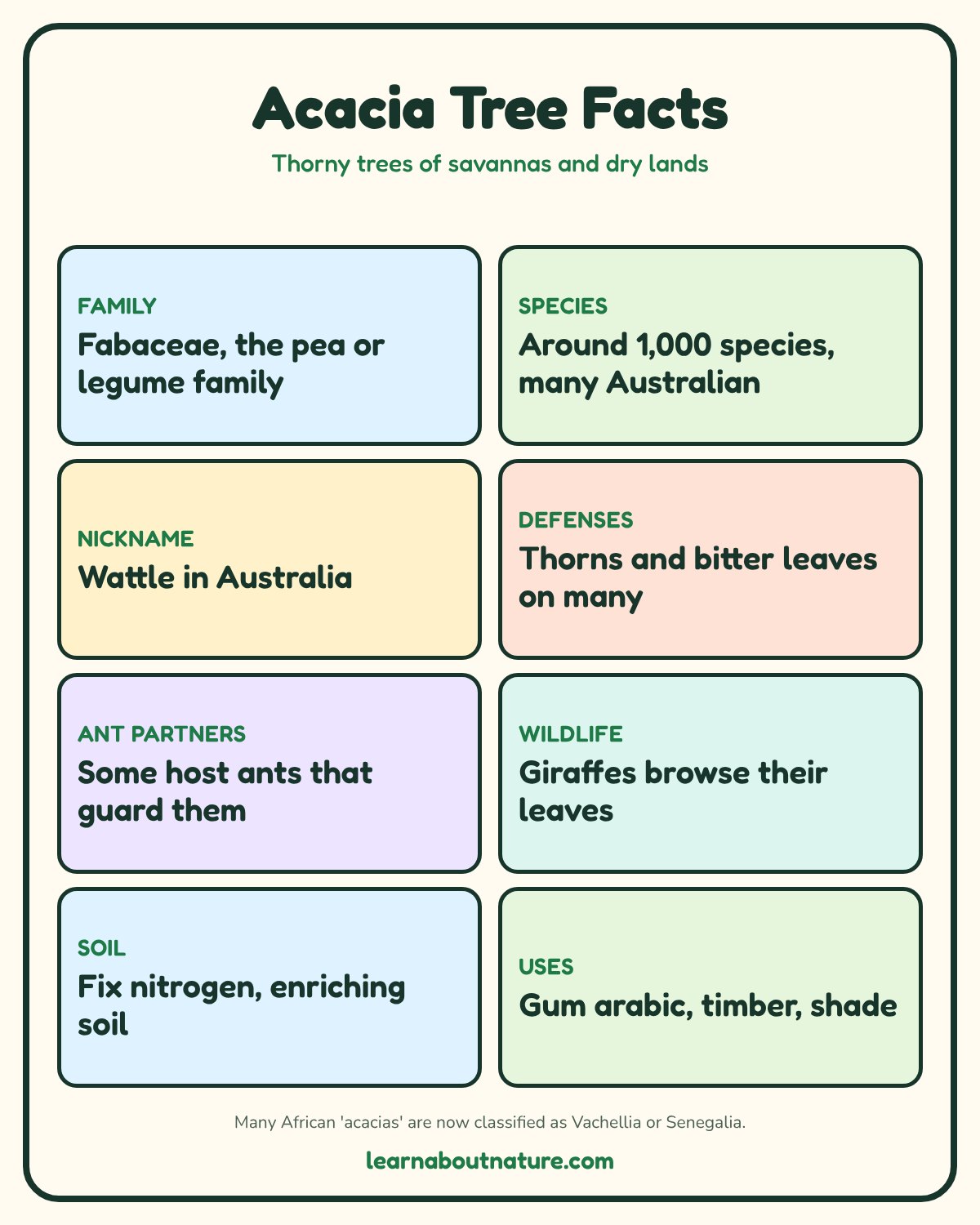
An acacia is a tree or shrub in the pea family (Fabaceae), known for feathery leaves, fluffy yellow or white flowers, and often sharp thorns. Australia has about 1,000 species, called wattles. The flat-topped thorn trees of African savannas, once called acacias, are now mostly classed as Vachellia and Senegalia.
Anatomy
The stem is almost circular and appears as an insignificant secondary growth. The epidermis displays the trichomes just as in the pilots. The cortex comprises of a conspicuous sclerenchymatic sheath (that includes stone cells and many fibers).
The leaves of the Acacia plant give it a special appearance. Most of these trees have green leaflets that are finely divided to give an appearance of a fern to the stalks. Many varieties growing in the deserts without rain have no leaves at all. The stalks of these trees are similar to thorns and carry out the leaves’ functions.
Their blossoms are distinctive, the flowers being fragrant and small, pea-shaped, yellow in color, with several stamens in a flower, in cylindrical cluster formation at the branch tips.
Habitat
The Acacia tree unlike the other trees has a very promising use to the farmers in Africa and they form a free source of nitrogen to the soils. This nitrogen that the tree gives to the soil will last for many generations.
Watering
The fascinating quality of these trees is that they do not demand much attention and care. These kinds of trees need a dry and very moderate climatic condition to grow. So watering them daily is not needed. Most importantly, we have to keep the area and the soil dry between the time periods we water them. One thing has to be taken care of is that too much dryness can cause the leaves to fall down so we have to water them, but only reasonably.
Temperature and Humidity
Pests
The larva of the hepialid of the moth family, which comes from the genus Aenetus that includes the A Ligniveren, uses these Acacia species as food. The leaves of these plants are used as food by these moths that are found mostly in the Australian regions. The other types of the larvae that can be found feeding on the Acacia are many. They are the brown tail larvae Endoclita Malabaricus and also he Turnip Moths. These varieties are mostly found feeding on the acacia leaves for their survival. The larvae that are found to feed on the acacia tree leaves are mostly Bucculatricid Moths. The acacia contains an organic compound which acts as a natural agent that protects them from the pests and the grazing animals.
Varieties

Photo by: Forest & Kim Starr
The Acacia seeds have many and varied uses. They are used for food and other variety of uses. Places like Burma, Laos and in places like Thailand, the shoots that are feathery are used in foods like soups, omelets, and curries. Some kinds of starters are also made from the shoots of acacia. Many varieties of the acacia plant produce gums. Senegalia senegal is the tree that produces gum arabic and they are mostly found abundantly in the tropical dry areas of the western Africa. They are very commonly found in the regions from Senegal, and along from there, to the northern parts of Nigeria.
The other version of the acacia gum that is found in the Indian region is the Vachellia Nilotica (synonym Acacia Arabica). The Indian version produces a different version of the gum that is of lower quality when compared to the Arabic gum. The gum Arabic is also used widely in many other products like soft drinks and they have been successfully used in the manufacturing of the folk medicines. Several species of the acacia are being used to make astringent medicines that are very high in the tannins; they are called as the Catechu. The special species called the Senegalia Catchu is used for this purpose. They boil the wood of the plant, and, on evaporation, the extract is obtained. The main compound in the catechu extract from this kind is called catechin.
Soil
Acacias always grow in places that have dry climates. They are supposed to be grown in places with water drained soil in it. They can be planted in hilly areas and on slopes. They need very little water to grow. The Acacia plant can grow in dry areas or in areas that have an acidic, alkaline, or neutral soil in it. The acacia plant needs full sunlight for the proper growth of the plant.
Land preparation: As the first step, when the rains are over, remove all the weeds. Preparing the soil in a very proper way means removal of the surface soil and breaking the hard soil underneath, paving the way for easy water penetration. Soil aerations are improved and the root diffusion of the soil is increased by planting them in this manner.
Harvest
Protective gear like boots and hand gloves are to be used while you handle the harvesting of Acacia Polyacantha and Acacia Xanthophloea. These protective gears are to be used due to the thorns on these kinds of plants. The top most part of the Acacia plant has many thorns and the stem of the plants have thorns on them as well. Harvesting should be done in a proper manner and methods followed, and proper tools should be used so that damages can be minimized.
Uses of Acacia Wood
Though you can find in excess of 1300 Acacia species in the world, only some of them serve the purpose of wood, especially for furniture, flooring, and ornamental use. Some of them serve the paper industry as pulpwood and others are used for firewood. The variety of shades, its luster, durability and the finish it gives, particularly, makes it an extremely good wood for making furniture.
The history of the Acacia wood goes back to the ancient Egyptian era, when the coffins were built from Acacia Seyal or the Red Acacia. They say that the Ark of the Covenant was also made from Red Acacia wood that is endemic to western and northern Africa
The attraction and fragrance of several varieties of Acacia trees endear them to the luxury item manufacturers and the furniture builders. Of the Acacia wood varieties, the Acacia Melanoxylon or the Australian Blackwood is one of the most valuable. Their large tree height of up to about 100 feet (30 m) or more, offers larger sizes of timber to work with, facilitating their abundant use in cabinetry, furniture, boat building, musical instruments, kegs and wooden tools.
Acacia homalophylla or Myall wood is still another fragrant variety from Australia that is used in making ornaments. Acacia Heterophylla or Highland tamarind, found on Réunion Island, is an Acacia wood that is famous for its timber. In many places, people use the Acacia wood for firewood.
How to Identify an Acacia Tree
Acacias vary from low shrubs to tall trees, but most share these features:
- Leaves – either finely divided into many small leaflets (bipinnate), giving a feathery, fern-like look, or replaced by flat, leaf-like stalks called phyllodes, common in Australian wattles.
- Flowers – tiny flowers packed into fluffy round balls or spikes, usually bright yellow or cream. Each flower has many stamens, which create the fuzzy look.
- Seed pods – flat or curled pods like those of peas and beans, as acacias belong to the same family.
- Thorns – many African and American species have paired spines at the base of the leaves; most Australian wattles have no thorns.
- Shape – savanna species often grow an umbrella-shaped, flat-topped crown.
Acacias are sometimes confused with mimosa (Albizia julibrissin), which also has feathery leaves but pink, silky pom-pom flowers.
Common Types of Acacia
| Name | Where it grows | Notes |
|---|---|---|
| Golden wattle (Acacia pycnantha) | South-eastern Australia | Australia’s national floral emblem |
| Silver wattle (Acacia dealbata) | South-eastern Australia; planted worldwide | Sold as “mimosa” by florists in Europe |
| Australian blackwood (Acacia melanoxylon) | Eastern Australia | Valuable timber for furniture and instruments |
| Koa (Acacia koa) | Hawaii | Prized wood for ukuleles and canoes |
| Umbrella thorn (Vachellia tortilis) | African savannas, Middle East | Classic flat-topped tree; browsed by giraffes |
| Whistling thorn (Vachellia drepanolobium) | East Africa | Swollen thorns house protective ants |
| Gum arabic tree (Senegalia senegal) | Sahel of Africa | Main source of gum arabic |
| Fever tree (Vachellia xanthophloea) | Southern and East Africa | Yellow-green bark; grows near water |
Many of the African species above were called Acacia until 2005-2011, when botanists split the group. The name Acacia was kept for the mostly Australian wattles, so older books and many gardeners still use the old names.
Acacia Trees and Wildlife
On African savannas, acacia-type trees are key sources of food and shelter. Giraffes use their long, tough tongues to strip leaves from between the thorns, and elephants, antelopes and goats also browse them. Seed pods that fall to the ground are eaten by many animals, which then spread the seeds in their dung.
Some acacias defend themselves in clever ways. The whistling thorn of East Africa grows hollow, swollen thorns where ants live; the ants attack animals that try to eat the leaves. In Central America, bullhorn acacias have a similar partnership with ants and even provide them with nectar and protein-rich food bodies.
Weaver birds hang their nests from acacia branches, where the thorns help keep out predators. Bees visit the flowers, and wattle seeds are an important food for Australian birds and, traditionally, for Aboriginal peoples, who grind them into flour.
How to Grow an Acacia
- Choose the right species – many wattles are fast-growing but short-lived (often 15-30 years). Check that the species is not invasive in your area, as some wattles spread aggressively outside Australia.
- Plant in full sun – acacias need lots of light and well-drained soil; they tolerate poor soil because their roots fix nitrogen.
- Prepare seeds – the hard seed coat stops water getting in. Pour hot (not boiling) water over seeds and soak them overnight; sow the ones that swell.
- Water while young – water regularly for the first year, then only in long dry spells.
- Protect from frost – many species are damaged by hard frosts; silver wattle is one of the hardier ones.
- Prune lightly – trim after flowering to keep a good shape; wear gloves with thorny species.
In cooler countries, acacias are often grown against a sunny wall or in large containers that can be moved under cover in winter.
Acacia FAQs
Where do acacias grow?
Acacias grow in tropical and subtropical places. More than 600 species are native to Australia, where they are called wattles. They are also common on the savannas of Africa.
What do acacia flowers look like?
Acacia flowers are small, fuzzy, sweet-smelling and usually yellow. They grow in tight round or cylinder-shaped clusters.
Why are acacia trees useful to farmers?
Acacia trees give nitrogen to the soil for free. In Africa this helps crops grow, and the effect can last for generations.
Can you eat acacia?
In Burma, Laos and Thailand, the feathery young shoots are used in soups, omelettes and curries.
What is gum arabic?
Gum arabic is a gum made by the acacia species Senegalia senegal in West Africa. It is used in soft drinks and in folk medicines.

Randi Jones is the owner and founder of the Nature Gift Store, an online retailer specializing in nature-themed gifts, educational science projects, live animal nature kits and real butterfly artwork. A biology graduate who fell in love with insects, she founded the company in 2001 to make active learning about nature fun, accessible and engaging for children and adults. Her store offers real butterfly frames, home and garden decor and educational live animal kits, including ant farms, worm farms, tadpoles, ladybugs and hermit crabs, and she runs a bug museum in Washington featuring live animals like Eddie the Iguana alongside other reptiles and insects. Randi wrote most of the guides on this site. They first appeared on her long-running nature sites, including Monarch-Butterfly.com, Ladybug-Life-Cycle.com, Frog-Life-Cycle.com, Dragonfly-Site.com and Butterfly Pictures, which have now been brought together here at Learn About Nature.