Bog Turtle
Scientific Classification
| Kingdom: | Animalia |
| Phylum: | Chordata |
| Subphylum: | Vertebrata |
| Class: | Reptilia |
| Order: | Testudines |
| Family: | Emydidae |
| Subfamily: | Emydinae |
| Genus: | Glyptemys |
| Species: | G. muhlenbergii |
| Binomial name: | Glyptemys muhlenbergii |
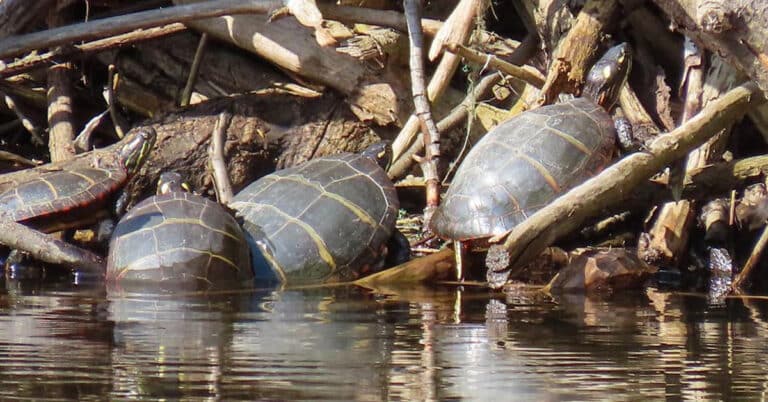
The turtle (Glyptemys mublenbergii), a semi-aquatic turtle, is widespread in the eastern United States. This turtle is the tiniest one in North America. A fully developed turtle can reach a length of 10 cm (4 in). In appearance, the bog turtle resembles the spotted or painted turtles, but it has a closer resemblance to the bigger wood turtles. You can find these bog turtles from Vermont in the north, west to Ohio, and south to Georgia.
Anatomy
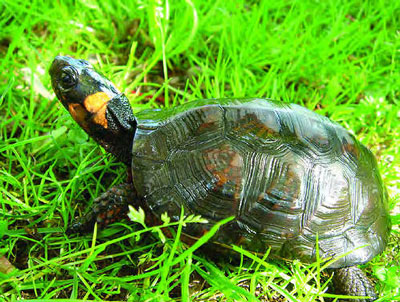
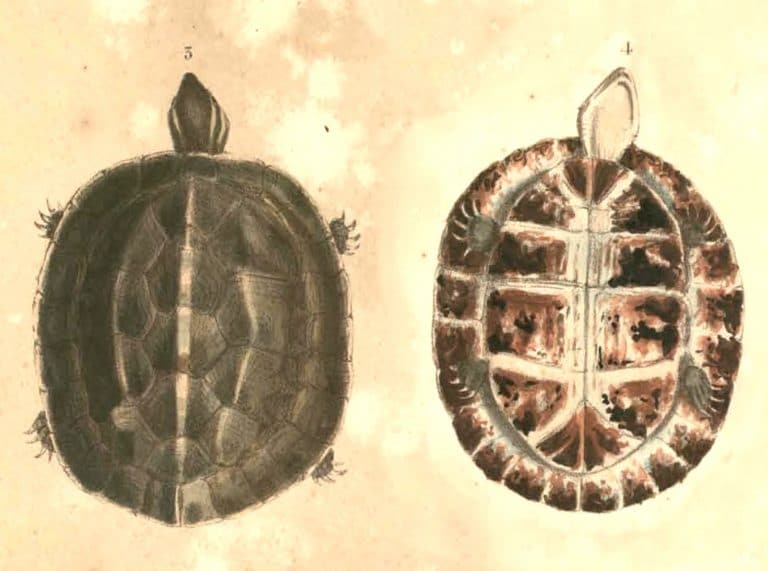
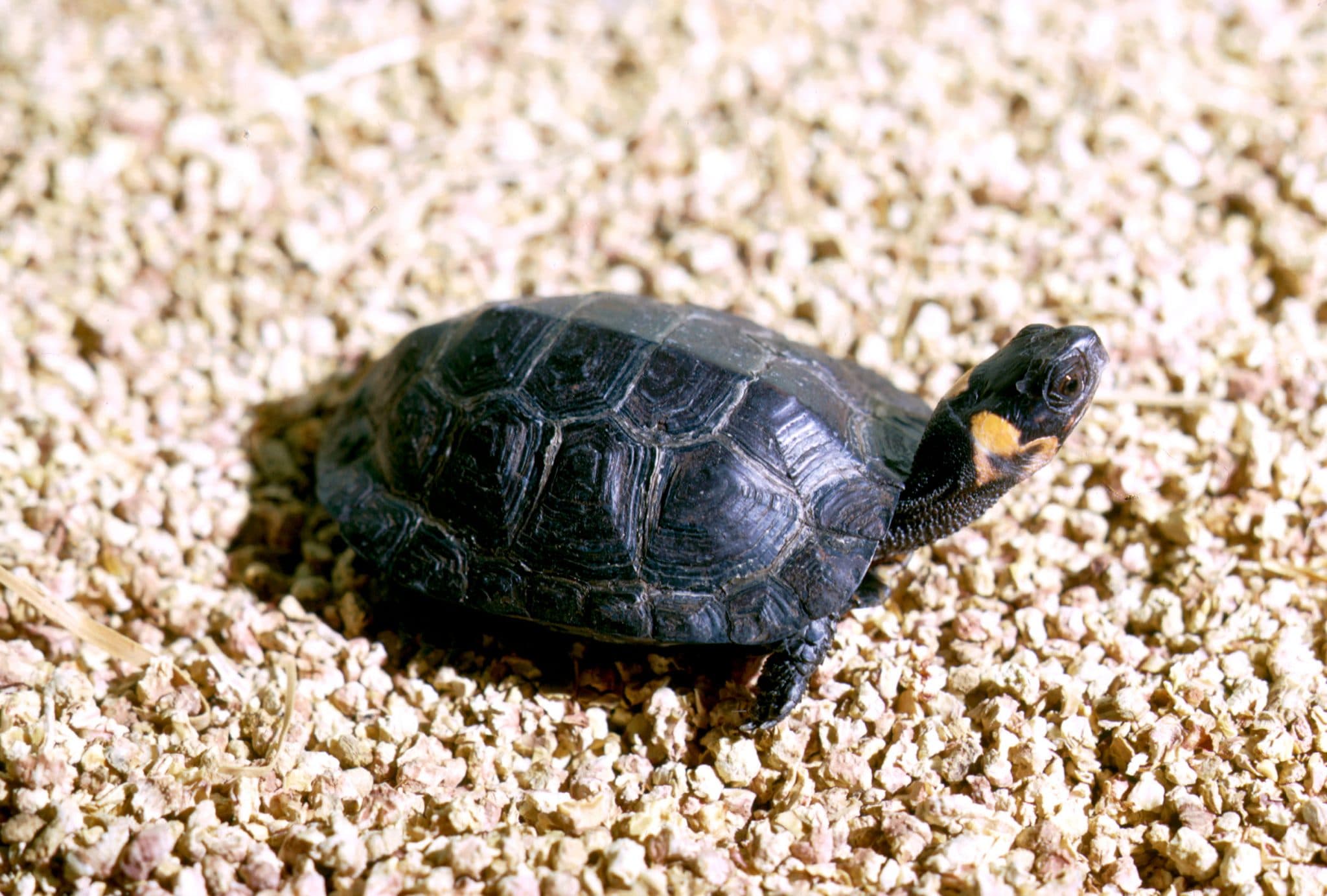
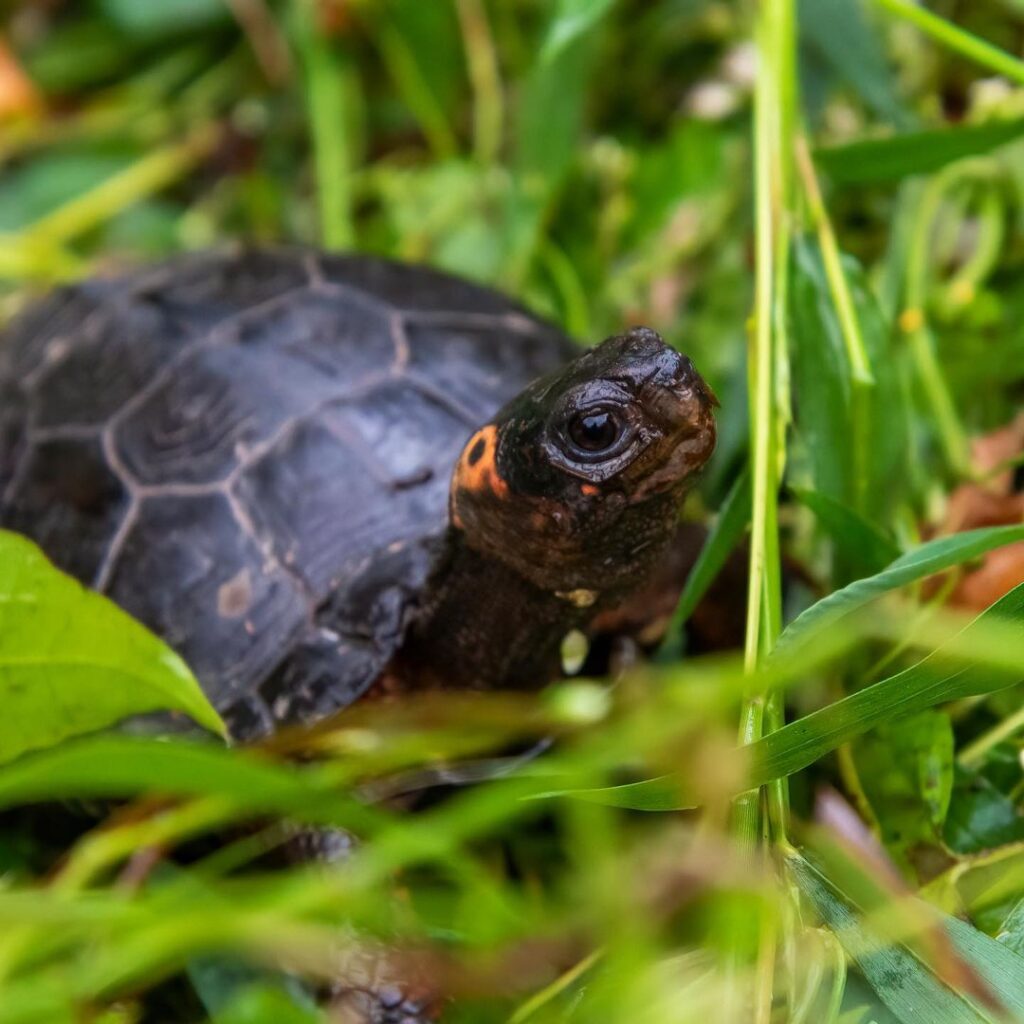
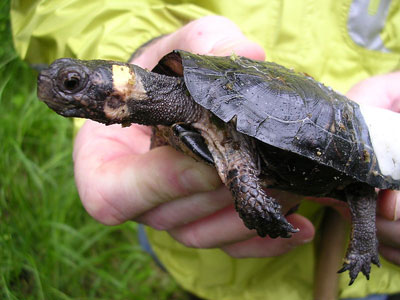
The bog turtle is the tiniest North American turtle and hardly measures 4 in (11cm) in size (3 – 3.5 in) (7.5 – 9cm at an average). You can recognize these turtles by their tiny size and yellow/orange blotches on its neck region and sides of its head. The growth rings of its scutes often show clear carving, and the color of its shell is either black or brown. The color of its plastron is cream having black patches without hinges. When compared to the females, the tails of the male are thicker and longer and their plastron is to some extent concave.
Breeding
The bog turtles emerge from their hibernation and breed towards the end of April and the beginning of June. They make their nests in the sunlit areas of a marshland on sphagnum moss or tussocks. These turtles lay 2 – 5 eggs (normally 2 – 3) in the months of June and July and leave them on their own to grow and hatch. The incubation period is 7 – 8 weeks and hatching time is July to beginning of September. These eggs remain latent in the nest till winter and hatch in spring when there is plenty of supply of food. Often raccoons and skunks prey on these nests. The juveniles are hardly 1” long when hatched and often carried away by different mammals and birds. At the age of 9 – 15 years, these bog turtles become sexually mature.
Habitat
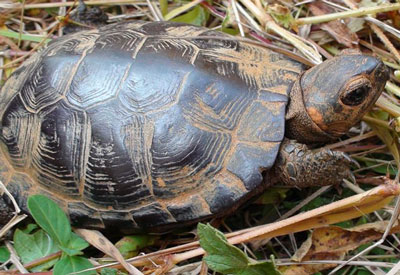
Bog turtles like inhabiting places like shallow water marshes, flood plain water lands, open wet meadows, bogs, spring seeps and fens. Bog turtles live in wetlands where there is a wide assortment of dry and wet areas that provide a combination of micro-climatic conditions which help them in regulating the temperature and incubation of the eggs. This soft, deep and mucky soil prevents predators from approaching these bog turtles. Besides, it enables them to keep away from the extreme cold and hot temperatures. Subsurface flows, seeps and ground water springs are some of the places where the turtles can stay conveniently over winter without being frozen to death.
Interesting facts: these bog turtles hibernate in winter under the water to a depth of 6 – 18 inches in deep regions of the marshy land, while the young turtles hesitate to hibernate in deep mud till the age of 2 – 3 years. The emerging period after hibernation is by the end of March and the month of April when they travel to nearby areas of breeding and feeding.
As a Pet
Housing
The appropriate external measurement of a terrarium is 10’ x 10’ and x 2’ height. You must make sure to provide partial shade to the internal portion of the tank. Place a Neodesha Turtle Tub measuring 40”w x 72” x 10”d in it. The sunken tub serves as the water area in the enclosure. Fill the tub with aquatic plants; driftwood and dechlorinated water, at one extreme end of the enclosure to a depth of 10” add a layer of mixture of ½ damp river sand and ½ peat moss, the area for laying eggs. Towards the other extreme end, fill heavily with bog and marginal plants like papyrus, taro, wild iris and cattails. Place sand and peat along one side is an area of 18” x 18” exclusively without plants. This part is the area where you feed them. Provide a series of steps at both ends of the water area for the turtle to climb.
Set up a big tub of size (48”w x 84”l x24”d) indoors for the wood turtles and spotted turtles. The “resting” or winter enclosed space as provided here is not like that of the outdoor facilities, where maintenance is easy and offers the enjoyable convenience of observing the turtle’s behavior closely. The substrata for both are the same.
For the little ones, an aquarium of 20 gallon capacity is fine.
Diet
The diet of the Bog turtle, Spotted Turtle and Western Pond Turtles are more or less carnivorous, comprising of invertebrates. Infrequently (weekly once) give them good quality lean meat and canned cat food, dusted with calcium powder and multivitamin.
Having discovered a fondness for insects while pursuing her degree in Biology, Randi Jones was quite bugged to know that people usually dismissed these little creatures as “creepy-crawlies”.