How Long Do Dragonflies Live?

Quick answer: Adult dragonflies usually live only a few weeks to a few months, depending on the species. However, they spend much longer as aquatic nymphs, which can last from a few months to several years before they become flying adults.
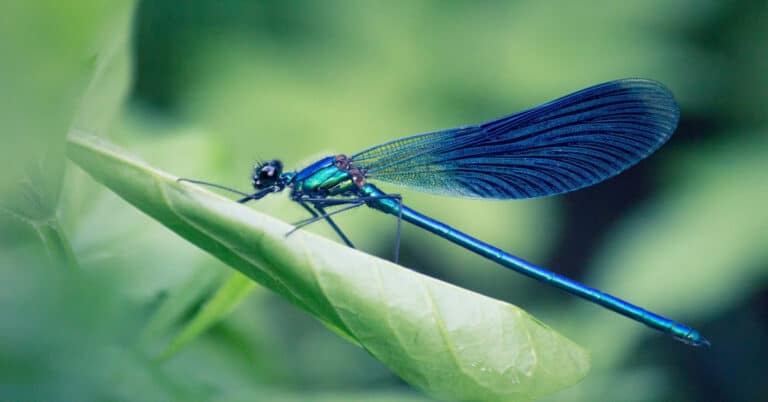
The dragonfly is an insect that has inhabited the earth for a very long time – almost 300 million years to be exact. There are more than 5000 species of dragonflies that exist today. There are many people who believe that these insects live only for a day. This however is not true as when you investigate how long dragonflies live, the shortest life cycle of a dragonfly from egg to the death of the adult is about six months.
There are even dragonflies that live for several years as aquatic larvae before they emerge and live for a few months as adults. Most dragonflies don’t die of old age but are caught by predators. Even if they do survive, they still don’t live much longer than a few months.
A surprising and interesting fact about the dragonfly is that, they will spend only a very short part of their life span as actual adult dragonflies. They will live as nymphs for up to four years, molting their skin between 8 to 17 times depending on the species, and finally when they mature into adults, they can only live for a few months.


How Long Do Dragonflies Live?
Most dragonflies live about six months to several years in total, but nearly all of that time is spent underwater as a nymph. The flying adult stage is short, usually a few weeks to about two months, and many adults are eaten by birds, frogs or other predators within days of emerging.
The Two Stages of a Dragonfly’s Life
The lifespan of a dragonfly is found to consist of two-stages. After breeding the female dragonfly will lay her eggs on or near water or in a place that will fill with water. Once the eggs have hatched the first stage in their lifestyle can begin. At this stage, it is an aquatic larvae, also called ‘nymph’.
This stage will generally last between one and three years, during which time the larvae will act as a voracious predator of other insect larvae, tadpole and even small fish. Unlike most of the other species of insect, including moths and butterflies that go through a pupal stage before emerging as adults the dragonflies however do not pupate. Instead of pupating the larval form or nymph will come out from its aquatic environment and hang from the bank or a stem.
This position makes it easier for the larvae to be exposed to the pleasant warmth of the sunshine and undergo metamorphosis into an adult dragonfly.

Explore next




Emerging as an Adult Dragonfly
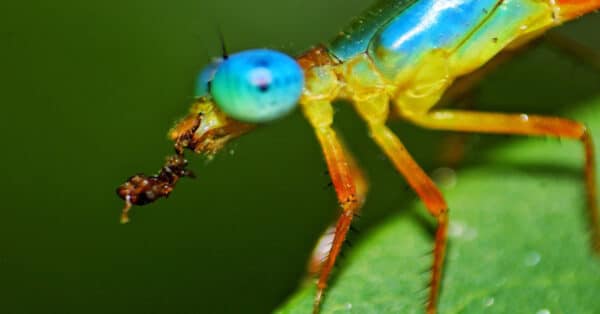
Once the larva’s transformation is complete, the newly emerged adult will have to wait several hours before its wings dry out and become strong enough to fly. The dragonfly at this stage is called a teneral which is a Latin word meaning tender or soft or delicate. This is a very critical period in the life cycle of the dragonfly. The tenerals are generally weak and they cannot fly very well.
This makes them easily exposed to predators, which can also be dragonfly larvae themselves. Many more of them die when they are knocked down by strong winds or by boats. However, it doesn’t take much time for the tenerals to gain sufficient strength to make their first flight. Once the adult becomes capable of flying, it becomes once more a voracious predator, showing off its wonderful self defense mechanisms.
Dragonfly Predators and Adult Lifespan
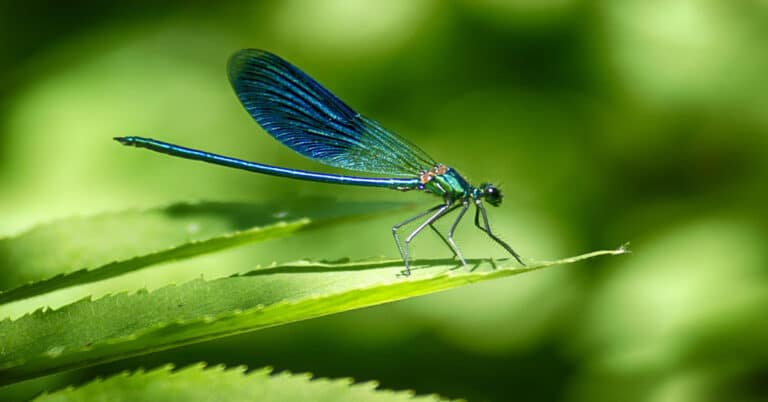
Though the dragonflies themselves are predators, they must be very careful of predators like birds, lizards, frogs, fish etc. They have many adaptations that will enable them to escape these predators. They have exceptional eye sight and fast and agile flight movements. As an adult, the dragonfly’s source of food will be flying insects and some of the larger dragonfly species may even predate its cousin the damsel fly.
The adult life of the dragonfly does not last long. They live just long enough to mature and reproduce. The adult dragonfly will not live beyond several months, depending on the quality of the weather. They may live as long as six months provided the weather is dry and warm. However, in the short and sometimes cold weather, adults will not live for longer than several weeks. This short lifespan of the adulthood in dragonflies allows them to live in the present than in the future. This is something that we all should keep in mind in our very busy lives.
Dragonfly Lifespan by Stage
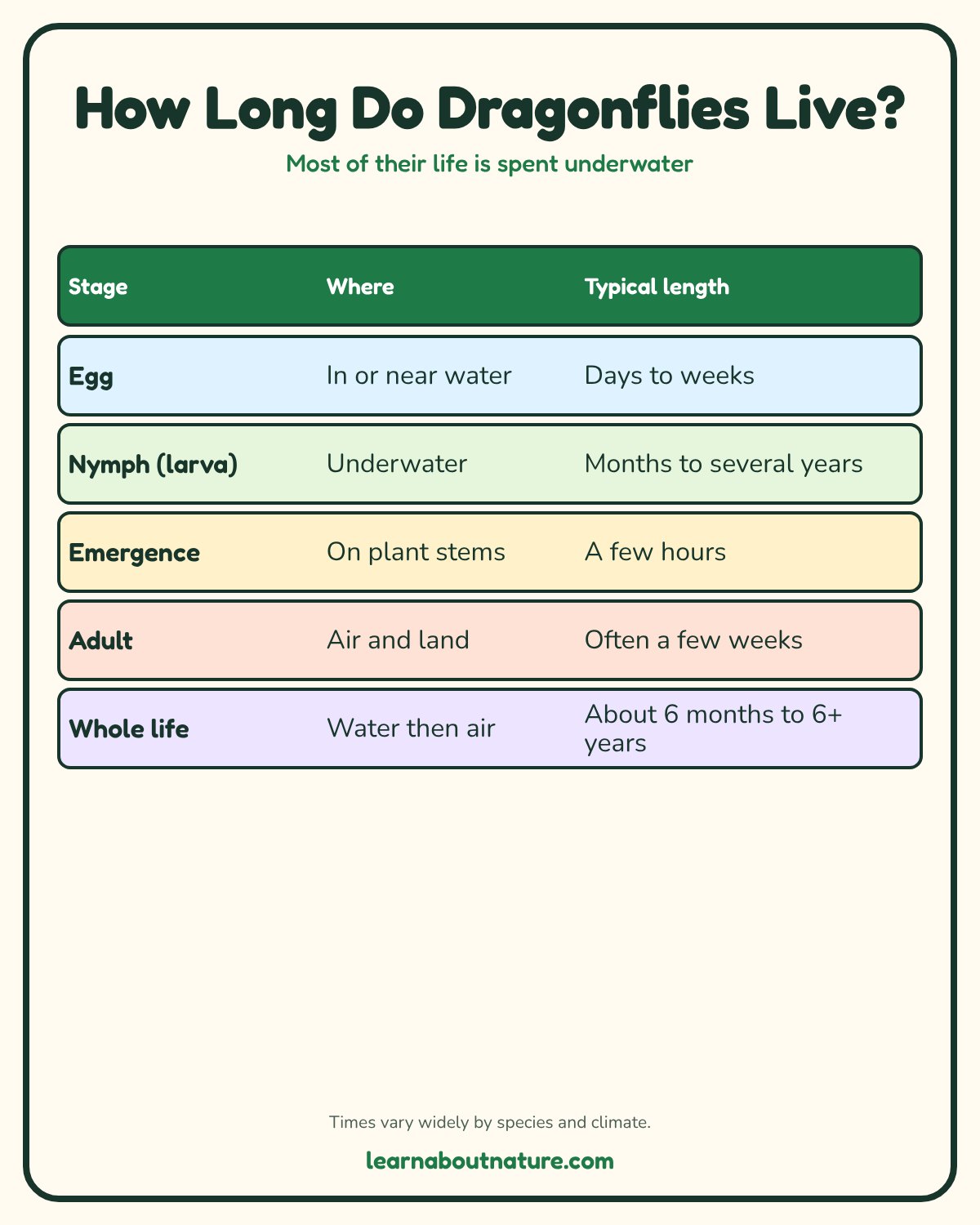
A dragonfly’s life is split very unevenly. The part we see, the flying adult, is usually the shortest.
| Stage | Where it lives | How long it lasts |
|---|---|---|
| Egg | In or near water, often on plants | About 1 to 5 weeks (some overwinter for months) |
| Nymph (larva) | Underwater in ponds, lakes and streams | A few months to 5 years, usually 1 to 3 years |
| Adult | Flying in the air near water | A few weeks to about 2 months, rarely longer |
During the nymph stage, the young dragonfly molts its skin many times as it grows. When it is ready, it climbs out of the water and the adult breaks out of its last nymph skin. The empty skin, called an exuvia, is often left clinging to reeds.
Why Do Some Dragonflies Live Longer Than Others?
With more than 5,000 species, dragonfly lifespans vary a lot. The biggest factors are:
- Climate: in warm places, nymphs grow quickly and some species fit more than one generation into a year. In cold places, nymphs may need several years to grow.
- Body size: large species, such as some darners and the big petaltails, usually spend longer as nymphs than small species.
- Food: nymphs with plenty of prey grow faster and emerge sooner.
- Water type: nymphs in cold streams generally develop more slowly than those in warm, shallow ponds.
- Migration: some species, such as the globe skimmer, migrate long distances, and their journeys are completed over several generations.
Whatever the species, very few adults die of old age. Birds, frogs, spiders, bad weather and other dragonflies end most adult lives within a few weeks.
Dragonfly Life Span FAQs
How long do dragonflies live?
Including the underwater nymph stage, most dragonflies live from about six months to several years. The adult flying stage is short, usually a few weeks to a couple of months. Most of a dragonfly’s life is spent underwater as a nymph.
Do dragonflies only live for one day?
No. This is a common myth, probably caused by confusion with mayflies, whose adults may live only a day. Adult dragonflies typically live for several weeks, and the whole life cycle, including the nymph stage, lasts months or years.
What is a teneral dragonfly?
A teneral is a newly emerged adult dragonfly. Its body and wings are soft and pale, and it cannot fly well until its wings have expanded and hardened. Tenerals are very vulnerable to predators and bad weather during this period, which may last several hours.
Do dragonflies have a pupa stage?
No. Dragonflies undergo incomplete metamorphosis, with egg, nymph and adult stages. Unlike butterflies and moths, they do not form a pupa. The fully grown nymph climbs out of the water, splits its skin and the adult emerges directly.
What eats dragonflies?
Dragonflies are eaten by birds, frogs, fish, lizards, spiders and even other dragonflies. Nymphs are eaten by fish, water birds and larger aquatic insects. Their excellent eyesight and fast, agile flight help adults escape many attacks.

Randi Jones is the owner and founder of the Nature Gift Store, an online retailer specializing in nature-themed gifts, educational science projects, live animal nature kits and real butterfly artwork. A biology graduate who fell in love with insects, she founded the company in 2001 to make active learning about nature fun, accessible and engaging for children and adults. Her store offers real butterfly frames, home and garden decor and educational live animal kits, including ant farms, worm farms, tadpoles, ladybugs and hermit crabs, and she runs a bug museum in Washington featuring live animals like Eddie the Iguana alongside other reptiles and insects. Randi wrote most of the guides on this site. They first appeared on her long-running nature sites, including Monarch-Butterfly.com, Ladybug-Life-Cycle.com, Frog-Life-Cycle.com, Dragonfly-Site.com and Butterfly Pictures, which have now been brought together here at Learn About Nature.