Butterfly Behavior to Watch in the Garden
Observing butterflies in the garden is a great way to learn about them!
What Flowers/Shrubs Attract Butterflies?
a Flower. Do You See the Proboscis(Feeding Straw)?
As you may know already, most species of butterflies use flower nectar as their main source of food. The use of the sugary nectar gives the butterflies energy and allows them to fly, so stocking up on flowers is going to be a great idea. Now the question may come up; what flowers attract the most butterflies?
Well, wildflowers, cultivated flowers (perennials and annuals), and even some shrubs are a fantastic start! Lilac bushes, blueberry bushes, privets, sumacs, butterfly weeds, chrysanthemums, daisies, purple coneflower, bergamots, black-eyes Susan, dogbane, goldenrods, and even purple ageratum are all flowers/shrubs that will attract butterflies for your observation to your garden.
Butterfly Behavior in the Garden: Basking
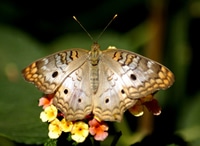
Now that you know the flowers/shrubs that will attract these beautiful creatures, there are now a few things that you can observe about the butterfly while they are in their own natural habitat. For instance, did you know that butterflies are cold-blooded creatures? This is one of the main reasons why you will sometimes see a butterfly basking under the sun�s heat.
Butterflies fly at their very best when the air temperatures range from seventy-five all the way to ninety degrees. The reason for this is that they do not have to stop and warm their wings up. If the winds are cooler, you will often see many butterflies perched on flowers or leaves in the sun, usually laying them flat down and facing upward at the sun so they can get the best exposure. This is not the only type of basking that butterflies do, there are a few more.
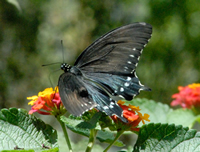
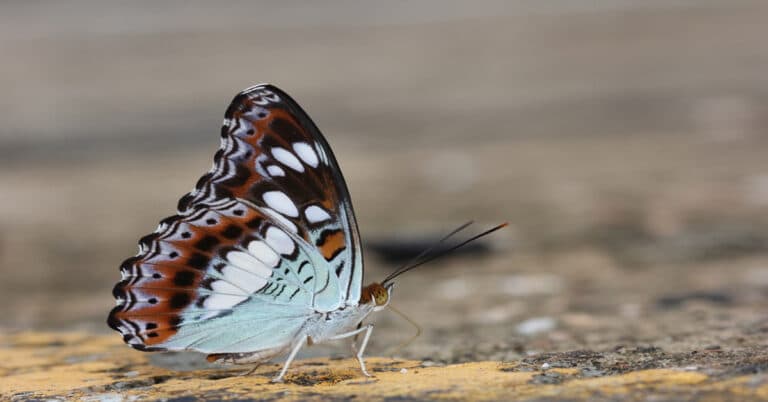
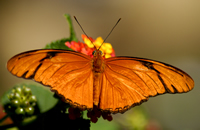
Butterfly basking to warm up.
The most common basking for the Satyrs (Satyridae) and the Sulphurs (Pieridae) is basking with their wings folded and facing the sun. This is usually because the underbelly of their wings is darker; therefore it absorbs more heat when the wings are folded.
The final form of basking is known as reflectance and this is used when the butterfly want to reflect the sunlight to their body versus just their wings. Usually, the butterfly�s body is much darker than their wings, so it makes since for them to reflect the sunlight to their body versus their wings sometimes.
Butterfly Behavior in the Garden: Puddling, Patrolling and Perching
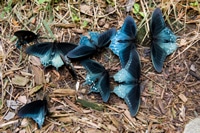
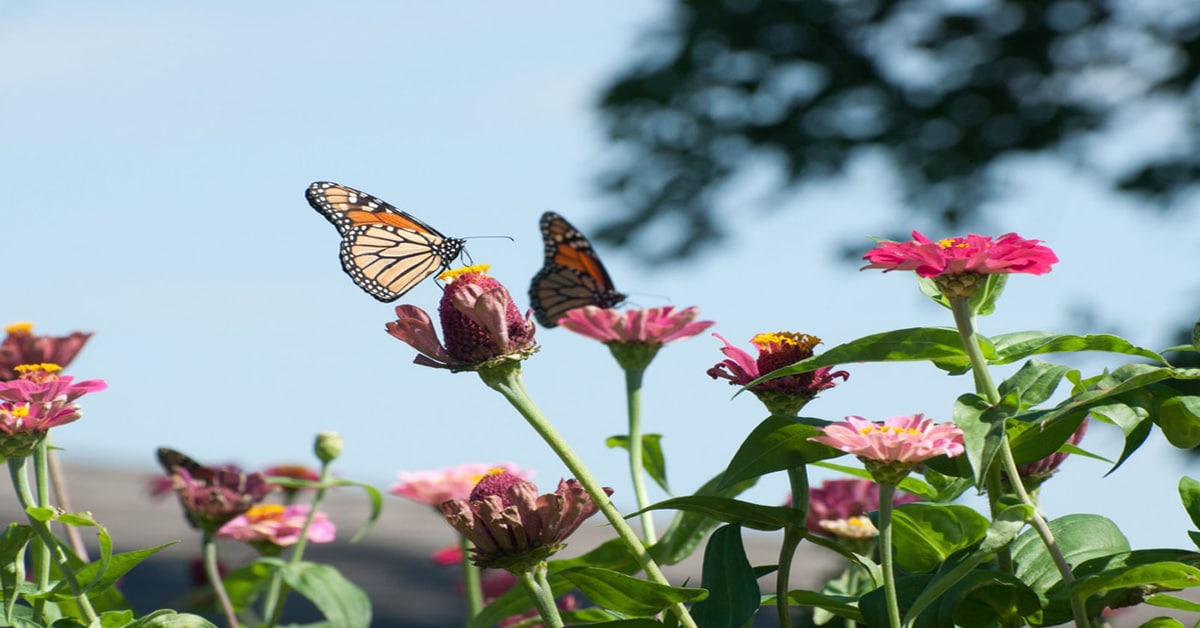
The three P’s in butterfly behavior are puddling, patrolling and perching. You have probably seen all three of these actions when you have observed your butterflies but you most likely had no idea what these beautiful creatures were doing.
First and foremost, puddling is when quite a few butterflies congregate at the wet edge of sandy areas or mud puddles. Since flowers are butterflies main source of food, there is not a lot of nutrients in flower nectar. Puddling is when males (mostly) get together and feast on extra salts and other nutrient found in the water around sand. These nutrients are then passed through the male’s sperm when they mate and the female uses these same nutrients to reproduce.
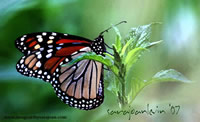
The patrolling and perching activities all have to do with mating. Usually, the mate butterflies will seek out the female butterflies. This act is called patrolling and while butterflies do not have sharp vision, when a male spots a female that he may want to mate with, he swoops down on the perched female. If the female is indeed of the males species, this is where the courting ritual comes into play.
Now, not all of the butterfly species go through the patrolling ritual, the Mourning Cloak, Black Swallowtail and the Red Admiral are just three of the butterflies that �perch� instead. Instead, they will perch themselves on tall plants right along a stream or a ridge. The males will wait for the females to come and as soon as these perched males spots one of the females, he will begin his courtship.
As you can see, observing butterflies in the garden is a great way to learn about a species you may have not known anything about!
Having discovered a fondness for insects while pursuing her degree in Biology, Randi Jones was quite bugged to know that people usually dismissed these little creatures as “creepy-crawlies”.