Panther Chameleon
Scientific Classification
| Kingdom: | Animalia |
| Phylum: | Chordata |
| Class: | Reptilia |
| Order: | Squamata |
| Family: | Chamaeleonidae |
| Genus: | Furcifer |
| Species: | F. pardalis |
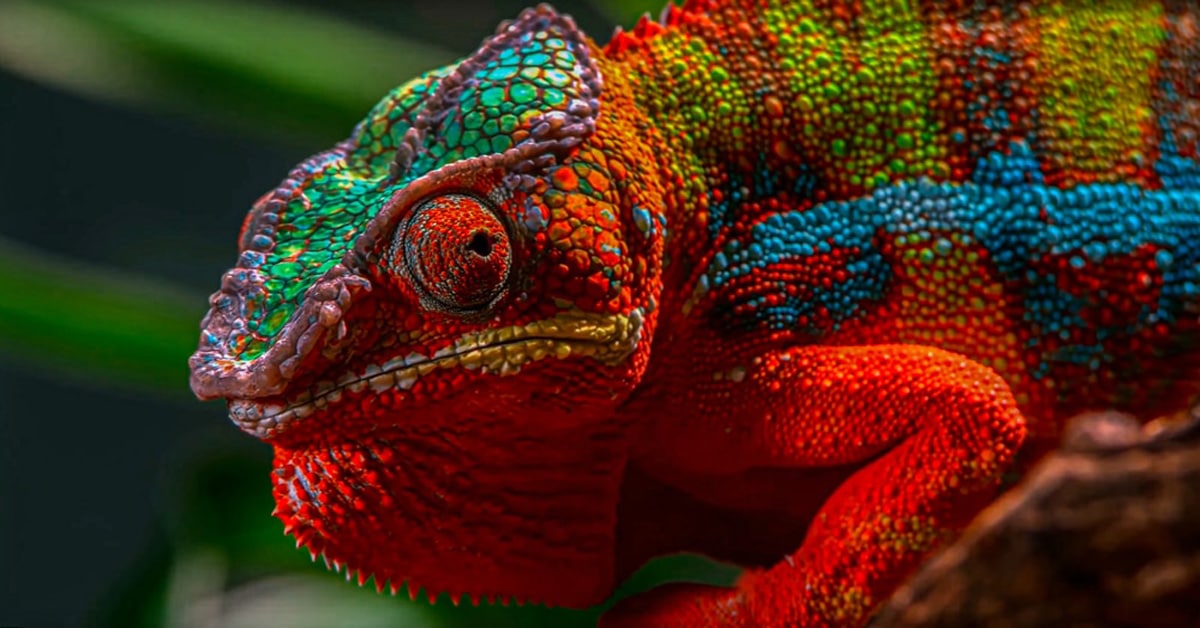
Come in a Brilliant Range of Patterns and Colors
Furcifer pardalis, more often known as panther chameleon, inhabit the island of Madagascar. You find them spread all over the island, but you will find these in abundance in the central-eastern, northern, northeastern and northwestern coasts.
Anatomy
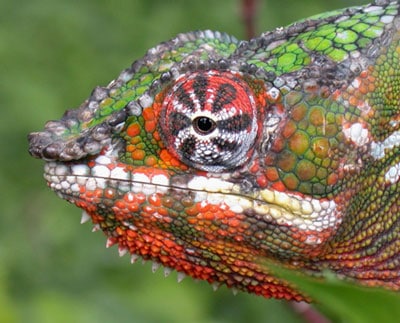
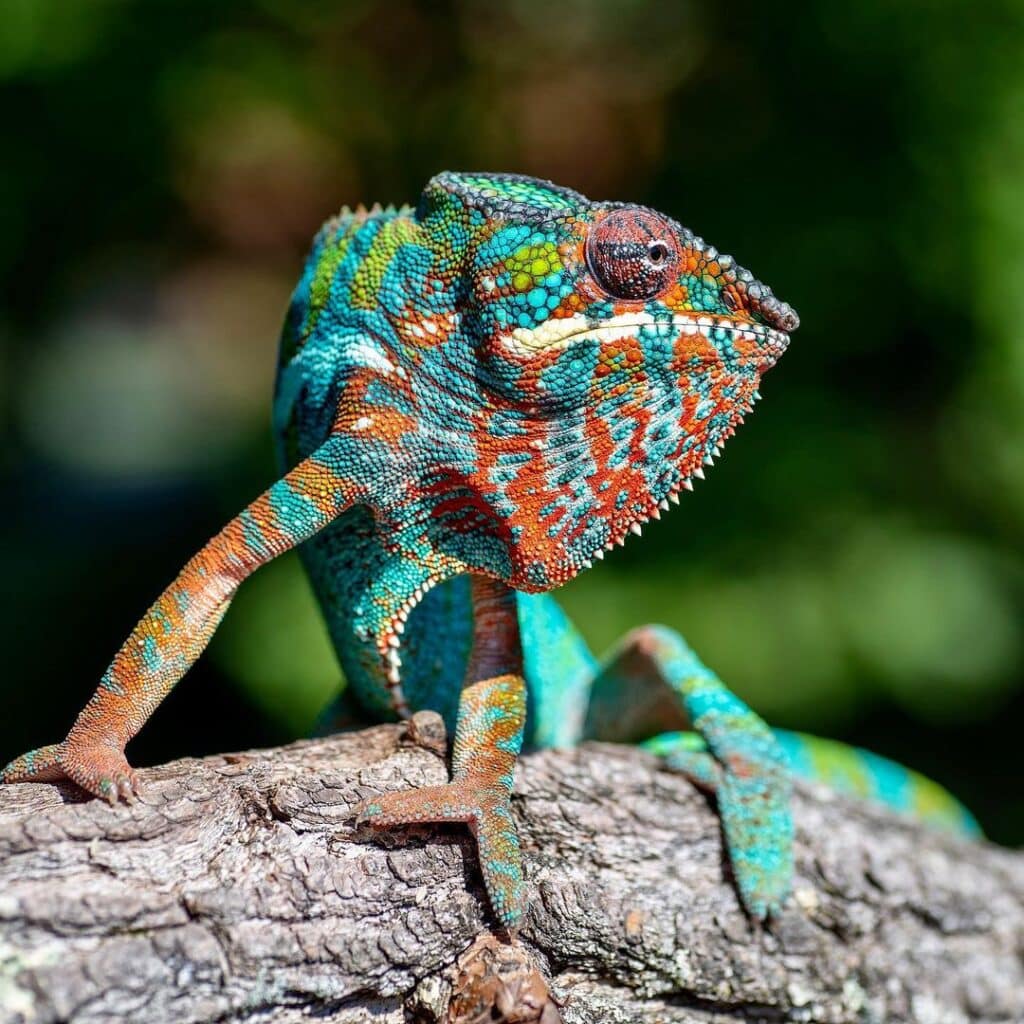
Adult panther chameleons come in a range of patterns and colors. You can recognize females by their more uniformly pale green or pink color, smaller size and their having thinner tail base, and at times with eggs noticeable throughout the body walls. Adults may attain a length of up to 23 cm.
Habitat
Furcifer pardalis mostly inhabits lowland, dry deciduous trees in the neighborhood of thin belt of trees neighboring rivers and roads. This particular genus rather prefers open habitats that are not too shaded.
Behavior
Panther Chameleon, like the great majority of chameleons, has an introverted and defensive habit, irrespective of age or sex. Males are likely to have bigger home ranges, compared to females. Habitually, males will not tolerate other males marching into their resident bush or tree and will defend their terrain by engaging in a show, chase, probably harshly injuring a pushy male.
As a Pet
Housing
- For adolescents- use a cage of size 16 x 16 x 20” height
- For adult males- Cage size 18 x 18 x 36” height
- For adult females- 16 x 16 x 30” height
- Larger cages serve your pets better
- Decorate the cages with nontoxic plants and diverse vines or sticks
Substrate
You should completely avoid substrates as it makes cleaning of your chameleon cage difficult and provides an unnecessary hiding place for insects. Should you insist on having a substrate, keep it simple, using newspapers or paper towels.
Lighting and Temperature
Adult Panther Chameleon needs a place for lazing around at 100 degrees F and ambient temperature of 75-85° F. Smaller chameleons willingly accept ambient temperature nearing 75° F
Water and Humidity
For proper panther chameleon care, you must take care to mist the cage of your wonderful pets at least twice or thrice a day to keep up the humidity around the required 60-70 percent rating. Remember that these chameleons love to drink water.
Food
They prefer a varied diet. Crickets make their staple food, but you should always offer super worms, hornworms, wax worms, silkworms, stick bugs and roaches to your panther chameleons. Make sure to feed gut-loaded insects. You would also need to dust your insects with vitamin powders. You can give them calcium thrice a week and calcium with D3 once a week.
Breeding
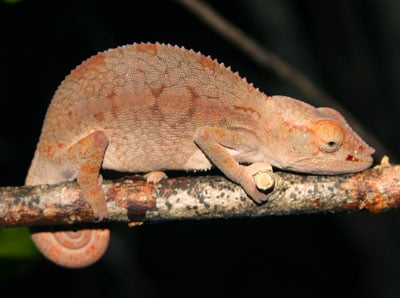
At seven months, most panther chameleons attain sexual maturity. A peculiar phenomenon exhibited by egg-carrying females is that their bodies turn black or dark brown with an orange stripe to indicate to the males about their disinterest in mating. The color and pattern of these females can vary with the chameleon’s color phase. This is also one way of distinguishing a male from a female.
The female will lay about five to eight clutches of about ten to forty eggs per clutch, which hatch out in about 240 days. The females have a lifespan of only two to three years after laying eggs.
Handling
The panther chameleon makes for an excellent pet, because of their docile behavior and lizard enthusiasts love to raise these animals in captivity and enjoy the pleasure of interacting lovingly with them. Although, most chameleons are show animals that prefer the solitude of their cages, the ones that become tame through the patient efforts of the keeper would still prefer their approach for pick up from the bottom as a hand coming from above could indicate a threat to them. These animals will also come to the terrarium door when they see their owners with food.
Having discovered a fondness for insects while pursuing her degree in Biology, Randi Jones was quite bugged to know that people usually dismissed these little creatures as “creepy-crawlies”.