Crocodile Monitor
Scientific Classification
| Kingdom: | Animalia |
| Phylum: | Chordata |
| Subphylum: | Vertebrata |
| Class: | Reptilia |
| Order: | Squamata |
| Suborder: | Lacertilia |
| Family: | Varanidae |
| Subgenus: | Papusaurus |
| Species: | V. salvadorii |
The World’s Longest Lizard
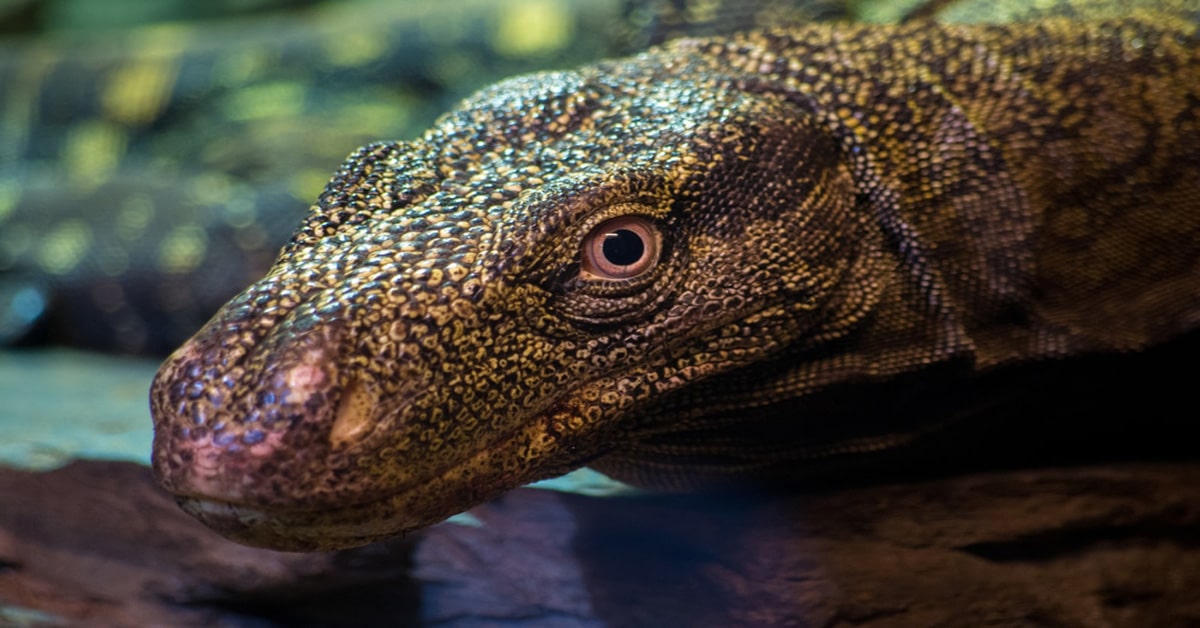
Varanus of New Guinea is a monitor lizard. People refer to this lizard as; a crocodile monitor, Varanus salvadorii, Papu (n) monitor, or Artellia. This outsized monitor lizard of New Guinea, which is the world’s longest lizard, is 211 cm (8.02ft) long. Just like other lizards, it possesses the anatomical skin texture that makes it breathe without difficulty while running.
Anatomy
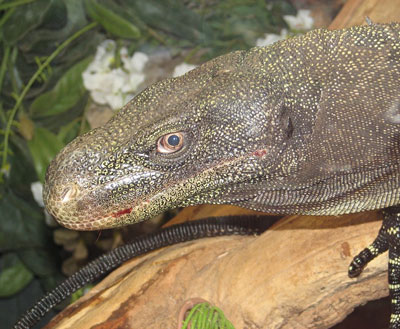
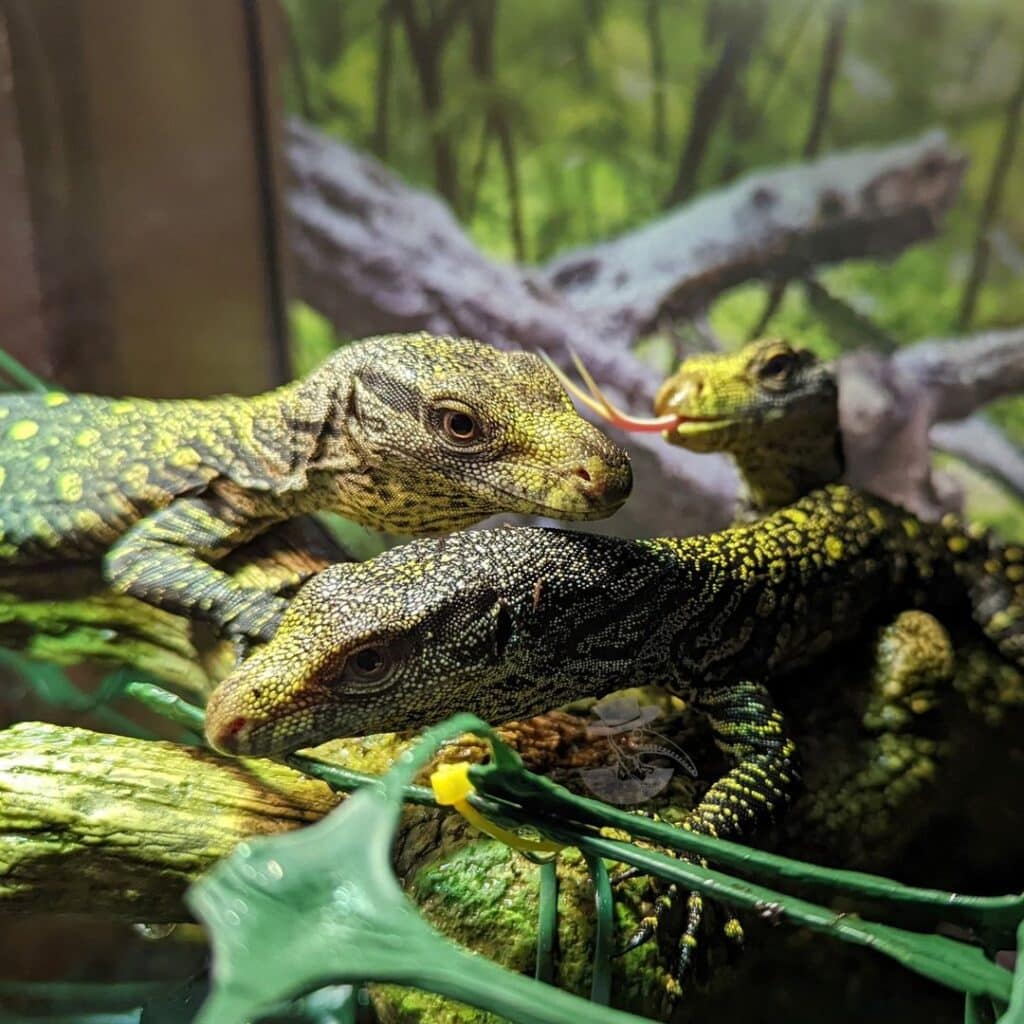
The bigger species of monitor lizard seen in New Guinea are the Papuan monitor. It grows to a length of 2.5m, and weighs to 20 kg. Its long tail distinctively doubles its SVL (snout-vent length), and is round at the base and triangular further from the point of attachment.
The scales on the skin do not overlap each other. The major part of the body is black with green, yellow and white spots. Throughout the neck, they have folds. The snout is long and round. They have a forked tongue, which helps chemoreception. The teeth are extra long, and claws are strong. Males are normally bigger than females, because females expend a lot of energy by reproducing.
Natural Habitat
The main dwelling place of Papuan monitors is in the coastal lowland surroundings, chiefly in the hot rainforests and in the marshy tropical seashores. You can see this crocodile monitor specifically in sea level and up to 200 meters above sea level; you see them in mountain areas that are 650 meters above sea level. They live in trees and land depending where they get food and sunlight. This variety of monitors live in rainforests; their best possible daytime temperature ranges from 29-31°C.
As a Pet
Housing
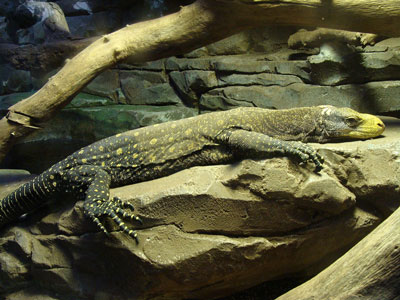
The most suitable cage size for the grownup crocodiles is 18 x 10 x 12 feet and even bigger. The ideal size of cage for the younger crocodiles is 8 x 8 x 10 feet and for the infant crocodiles, it is 4 x 4 x 6 feet. Place assorted items like trees, natural and artificial rocks, stairs and wooden platforms, wire mesh and other climbing facilities in the cage for keeping these crocodiles active. In the cage, provide a hide-box placed on the ground for every monitor.
Substrate
Use varieties of substrate for this crocodile monitor, which includes mulch, peat moss, natural earth, gravel and different types of bark or shavings of wood. In brief, the substrates you use have to hold the moisture and not give cause for forming mold or pathogenic bacteria. It must also provide a cushioning effect for the lizards when they hop from the high into the lower areas of the cage.
Humidity and water
Crocodile monitor chooses to have a relative humidity of 70% or greater. Keep them at lesser humidity, and mist daily twice or thrice by hand.
Temperature and lighting
These crocodiles enjoy a basking environment of 110 – 120 ° F., Keep the surrounding temperature of the enclosure as low as 90 ° F. at daytime.
Feeding
These carnivorous monitors feed on small animals such as big birds and their eggs (especially Cacatua sp. and maleos (Macrocephalon)]. Besides, they eat small mammals like rodents), amphibians and reptiles, also carrions and insects. The crocodile’s teeth are long and sharp and they have powerful jaws, they gulp down food items wholly. Just like other monitor lizards, these monitors, irrespective of the size of the prey, attack their prey with the same violence.
Breeding
They reproduce only in confinement. There is not much information of their reproduction in their natural habitat. Between October and January these monitors lay 4-12 egg clutches with significant differences in their dimensions, there is no explanation for this fact. The weights of the eggs are from 43.3 to 60.8g (1.53 to 2.14oz) and their dimensions range from 7.5 x 3.4 cm (3.0 x 1.3 in) to 10 x 4.5cm (3.9 x 1.8 in)
Handling
This crocodile monitor is tremendously hazardous to the owners; therefore, crocodile monitor care advises you to handle them with great care. There are incidents when crocodile bites resulted in finger amputation and even deep wounds rupturing tissues that lead to hospitalization. As regards these crocodile’s temperament, those that come directly from the natural habitat are extremely nervous when compared with the captive bred ones.
Having discovered a fondness for insects while pursuing her degree in Biology, Randi Jones was quite bugged to know that people usually dismissed these little creatures as “creepy-crawlies”.