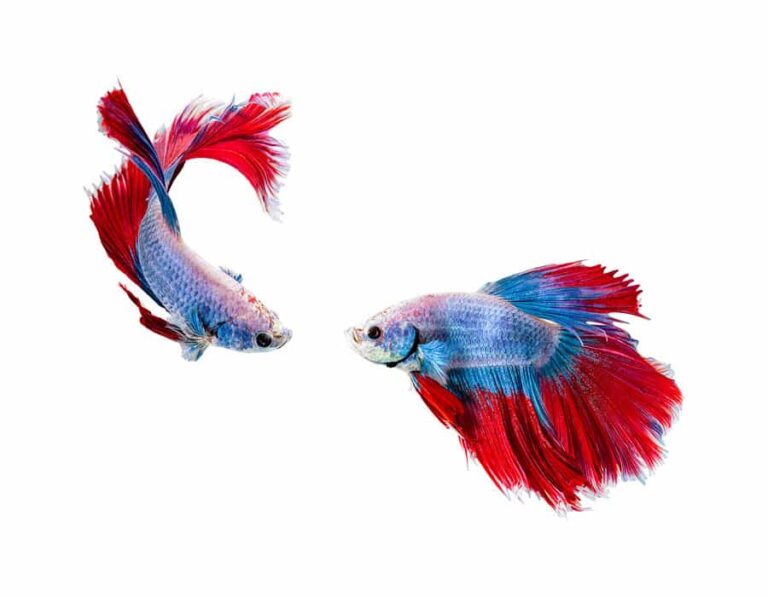
Platy Fish

Scientific Classification & Quick Facts
| Common name | Platy |
| Scientific name | Xiphophorus |
| Kingdom | Animalia |
| Phylum | Chordata |
| Order | Cyprinodontiformes |
| Family | Poeciliidae |
| Type | Live-bearing freshwater fish |
| Diet | Omnivore: algae, vegetables, brine shrimp, bloodworms |
| Habitat | Ditches, slow canals and warm springs |
| Native range | Southern Mexico and eastern Central America |
| Size | Variatus platy up to 7 cm (2.8 in) |
| Special feature | Gives birth to 20 to 50 live babies |
Platy is the common name for several small freshwater fish in the genus Xiphophorus. Unlike their close cousins the swordtails, platies do not have a long “sword” on the tail. Platies are livebearers in the family Poeciliidae, just like mollies and Guppy fish. In the wild, platy fish live in southern Mexico and eastern Central America.
The Variatus Platy and the Southern Platy Fish were interbred, so much so, that differentiating them is difficult. The majority of the Platy available in the aquarium hobby shop are hybrids of both varieties.

Habitat and Range
The variatus platy (X. variatus) comes from the Atlantic side of Mexico, from southern Tamaulipas to northern Veracruz. Through the aquarium trade it has been released in other places, including canals near Tampa Bay and Gainesville in Florida, warm springs in Montana, and countries such as Singapore, Colombia and Hong Kong. In some of these places it breeds so fast that it competes with native fish. In the wild, platies live in ditches, slow streams, weedy canals and warm springs, where they eat small crustaceans, insects, worms and plants.
Description
The variatus platy grows to about 7 cm (2.8 inches) long. Wild fish are olive-colored with dark spots or marbling on their sides, especially near the tail, and large males often have black blotches on the dorsal fin. Aquarium platies come in many more colors, such as red, orange, yellow and blue. An easy way to tell males from females is the anal fin: in females it is fan-shaped, while in males it is long and pointed and is called a gonopodium.
Platy Breeding
The X Variatus are Livebearers, meaning, the babies of the pregnant platy swims soon after they are born. Generally, breeding them is not difficult. If you have a pair, then they will breed. The most preferable is to keep 2 to 3 females for a single male in the tank, by which, the chances of reproduction is more. It also prevents the aggressiveness in males and stress in female Platy fish. The female fish produce around 20 to 50 fry. After birth, keep away the parents from their juvenile. For this purpose you can place the parent fish in a net or plastic breeder. Or else you can place the fry in a separate 5 gallon tank, adequately aerated with a bubble filter. If you do not wish to set a bubble filter, and then make sure you change the water completely, once in a week. While changing the water, check the temperature level, and make it the same as it was earlier. Avoid using a power filter, or there is a possibility of these small fry getting sucked up into it. For the healthy growth of these small fry, provide essential nutrients through powdered and live food suitable for their size. In the beginning, provide them powdered food, and as they grow, you can give them live, but small food like freshly born brine shrimp. When they attain a body length of 1.3 to 1.9cm, you can place them with the adults in the regular fish tank.
Tank
Platies are hardy fish with few special needs, as long as the water is not too acidic. Change about 25% of the water every week or two, depending on how many fish you keep, so that waste does not build up and make the water harmful. Platies do not live long in dirty water, so regular cleaning is the best way to keep them healthy.
You would do well to add 1 to 11/4 teaspoons of aquarium salt in every gallon of water. When you replace removed water from the aquarium, be certain to add salted water. The evaporated water leaves the salt behind after evaporation. Therefore, in case you intend to top top up the evaporated water, do not add salt further.
Water Condition
Taking care of platys is quite easy, especially for the beginners. The water temperature required for Platy is 76 to 79 F (24.4 to 26 C). Platy fish are generally healthy and are adjustable to most of the water with pH variations from acidic (6.5) to basic (8.2). There are incidences of platy living in brackish water (mildly salty) with no ill effects of it.
Nutrition
Even though the Platy fish is deemed omnivorous, they are more herbivorous in their diet, requiring plenty of algae and many vegetables. In nature, they feed on crustaceans, worms, insects and few plant parts. In an aquarium, the platy fish consumes almost all the feed available in the market, and occasionally live on vegetable matter. Give them brine shrimp (both frozen and live), blood worms, or tubifex as a delicacy. They love proteins; however the vegetation is essential in their diet. The Platy has no choice in its diet; however, in general, a balanced diet is fine for its health and long life. Platys get good coloration with a diet rich in vitamins. While in the aquarium, they, at times, eat the algae in the tank. This fish never picks and eats its food; therefore, you need to feed them a balanced diet several times in the day in small quantities.
Setup
The smallest size of the tank recommended is a 10 gallon one for the tiny lively fish. The Platy is not a shoaling fish, but it still loves living in groups, with some of its same variety. For a shoal of 5 fish, a 10 gallon (38 liters) tank is enough, but the hobbyist needs to keep in mind that if both male and female ones are in the tank, the population will increase in no time because of their regular breeding and fast maturing babies. The preferable male to female ratio is 1 to 3; this decreases the fight between the dominating males.
Even though the Platy tolerates most of the water conditions, proper filtration is essential in keeping the water stable. All varieties of gravel are suited as substrate; however, the Platy loves a tank simulating its environment in the wild, with plenty of plants in it. The southern Platy needs plants oriented spaciously and the Variatus Platy needs plants densely oriented. For survival of the offspring, floating plants are helpful.
Platy FAQs
What do platies eat?
Platies eat both plants and animals, but they need plenty of algae and vegetables. They also enjoy brine shrimp, bloodworms and Tubifex as treats.
Do platies lay eggs?
No. Platies are live-bearers, so the babies swim right after they are born. A female has about 20 to 50 babies at a time.
How big do platies get?
The article says the variatus platy grows up to 7 cm (2.8 inches) at most.
How many platies can live in a small tank?
A 10 gallon tank is enough for a group of 5 platies. Keep about 1 male to 3 females so the males fight less.
Where do platies come from?
Platies come from southern Mexico and the eastern coast of Central America. They live in ditches, slow canals and warm springs.

Randi Jones is the owner and founder of the Nature Gift Store, an online retailer specializing in nature-themed gifts, educational science projects, live animal nature kits and real butterfly artwork. A biology graduate who fell in love with insects, she founded the company in 2001 to make active learning about nature fun, accessible and engaging for children and adults. Her store offers real butterfly frames, home and garden decor and educational live animal kits, including ant farms, worm farms, tadpoles, ladybugs and hermit crabs, and she runs a bug museum in Washington featuring live animals like Eddie the Iguana alongside other reptiles and insects.