Elephant-nose Fish
Scientific Classification
| Kingdom | Animalia |
| Phylum | Chordata |
| Class | Actinopterygii |
| Order | Osteoglossiformes |
| Family | Mormyridae |
| Genus | Gnathonemus |
| Species | G. Petersii |
Gnathonemus Petersii, commonly known as Peters’ Elephant-nose fish is a species of fish from the freshwater group, endemic to Africa. It is a member of the genus Gnathonemus. The other synonyms for this fish are Long-Nosed Elephant Fish, Elephant-Nose Fish, and Ubangi Mormyrid, which is named after the river Ubangi. The name Petersii in Latin is named after “Peters”(Mostly Wilhelm Peters). This species has the highest weight ratio of brain to body among all the described vertebrates.
Description
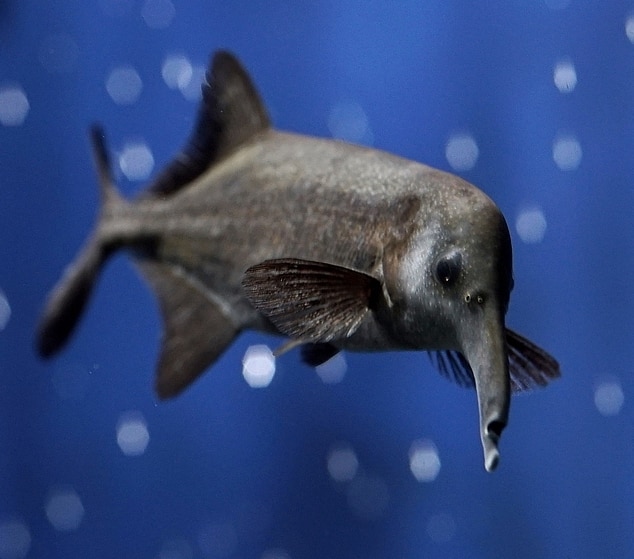
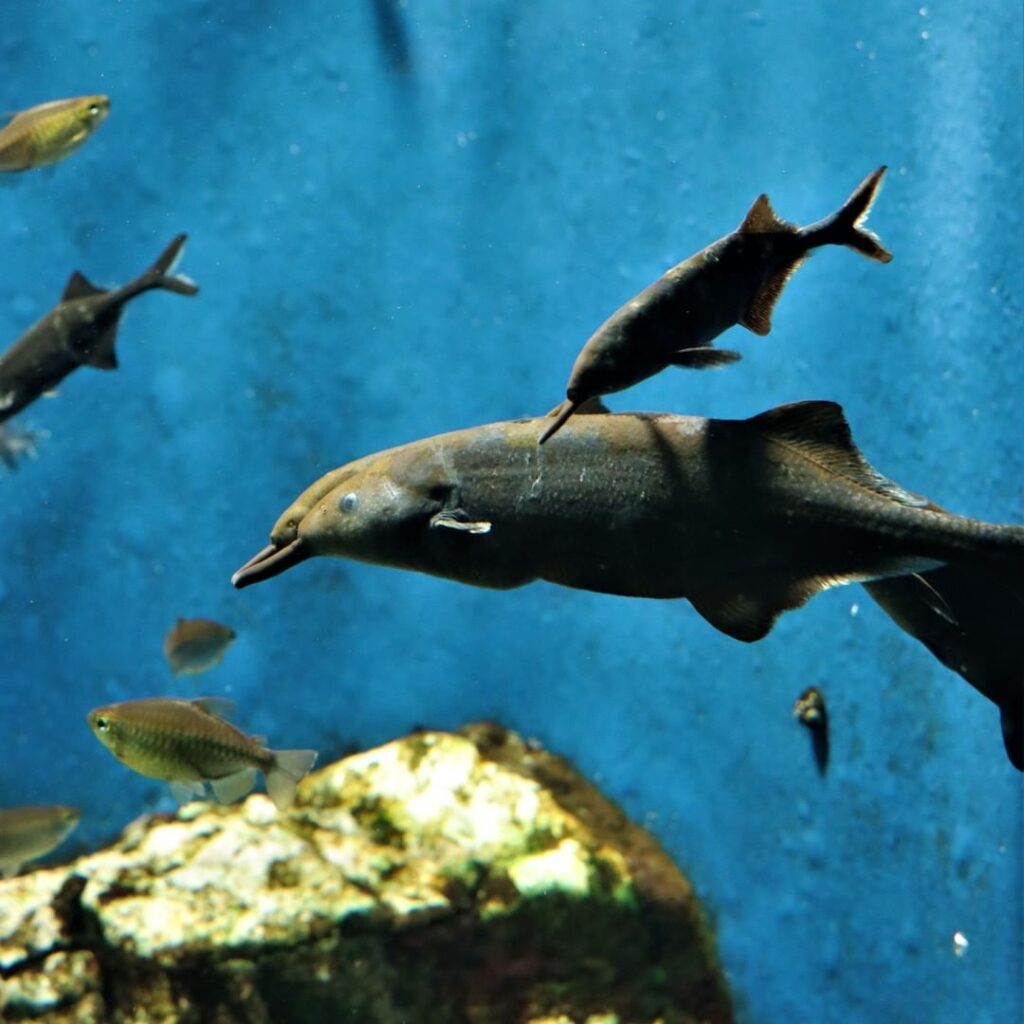
The Elephant-nose fish has a unique structure. As the name indicates, it has an elephant trunk like projection on the head, which looks like a nose. But actually, it is not a nose; instead, it is an extended sensitive part of the mouth. Nature has given such a mouth to this creature to fetch the food, communicate, navigate and for self-defense. It is often found in dark brown or black in color. The body is compressed laterally that attains a size of 23 to 25cm. The anal fin and the dorsal fin of this species have the same length. It is said that these creatures have bad eye sight. But they have the capability to produce a poor electric field by the specialized cells termed as ‘electrocytes’ from the cells of the muscles, to navigate even in the dark, to search for a mate or to find a source of food.
Habitat
Elephant-nose fish has originated from the rivers of Central and Western Africa, particularly from the Niger River basin, Chari River and the basin of the Ogun River. They are mostly found to inhabit the rivers having slow flowing movement and other water bodies like pools that are covered with submerged branches. It is widely populated in the regions of Nigeria, Cameroon, Mali, Republic of Congo, Zambia, Democratic Republic of Congo, Niger and Benin.
Growing in Captivity
Reproduction
It is said to be very difficult to breed these Elephant-nose fish, especially in the captivity. In their natural habitat, the spawning takes place during the rainy season. The other inducing aspects are low pH level, rising of humus-rich water and escaping to smaller tributaries during spawning. In captivity, they find difficult to recognize their mate.
Food
These creatures are predominantly scavengers by nature, and have the capability to fetch the food with the nose like organ. Even the trunk like organ brings the food towards the mouth similar to that of the elephant’s trunk, but it is situated below the mouth, rather than above. These creatures are carnivorous by nature, and prefer to eat meaty food, including chopped earthworms, bloodworms, mosquito larvae and brine shrimps. They will prefer both the frozen or live meaty food. They should also be provided with flakes and pellet diet.
Water
The Elephant-nose fish should be provided with perfect water conditions in the aquarium, and they cannot tolerate medication. The pH level of the water should be about 6 to 7.2. The temperature preferable for these fish is between 23 and 28 degrees C. The water hardness should be medium, and the KH level should be about 0 to 10.
Tank
The Elephant-nose fish prefers a well planted aquarium with many hiding places like driftwood, pipes and pots. Lack of such hiding places can make them stressed. For substrate, select fine and soft gravel, so that it doesn’t damage or hurt this creature’s sensitive nose. They will turn active only when in a comfortable surrounding. They need at least a 50 gallon tank with subdued lighting. Place a few plants in the front portion. Make some good hiding places with clay or PVC pipes This will make the fish feel safe and secure, and you can see them.
Having discovered a fondness for insects while pursuing her degree in Biology, Randi Jones was quite bugged to know that people usually dismissed these little creatures as “creepy-crawlies”.