Fantail Goldfish
Scientific Classification
| Kingdom | Animalia |
| Phylum | Chordata |
| Class | Actinopterygii |
| Order | Cypriniformes |
| Family | Cyprinidae |
| Genus | Carassius |
| Species | C. Auratus |
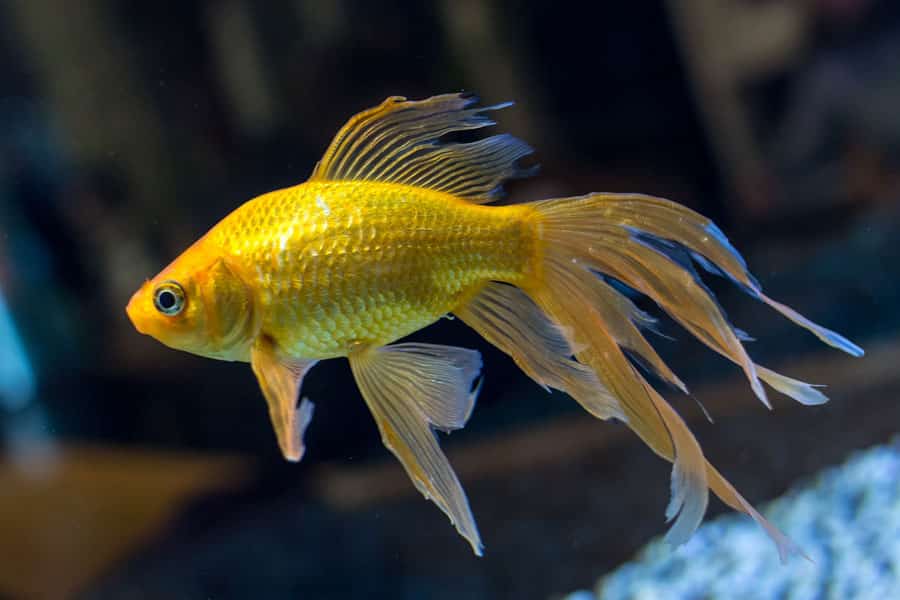
Carassius Auratus, also known as Fantail Goldfish belongs to the Cyprinidae family. The Japanese version of this Fantail species is the Ryukin Goldfish, which has a more curved back and a caudal fin with more width than a Fantail Goldfish. Both awesome fish are suitable for beginners due to their adjustable nature and beautiful profile.
Description
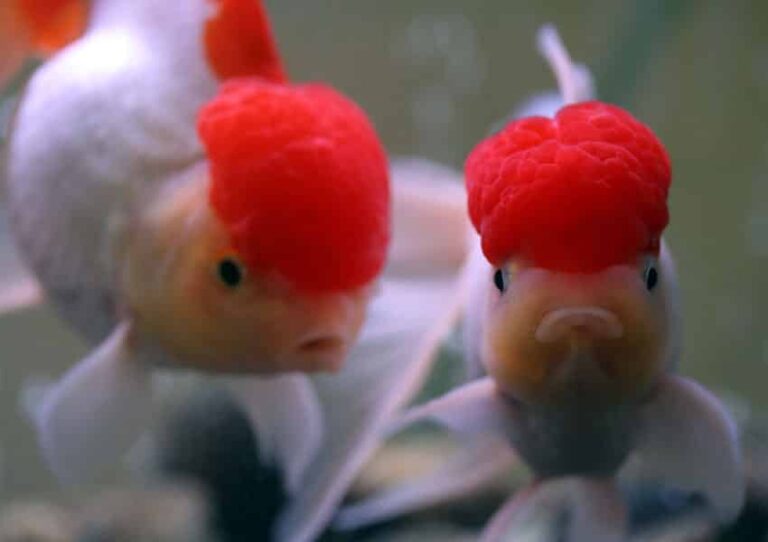
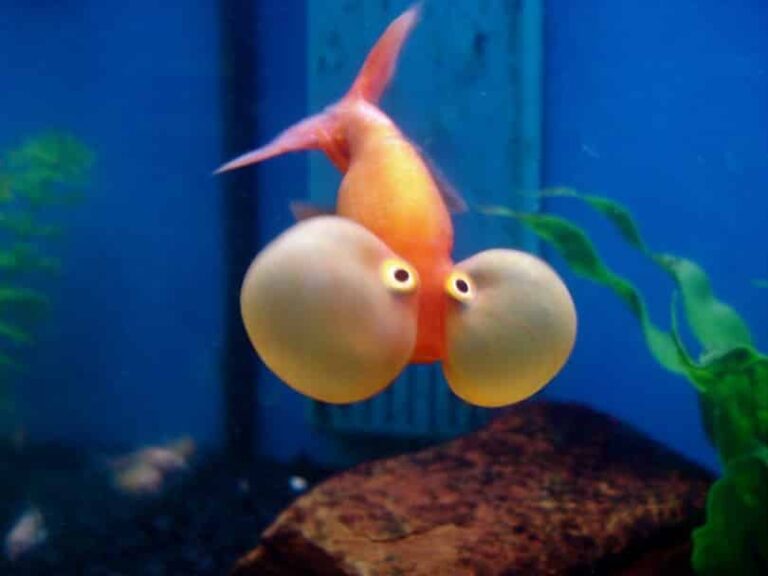
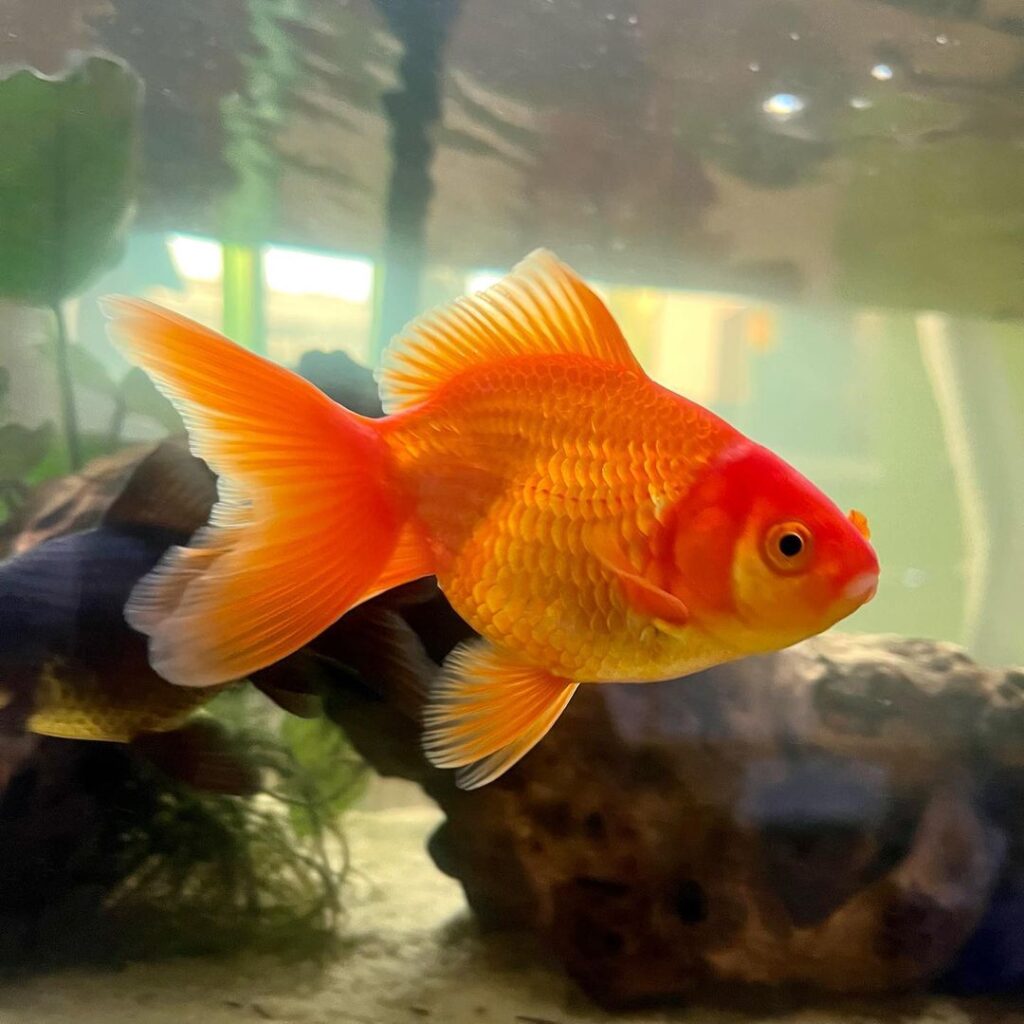
The Fantail Goldfish can be seen in an array of color combination and diverse patterns. There is a versatile scale pattern; the one is colored in reddish-orange and the other in a metallic shade. The other diverse scale types like white in a matt effect and speckled nacreous pattern (relating to nature) can also be seen. These fish grow about 6 inches in body length. The eyes are mostly telescopic or normal. It takes around 6 months to develop the telescope eyes. These fish have less developed fins, compared to the Ryukin types. They also possess tail fins and double anal fins. There have similar looking two equal parts of the caudal and anal fins. They are basically termed as a hardy fish, but cannot thrive if exposed to too cold water for a long period of time. The average life expectancy is between 10 and 15 years.
Habitat
The Fantail Goldfish is developed in the Asian countries like China and Japan. It inhabits the Central Asian regions, and are found in the stagnant or slow flowing rivers, ponds, lakes and ditches. In the 14th century, these Fantail fish were first introduced in Japan and later in Europe. From there, the new species with different colors and different scale patterns were developed, which you see today.
Reproduction
The Fantail Goldfish sexually matures by the age of 2. Similar to the other fish, these fish also undergo courtship rituals before spawning. The male follows the female and nudges her belly. The male counterpart insists the female to lay eggs. A matured fantail female can lay more than 1000 eggs in a single spawn, but only a very few percentage will fertilize and grow into a new life. Those eggs stick to any substrate in the tank. As soon as the female lays her eggs, the male fish sprays his milt over the eggs to fertilize. Thus the fertilization takes place externally. The clear eggs in the group possibly grow into small fry.
Fantail Goldfish at Home
Food
The Fantail Goldfish are omnivorous in nature, and eat all types of food. Their diet should consist of the required nutrients to survive. The best nutritious food suitable for these fish is a pellet diet. It should be provided at least 2 times a day. The remaining times, you can give a variety of live and frozen items like blood worm, brine shrimp, Daphnia, Tubifex worms and mosquito larvae. Food consisting vegetable and fruits contents are also good for their health.
Tank
The Fantail Goldfish should be placed in a 20 gallon tank that has a rectangular or elongated shape, so that it can get enough supply of oxygen. There should be enough space for swimming and hiding. Place some substrate like gravel or sand, but make sure it will not choke your pet’s throat. These fish sometimes gulp the substrate matter; hence it should be either very small or big for their mouth to gulp. A filter is a must, as these fish produce a lot of waste. For the décor, you can place soft rocks, woods and aquarium plants that impart a natural look to the aquarium.
Water
Like any other fish, these fish can also be comfortable only if the water conditions provided in the aquarium are perfect. It should be similar to their original habitat. The Fantail Goldfish inhabits in a Coldwater habitat, hence the water temperature must be properly set. It requires a temperature of 18 to 22 degree C, but can tolerate a few degrees around freezing point. The water pH level required is between 6.0 and 8.0, and the hardness range is between 5 and 19 DGH.
Having discovered a fondness for insects while pursuing her degree in Biology, Randi Jones was quite bugged to know that people usually dismissed these little creatures as “creepy-crawlies”.