Catopsis

Catopsis

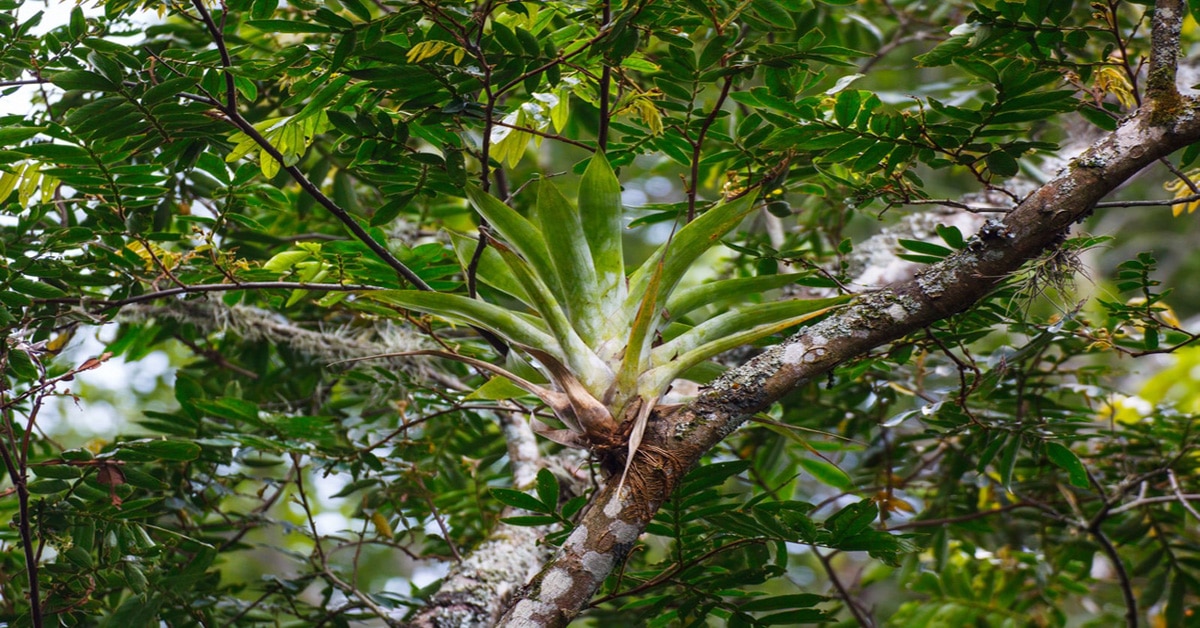
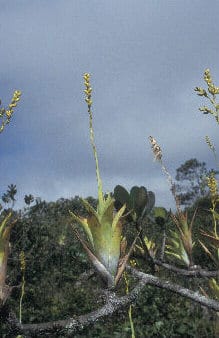
The species Catopsis belongs to the family Bromeliaceae and the  Tillandsioideaev subfamily. The name derives from “kata” the Greek word for “hanging down” combined with “opsis” or “appearance”. You can find varieties of Catopsis from Florida, running parts of Brazil in the East, as well as the Caribbean.
Catopsis
Catopsis
KingdomPlantae (Plants)
(Unranked)Angiosperms
(Unranked)Monocots
(Unranked)Commelinids
OrderPoales
FamilyBromeliaceae
SubfamilyTillandsioideae
GenusCatopsis

However, there are many species, but you can consider only Catopsis berteroniana as a possible carnivorous plant, though it is yet unconfirmed. The plant grows over a large range from south Florida all through México (Campeche, Chiapas, Guerrero, Oaxaca, Quintana Roo, Tabasco estados and Veracruz), the Islands of the Caribbean and Central America, Brazil and Venezuela there are nearly twenty known varieties of Catopsis. Though they almost look-alike, the varieties found in hot and dry areas are comparatively smaller than those found in cooler and more humid areas are.

READ MORE:  Western Australian Pitcher Plant

Tips for Domestic Cultivation

Cultivation

Cultivation conforms to that of Brocchinia. Catopsis grows in exceptionally bright conditions, needs protection from frost, but requires an ample abundance of humidity. You can carry out the process of watering simply by pouring disinfected water straight into the urn. You may feed it by occasionally throwing into a bug in the urn or leaf axils.

Propagation

You can propagate catopsis through pup as the plant dies after flowering. It seems, as the plant dies, it leaves behind only one replacement pup, which you may use for maintaining your plants rather than propagating the same. Apparently, the plant is largely dioecious so, consider yourself lucky if you get plants of both genders to cross them. Yet, some horticulturists reportedly got hold of seed readily from their plants, so it is uncertain if the plants are dioecious. It could be a trait restricted to some varieties. Apparently, the feathery seeds dispersed by wind germinate quickly.

READ MORE:  Pitcher Plants

Similar Posts

  • Sundews

    Drosera, usually famous as the sundews, encompasses one of the biggest varieties of carnivorous plants, having over 194 species. The members of the Droseraceae family attract, arrest, and absorb insects through stalked mucilaginous glands spread over the surface of their leaves. The insects go to enrich the meager mineral nutrition of the soil wherein they grow….

  • Pitcher Plants

    Perhaps the Pitcher plant is the most mysterious leaf in the whole wide universe. With its unique ability to obtain food, it has inspired multitudes to reshape their concept of how nature really works. Kingdom Plantae (Plants) Subkingdom Embryophyta Division Tracheophyta (Vascular Plants) Subdivision Spermatophyta (Seed Plants) Class Angiosperms (Flowering Plants) Subclass Monocotyledons (Monocots) Families…

  • California Pitcher Plant

    Darlingtonia California is also known as California pitcher plant, cobra plant, or cobra lily California is a genus of animal-eating plant, the only member of the genre Darlingtonia from the family of the Sarraceniaceae. It inhabits Northern California and Oregon, grows in marshes, and seeps with cold running water. This plant has an unusual classification as due to its natural…

  • Butterworts

    Pinguicula carnivorous plants, more popularly known as the butterworts, are a species of carnivorous plants that employ their sticky, glandular leaves to entice, trap, and absorb insects to compensate for the meager mineral nutrition they get from the environments. At present, it has eighty known species. Of these, twelve belong to Europe, nine to North America,…

  • Venus Fly Trap

    The Venus flytrap or Dionaea Muscipula is a meat-eating plant that inhabits the subtropical swampland of the United States East Coast. It grasps its victims, mainly insects, and arachnids, with a trapping arrangement fashioned by the terminal section of each leaf of the plant, triggered by minute hairs that exist on their internal surfaces. Kingdom Plantae (Plants) (Unranked) Eudicots…

  • Heliamphora

    The genre Heliamphora carnivorous plants have 23 varieties of pitcher plants that are widespread in South America. Everyone knows the species group as “sun pitchers,” because of the misguided opinion that the Heli of Heliamphora derives from the Greek Helios, meaning “sun”. Actually, the name is a derivative of helos, meaning marsh. Therefore, a more precise translation of their scientific…