Nepenthes
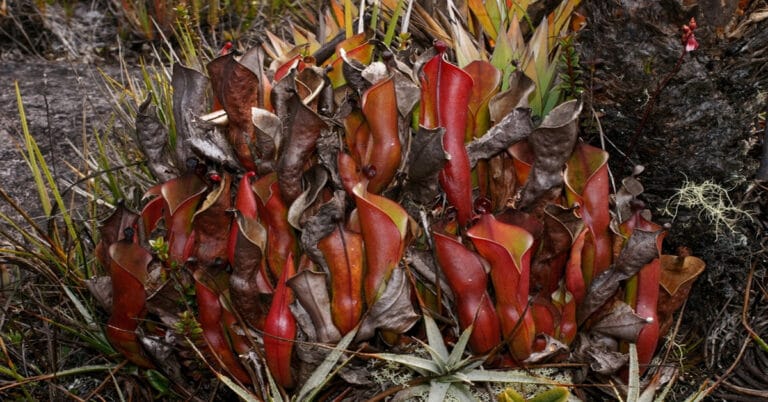
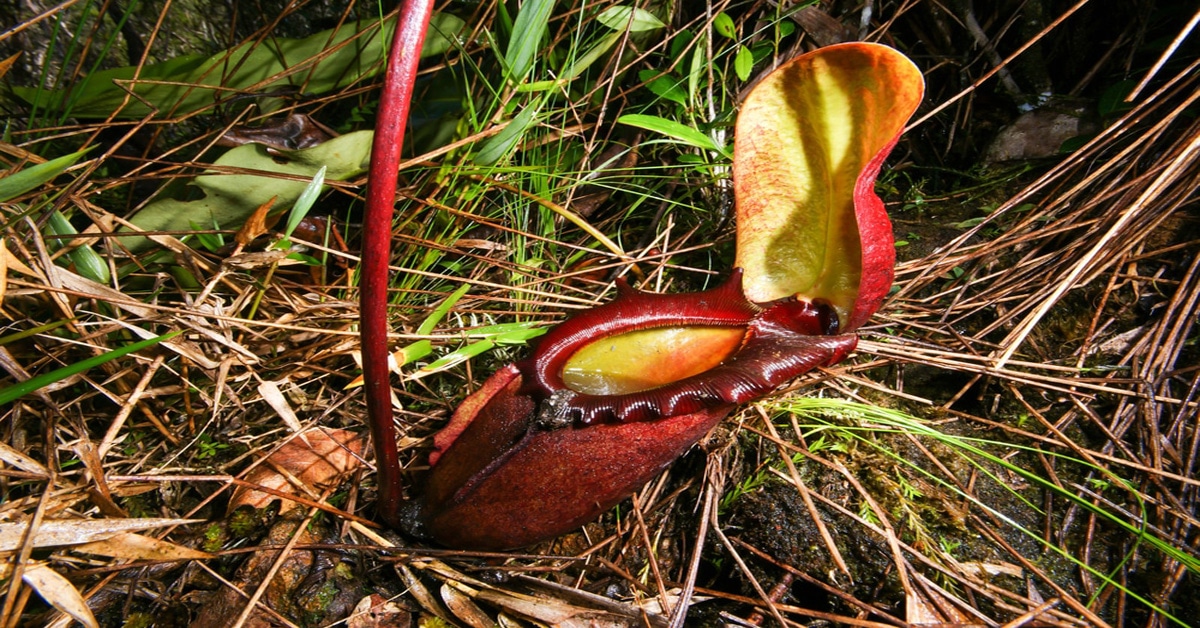
Tropical pitcher plants, popular name monkey cups, fit in the Nepenthes carnivorous plants species having pitfall traps. They include a verified list of 130 prevalent varieties in China, Indonesia, Philippines, Malaysia, Madagascar, Australia, India, Seychelles, Borneo, and Sumatra. They derive the name “monkey cups” due that you can often see monkeys drinking rainwater from them.
| Kingdom | Plantae (Plants) |
| (Unranked) | Angiosperms |
| (Unranked) | Eudicots |
| (Unranked) | Core eudicots |
| Order | Caryophyllales |
| Family | Nepenthaceae Dumort |
| Genus | Nephentes |
Types-Highland and Lowland
These plants frequently undergo classification as lowland or highland variety, as per their altitude above sea level, with 1,200 m as a rough line of delineation between lowland and highland.
Anatomy
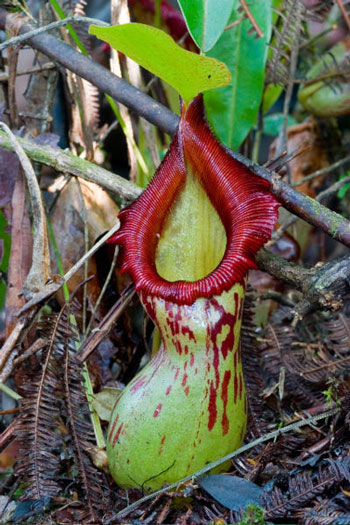
Generally, Nepenthes varieties have a shallow root arrangement with a prostrate or climbing stems, having a maximum diameter of one centimeter, but growing as tall as fifteen meters. The alternate, sword-shaped leaves with whole leaf margins, branch out from the stem. A protruding extension of the midrib (the tendril), which in certain varieties assists climbing, sticks out from the tip of the leaf. The pitcher forms at the end of the tendril. The pitcher formation begins as a small bud and progressively enlarges to form a globe or tube-shaped trap.
How the trap works
- The down section of the trap has glands, which soak up nutrients from the captured prey.
- Around the opening of the trap, you find is a structure that botanically they call the peristome (the “lip”) which is slippery and generally somewhat colorful and attracts prey, but provides risky footing.
- There is a lid on top of the peristome. Among many varieties, it prevents rain from thinning the fluid contained in the pitcher, the bottom of which may hold nectar glands to attract prey.
Digestion of Prey
These carnivorous plants produce watery or syrupy viscoelastic biopolymers that help to drown, retain the insects in the trap and digest them. You find glands in the lower part of the cup that distribute the nutrients after absorption.
Tips for Domestic Cultivation
Containers
For smaller plants, a one-gallon plastic container will suffice, but if you are considering growing a larger species, you will definitely need a tank of 4-5 gallon capacity. You should provide sufficient holes at the container bottom to facilitate quick drainage and good aeration of the soil.
Substrate
Use a blend of equal parts of organic and inorganic material like sphagnum peat and moss, osmunda, tree bark or tree fern root fiber. These are nutrient free. They have low pH, and retain moisture well.
Light
Nepenthes thrive in 4-5 hours of direct sunlight every day, or you could use 30-50% greenhouse shade cloth. Good exposure to light will help with the advancement of growth in these species and at the same time, bring out the pitchers in their brilliant colors, besides helping to stimulate flowering.
Watering
Make sure you water the plants regularly and never allow the soil to dry.
Temperature
You need to cultivate the highland and lowland species separately, because these carnivorous plants need different temperatures during the day and at night.
Pruning
Most Nepenthes plants have this habit of vine forming, and this necessitates regular pruning to keep the plants healthy and in good shape.

Having discovered a fondness for insects while pursuing her degree in Biology, Randi Jones was quite bugged to know that people usually dismissed these little creatures as “creepy-crawlies”.