Pet Turtle

Is it not surprising to know that tortoises and turtles existed on earth from over 200 million years ago? How interesting it is to know that family-member of that cute shelled reptile you are planning to bring home once shared space with the dinosaurs. Tortoises and turtles possess a very good sense of smell and have brilliant eyesight. Hobbyists and families, take a fancy to them and enjoy rearing them at home and enjoying their movements.
In case you have an idea of including a tortoise or a turtle as a family member, or simply taking one home on an experimental basis, you can get the required information from the Pet Smart tortoise or turtle guide or a turtle rescue league. This will guide you to have a wonderful time with your pet nurturing, feeding, caring and having fun together.
How to Pet a Turtle
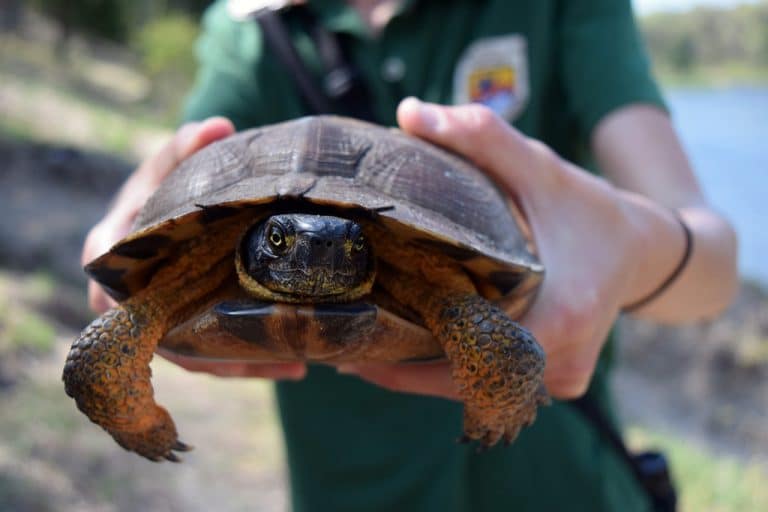
Turtle care advises that you should approach your pet turtle from the front, slowly. You are likely to scare the turtle if you are not visible to it, or your hand abruptly comes into sight.
Softly allow your finger to nuzzle the middle-top of the turtle’s head, vigilantly keeping away from its nose/eyes.
Once the turtle reposes its confidence in you, massage its neck. If you desire to carry your pet, attempt this from its rear, and gently scoop it with your hands. If you do not have time to wash your hands later, wear gloves while handling it, should it urinate on you.
Stroke your turtle’s shell in mild circular motions. Do not touch its claws and feet. Keep away from stressing them, when they show their displeasure by hissing or snapping at you.
Allow your turtle to crawl on you; make sure that they keep away from the edges and do not trip and fall.
Use a soft brush or a toothbrush (an unused one) to scrub its shell. Cleaning it is an option, not a necessity.
How Perfect Is a Turtle for Your Family?

Are you aware that since 1975 the United States put a ban on sales of turtles under 4 inches for the reason that turtles present a high risk of carrying diseases, particularly for children? This ban by The U.S. Food and Drug Administration (FDA), they say, has resulted in the effective prevention of over 100,000 cases of salmonella related diseases in children every year.
In spite of this risk of health, currently many like to adopt turtles as their pets. They seem an ideal family pet because of their beautiful, colorful shell and their dainty movements. All the same, they are carriers of the dreadful bacteria named Salmonella.
Do Not Be Fooled
Turtles possess salmonella as a natural phenomenon, Turtles affected by Salmonella, do not appear sickly in any way. Besides, they do not shed Salmonella all the time. A single negative test will not give you a positive indication if the turtle has a salmonella infection. It is possible that, on the day the test, it did not shed Salmonella.
Certain cases of salmonella infection may lead to acute infirmity, hospitalization and in certain cases lead to even to death in sensitive people like the aged, children under 5, and people with less resistance to sickness on account of pregnancy, chemotherapy, cancer, diabetes, organ transplants, liver problem and several other diseases.
Of late several cases of Salmonellosis associated with turtles have come to light in The United States.
Precautions When Handling Turtles at Home
- Do not have a turtle in homes with children under 5 and people whose natural resistance to disease is low because of cancer, organ transplants, pregnancy, liver problem, diabetes, chemotherapy and several other diseases. A family expecting a newborn must clear the house of any pet reptiles or amphibians prior to the arrival of the infant.
- Remember, the Turtles are cute, but contaminated. Treat all the turtles and the area they have come in contact with the perception that they have salmonella infection, because the chances are very high.
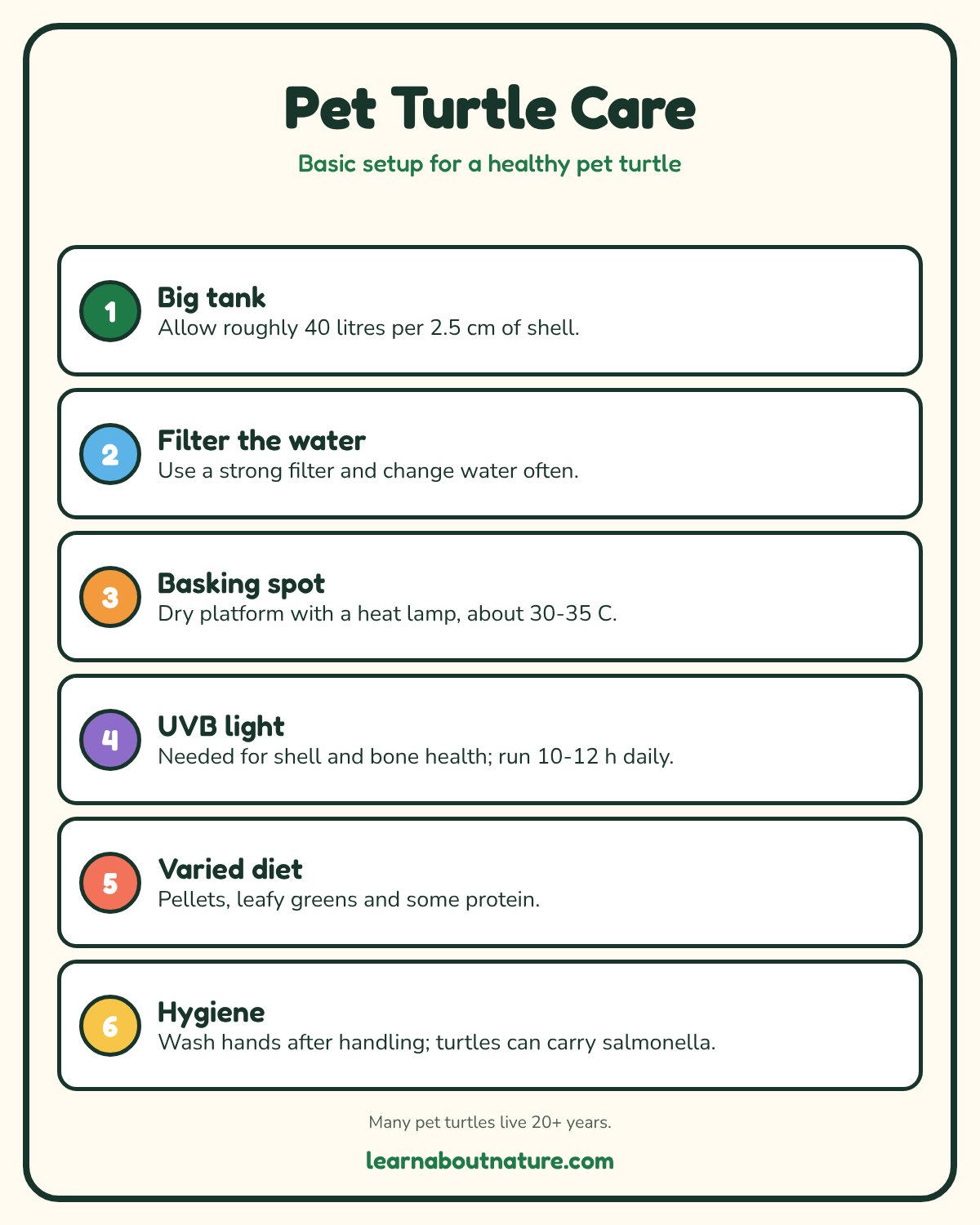
- Wash hands thoroughly with soap and water right away after handling turtles or their cages or after coming in contact with their feces. Never touch your face, your body, other people or anything or anywhere, until you wash your hands thoroughly.
- Wash surfaces having contact with the turtle or its cage.
- Separate the turtle from possible contact with food:
- Restrict the turtles from roaming about freely in your living places and home, particularly where you prepare your food.
- Never use your kitchen sinks for washing turtle dishes, aquariums or cages, or to give them a bath.
- In case you are using bath tubs for them, thoroughly clean them and disinfect them with bleach.
- Separate the turtle from contact with high-risk people
You would do well to make sure that people with high risk diseases do not come into contact with turtles.
Did You Know These Amazing Facts About Pet Turtles?

- The turtle’s shell is a combination of 50 diverse bones that are really the rib cage modified during the evolutionary process and really forms part of the vertebra
- The Soviet Union, in its 1968 launch of Zond 5, its space probe, a prelude to launching human beings into space, reportedly sent two turtles in this spacecraft.
- The alligator snapping turtle has an interesting way of catching its prey. The tip of its tongue has evolved an adaptation to make it look like a worm when wriggled, thereby attracting fish to it.
- It is a well known fact that Chelonians do not have vocal cords. However, they swallow or force air through their lungs to make unique noises.
- Biologists, from their study of turtle fossils have concluded that turtles emerged and lived in the same era as the dinosaurs almost 220 million years ago. The turtles have long outlived their cousins and you see them still extant.
- Helmeted turtles and musk turtles emit an awful odor as a defense mechanism when predators pursue them. These glands are four in number and you can find one under each leg.
Most Vertebrates that breathe air use a diaphragm (a muscle that rhythmically relaxes and contracts while breathing) to inhale and exhale air from the lungs. Some turtles breathe with the aid of special muscles between their lungs and limbs that aid their breathing process. Some of them also rely upon buccopharyngeal breathing that involves intake of water and drawing the oxygen from it with the capillaries in their neck. The process helps them to stay under water for long periods.
Pet Turtles FAQs
Are turtles good pets for kids?
Turtles can be rewarding pets but are not ideal for young children. They need large tanks, special lighting and long-term care, and they commonly carry salmonella. Health agencies advise against keeping turtles in homes with children under five, and adults should supervise handling and handwashing.
Why is it illegal to sell small turtles in the US?
Since 1975, the US Food and Drug Administration has banned the sale of turtles with shells under 4 inches long as pets. Small turtles were often handled or put in children’s mouths, spreading salmonella. The ban greatly reduced turtle-related salmonella infections in children.
How do you pet a turtle?
Approach slowly from the front so the turtle can see you, then gently stroke the top of its head or shell. Avoid its face, legs and tail, and stop if it hisses, pulls in or snaps. Many turtles prefer not to be handled much, so keep sessions short.
Can turtles make sounds?
Turtles do not have vocal cords, but many can still make sounds. They may hiss when air is pushed out as they pull their heads in, and some species grunt, chirp or click, especially during courtship. Scientists have found that sea turtles even make sounds before hatching.
How does an alligator snapping turtle catch fish?
The alligator snapping turtle has a pink, worm-like lure on its tongue. It lies still on the bottom with its mouth open and wiggles the lure. When a curious fish swims in to investigate, the turtle snaps its powerful jaws shut.

Randi Jones is the owner and founder of the Nature Gift Store, an online retailer specializing in nature-themed gifts, educational science projects, live animal nature kits and real butterfly artwork. A biology graduate who fell in love with insects, she founded the company in 2001 to make active learning about nature fun, accessible and engaging for children and adults. Her store offers real butterfly frames, home and garden decor and educational live animal kits, including ant farms, worm farms, tadpoles, ladybugs and hermit crabs, and she runs a bug museum in Washington featuring live animals like Eddie the Iguana alongside other reptiles and insects. Randi wrote most of the guides on this site. They first appeared on her long-running nature sites, including Monarch-Butterfly.com, Ladybug-Life-Cycle.com, Frog-Life-Cycle.com, Dragonfly-Site.com and Butterfly Pictures, which have now been brought together here at Learn About Nature.