Mata Mata – The Only Existing Species of the Genus Chelus

Scientific Classification & Quick Facts
| Common name | Mata mata |
| Scientific name | Chelus fimbriata |
| Kingdom | Animalia |
| Phylum | Chordata |
| Class | Testudines |
| Family | Chelidae |
| Genus | Chelus |
| Conservation status | Least Concern |
| Type | Reptile (freshwater side-necked turtle) |
| Diet | Live fish |
| Habitat | Slow backwater streams, swamps and marshes |
| Native range | Amazon and Orinoco basins, South America |
| Weight | About 15 kg (33 lb) when fully grown |
| Lifespan | About 40–75 years |
| Special feature | Looks like bark and leaves; has a tube-like snout |
The species Chelus fimbriata commonly known as mata mata is a freshwater turtle. This represents the only existing species of the genus Chelus. You can see the mata mata mainly in the Amazon and Orinoco basins of South America.

Anatomy
Mata Mata – The Only Existing Species of the Genus Chelus

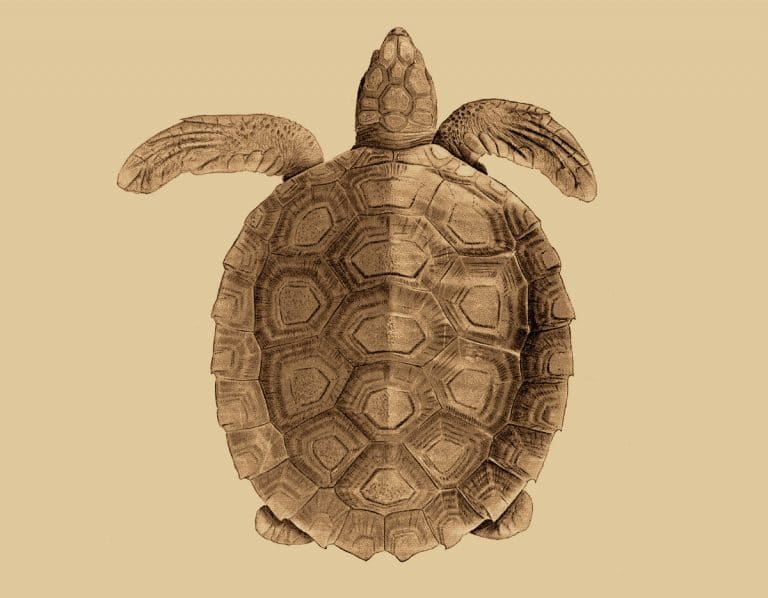
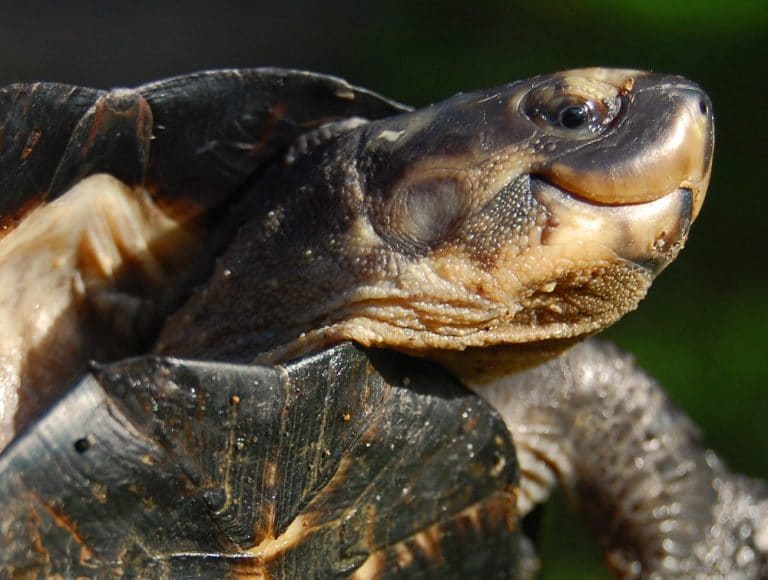
The full-grown mata mata turtle weighs 15kg (33lb) and has a life span of 40-75 years. These sedentary turtles are large. The head with many flaps of skin and tubercles is flat and triangular. The snout is tubular and manifests in a long form with a “horn”. A mature mata mata’s oblong carapace is either brown or black.
Habitat
Even though mata mata is purely aquatic, we can see them in shallow water with their snout reaching the surface to breathe. You can find them in backwater streams that move slowly, in swamps, marshes, and stagnant water and they extend into northern Bolivia, Peru, eastern Colombia, Ecuador, the Guiana, Venezuela, and central and northern Brazil.
Behavior
The mata mata’s shell appears like a piece of bark while the head bears a resemblance to fallen leaves. Even if it remains in the water, the skin flaps help them to camouflage into the nearby foliage until a fish approaches close.
As a Pet

Housing
For growing them domestically, you must keep up pH in the range of 4 to 6 and the temperature around 76 to 83 degrees F. It can also withstand similar air temperatures. Aquariums are ideal for small to medium turtles of 4-10 inch sizes.
Use larger stock tanks or custom-made ponds with a carrying capacity of more than 100 gallons for larger turtles of about 18 inches in size.
Avoid rough surfaces in the enclosures.
Substrate
A sandy substrate can prevent abrasion to the turtle’s plastron. It also acts as an anchor for plants. Therefore, a mata mata enclosure should have a substrate with sand. Use driftwood and various types of sunken and floating plants for decoration.
Lighting and Temperature

Mata mata requires higher temperatures as we see them in a tropical environment. 80-90 degrees Fahrenheit water temperatures are also fine. For this, positioning a basking light about one foot above the basking spot will do. A 75-150 watt heat bulb will serve the purpose. For ultraviolet light, place one UVB emitting bulb along with the basking light. The basking area should range between mid to upper 90-degree temperatures.
Feeding
Mata mata turtles feed on live fish. These turtles are carnivores. They prefer platies, guppies, minnows, mollies, sunfish, and goldfish as food. Some turtles feed on night crawlers as well. Feeding on commercial food is not usual. Keep an enclosure stocked with 30-40 fish at a time so that the turtles can feed freely. It is difficult to find them to catch just one or two fish when they are hungry.
Breeding
Males attract females by stretching their limbs and lunging with their heads, and mouths open. Lateral flaps on the body also show movements. Nesting occurs in the upper Amazon. The nesting period is October – December. They deposit eggs in clutches of 12 to 28. Eggs are brittle and spherical in shape with 35mm diameter.
Handling
Start handling mata mata turtles only after you find them eating, and active, and do not show any signs of illness or bad health these are sure signs of their comfortable acclimatization to the new environment.
It is easier to maintain mata mata hatched in captivity. One must keep a note that small hatchlings should start eating and show signs of growth before we handle them.
Mata mata FAQs
What does a mata mata look like?
It has a flat, triangle-shaped head covered with flaps of skin, a long tube-like snout and a brown or black bumpy shell. Its shell looks like bark and its head looks like fallen leaves.
How does a mata mata catch fish?
It stays still, looking like a pile of leaves, until a fish swims close. Then it snaps up its meal. The skin flaps help it blend in with plants in the water.
Where do mata matas live?
They live in the Amazon and Orinoco river basins of South America, in slow backwater streams, swamps and marshes. They stay in shallow water and stick their snout up to breathe.
How long do mata matas live?
They live about 40 to 75 years.
How big is a mata mata?
A fully grown one weighs about 15 kilograms (33 pounds), so it is a large turtle.

Randi Jones is the owner and founder of the Nature Gift Store, an online retailer specializing in nature-themed gifts, educational science projects, live animal nature kits and real butterfly artwork. A biology graduate who fell in love with insects, she founded the company in 2001 to make active learning about nature fun, accessible and engaging for children and adults. Her store offers real butterfly frames, home and garden decor and educational live animal kits, including ant farms, worm farms, tadpoles, ladybugs and hermit crabs, and she runs a bug museum in Washington featuring live animals like Eddie the Iguana alongside other reptiles and insects.